
Ecuador Birding – Where Every Feather Tells a Story
From October 26, 2025 through November 8, 2025 I joined 5 other adventurers and an outstanding photographer and birding guide (Liron Gertsman) with Eagle-Eye Tours to Ecuador. This blog series highlights the animals (mostly birds), people and locations we encountered over the 14 full days in this beautiful land.
*Unless otherwise indicated in the image caption, all photographs (>99%) are mine.
**Best when viewed on full computer screen**
Ecuador Birding: Blog Post #5
“The Ecuador Species List Rapidly Grows“
A Reflections of the Natural World Blog Post Series by Jim Gain
DAY 1 – Morning
- My Ecuador Species Count up to but not including Zuro Loma now: 13 (6 lifers)
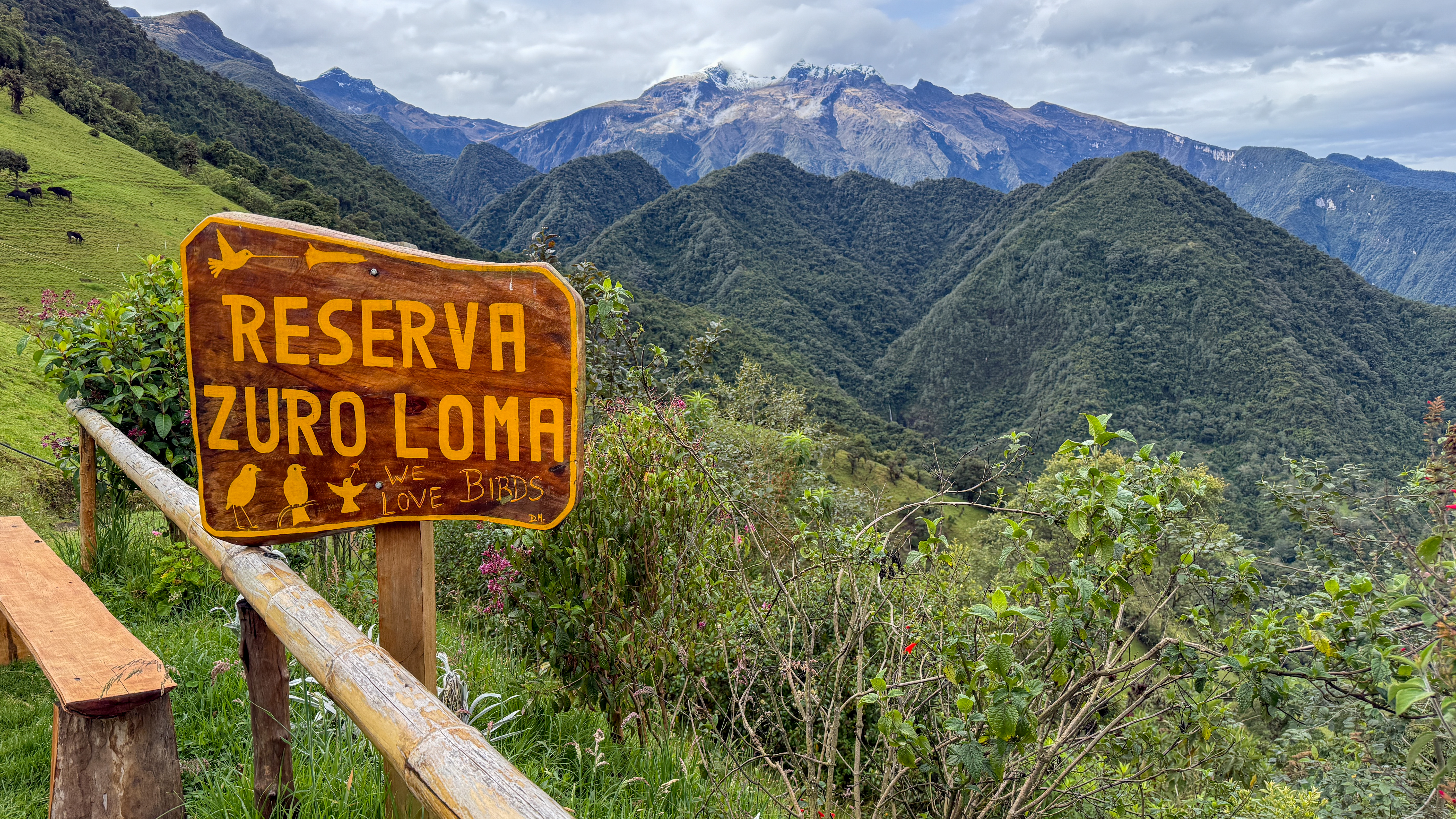
- Primary eBird Hotspot: Reserva Zuro Loma
From the entrance gift shop, the view alone felt worth the entire climb. The valley opened beneath us in a sweeping green bowl, its contours softened by mist and shadow, and far across it rose the snow‑capped bulk of Pichincha Volcano, its summit wrapped in drifting clouds like a sleeping giant. It was the kind of vista that made you pause without thinking—the kind that reminded you just how high you’d climbed and how wild these mountains still were.

Below the gift shop, the hillside dropped steeply, and we followed a short zigzagging trail down to the first set of feeding stations. A covered seating area waited there, surrounded by hummingbird feeders, a small water feature, and fruit trays arranged with almost artistic care. Moss‑covered branches had been placed around the clearing—perfect natural perches that photographers dream about, and the birds used them exactly as intended.

The first arrivals were a trio of familiar Andean species. HOODED MOUNTAIN TANAGERS appeared first, bold and beautiful, their deep blue bodies offset by a striking black hood and lemon‑yellow belly. They moved with deliberate grace, hopping from branch to branch like royalty surveying their domain.

Then came the MOUNTAIN VELVETBREASTS, hummingbirds with shimmering emerald backs and rich velvety purple throats, their tails flaring as they hovered near the feeders. In the shadows, a flurry of movement revealed several MASKED FLOWERPIERCERS, their electric blue plumage and jet‑black facial masks giving them a mischievous, bandit‑like charm as they darted in and out of the foliage.


Alex spotted something different—a GLOSSY FLOWERPIERCER, perched boldly on one of the feeders. Its plumage was darker, almost black with a subtle sheen, and its curved-tipped bill gave it a sinister elegance. Moments later, a TYRIAN METALTAIL zipped in, its compact body flashing iridescent green and violet as it hovered briefly before vanishing into the forest like a spark extinguished.


And then it was time to feed the antpittas!
NEXT UP: EB#6 “When Antpittas Come Calling“
Additional Photographs and Video


Previous Ecuador Birding Blog Posts:
- EB100 – Epilogue – Full of Wonder and Gratitude
 This epilogue looks beyond the individual bird highlights to the deeper meaning of the journey, capturing the wonder, gratitude, and renewed perspective that Ecuador left within me. This blog series chronicles Jim Gain’s experiences with birds and nature.
 - EB99 – Ecuador – Favorite Images from the West Andes
 This epilogue looks beyond the individual bird highlights to the deeper meaning of the journey, capturing the wonder, gratitude, and renewed perspective that Ecuador left within me. This blog series chronicles Jim Gain’s experiences with birds and nature.
 - EB98 – Ecuador – Favorite Images from the High Andes Páramo
 A visual tribute to the páramo, where the Andes reveal their rawest beauty and every moment feels carved from wind and light. This blog series chronicles Jim Gain’s experiences with birds and nature.
 - EB97 – Ecuador – Favorite Images from the Eastern Andes
 A visual journey through the cool, moss‑laden slopes of the eastern Andes and the birds that define them. This blog series chronicles Jim Gain’s experiences with birds and nature.
 - EB96 – Ecuador – Favorite Images from the Amazon Lowlands
 A collection of my favorite images from the Amazon Basin, where water, light, and life intertwine in one of the world’s most vibrant ecosystems. This blog series chronicles Jim Gain’s experiences with birds and nature.
 - EB95 – Reserva Yanacocha: Ending Ecuador Birding on a 3500m High Note
 A late morning at Reserva Yanacocha revealed a powerful blend of conservation triumphs and high‑Andean species, highlighted by a final lifer that brought the journey full circle. This blog series chronicles Jim Gain’s experiences with birds and nature.

>>Ecuador Birding Blog Home Page Link https://reflectionsofthenaturalworld.com/ecuador-birding/
*This Ecuador Birding blog post was shaped and polished with the assistance of Microsoft Copilot, helping bring clarity and a consistent flow to my field notes and dictated memories.
Leave a Reply