
Ecuador Birding – Where Every Feather Tells a Story
From October 26, 2025 through November 8, 2025 I joined 5 other adventurers and an outstanding photographer and birding guide (Liron Gertsman) with Eagle-Eye Tours to Ecuador. This blog series highlights the animals (mostly birds), people and locations we encountered over the 14 full days in this beautiful land.
*Unless otherwise indicated in the image caption, all photographs (>99%) are mine.
**Best when viewed on full computer screen**
Eucador Birding: Blog Post #4
“Unofficial Sidetrip to Reserva Zuro Loma”
A Reflections of the Natural World Blog Post Series by Jim Gain
DAY 1 – Morning
- My Ecuador Species Count up to now: 7 (4 lifers)
- Primary eBird Hotspot: None
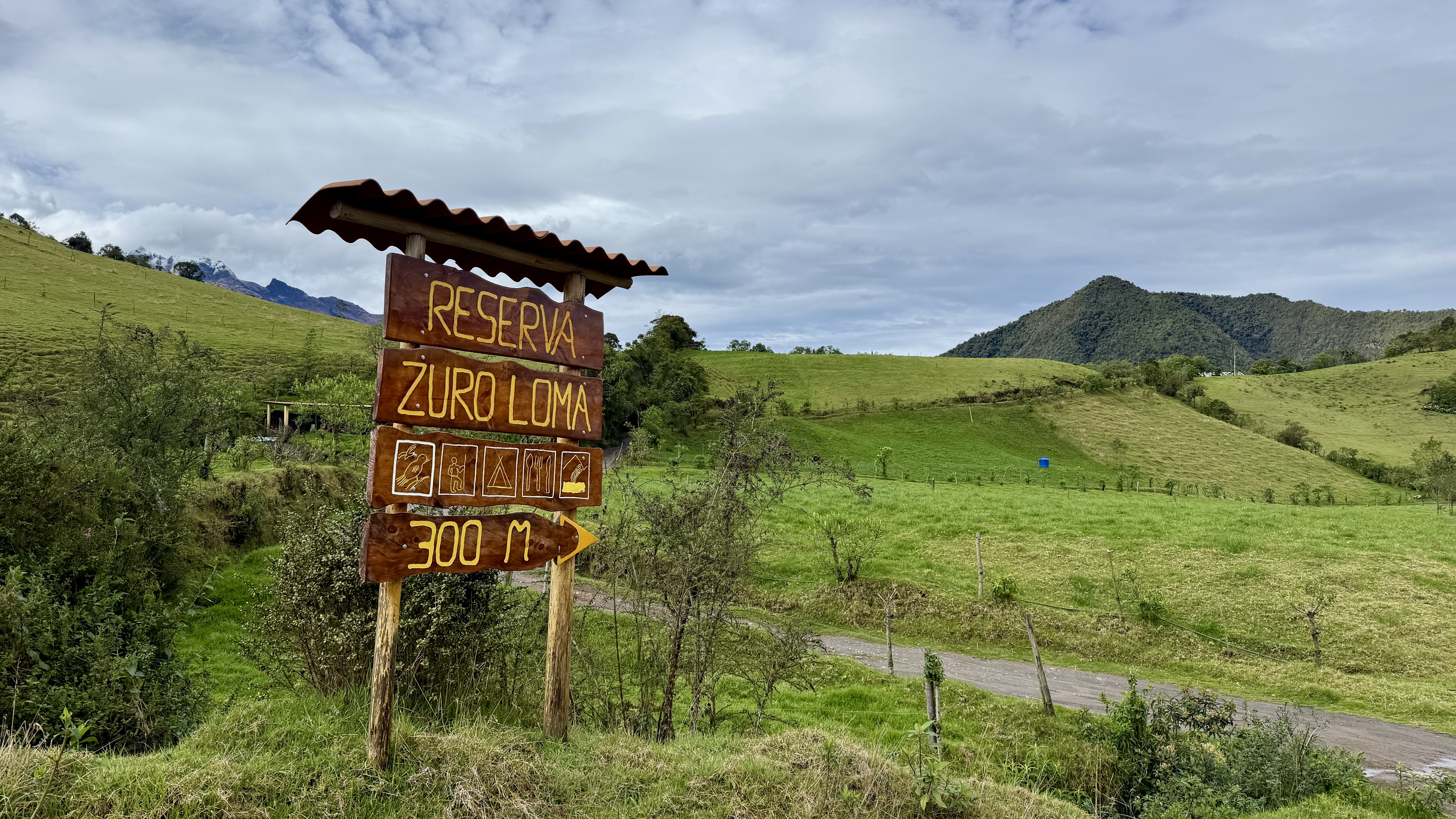
As I mentioned previously, I knew that we had the better part of a day to kill before the official start of the Eagle-eye Tour so Alex and I arranged through Mercedes for a sidetrip to Zuro Loma. After loading into the car with our driver and guide Edwin Perez, Alex and I set out for the western slopes of the Andes and it felt like the true beginning of my Ecuador birding adventure.

As we left the city center, our driver and guide, Edwin, threaded us through the outskirts of Quito, past clusters of small shops, roadside fruit stands, and the constant hum of a metropolis of more than three million people.


Eventually the pavement gave way to a dirt road that rose at a surprisingly steep angle, pointing us toward the cloud‑wrapped mountains ahead. As we continued upward, the weather shifted into a pattern that would define much of the day: low clouds, scattered rain showers, and a persistent grayness that softened the landscape. The road, however, was anything but soft. Once we hit the steep hills, the drive became punishing. Edwin’s car seemed to have long ago surrendered its shock absorbers, and every rut or rock sent the backseat—my seat—into a jarring bounce. With each impact, my spine protested a little more. Edwin drove with a confidence that bordered on alarming given the road conditions, and by the time we completed the two‑hour ascent, my back felt like it had been hammered from the inside. I could barely twist enough to climb out of the car. Still, we made a few hopeful stops along the way, scanning the open slopes for one of my early target birds, the Andean Lapwing. The hillsides remained stubbornly empty, but the anticipation kept me alert despite the discomfort.

Reserva Zuro Loma itself has a story that adds weight to every birding moment spent there. Once a patchwork of privately held forest and recovering pastureland, it was gradually protected through the dedication of local conservationists who recognized the biological richness of the Chocó‑Andean transition zone. Over the years, the reserve has become a sanctuary for species that exist nowhere else on Earth, including several hummingbirds whose populations have dwindled to the brink.

For the birding community, Zuro Loma is more than a stop on an itinerary—it’s a symbol of what determined stewardship can preserve. Its feeders, trails, and restored habitat have given countless birders the chance to witness species that might otherwise slip quietly toward extinction. Knowing that history made my visit feel less like tourism and more like a small act of participation in something fragile and ongoing.

When we finally reached the reserve, the first thing that greeted us was a beautifully painted mural on the exterior wall—bright colors, sweeping shapes, and birds rendered with a kind of reverence. At the entrance was a small gift shop with souvenirs and snacks, but we barely slowed down. The hummingbird feeders were calling, and we were too eager to waste even a moment indoors.

Two species were at the top of our list, but for me, the entire trip had been anchored around one dream: seeing the Sword-billed Hummingbird, a bird so improbable it feels like a creature imagined rather than evolved. And then, just days before my departure, I learned that the Black-breasted Puffleg—critically endangered, with fewer than 120 adults left in the wild—had returned to the reserve after nearly three years of absence. The possibility of encountering both species in a single morning felt almost unreal. Standing there, sore and exhausted but buzzing with anticipation, I realized that this was exactly the kind of moment I had hoped for when I first decided to come to Ecuador: a blend of hardship, wonder, and the electric possibility of seeing something rare and extraordinary.
NEXT UP: EB#5 “The Ecuador Species List Grows“
Previous Ecuador Birding Blog Posts:
- The Velvet‑purple Coronet and the Science of Color: A Field Photographer’s Reflection
 A quiet Gray Fox along the Stanislaus River offered a moment of Zen‑like stillness, blending natural history, resilience, and the calm grace of wildness moving at its own pace.
 - EB100 – Epilogue – Full of Wonder and Gratitude
 This epilogue looks beyond the individual bird highlights to the deeper meaning of the journey, capturing the wonder, gratitude, and renewed perspective that Ecuador left within me. This blog series chronicles Jim Gain’s experiences with birds and nature.
 - EB99 – Ecuador – Favorite Images from the West Andes
 This epilogue looks beyond the individual bird highlights to the deeper meaning of the journey, capturing the wonder, gratitude, and renewed perspective that Ecuador left within me. This blog series chronicles Jim Gain’s experiences with birds and nature.
 - EB98 – Ecuador – Favorite Images from the High Andes Páramo
 A visual tribute to the páramo, where the Andes reveal their rawest beauty and every moment feels carved from wind and light. This blog series chronicles Jim Gain’s experiences with birds and nature.
 - EB97 – Ecuador – Favorite Images from the Eastern Andes
 A visual journey through the cool, moss‑laden slopes of the eastern Andes and the birds that define them. This blog series chronicles Jim Gain’s experiences with birds and nature.

>>Ecuador Birding Blog Home Page Link https://reflectionsofthenaturalworld.com/ecuador-birding/
*This Ecuador Birding blog post was shaped and polished with the assistance of Microsoft Copilot, helping bring clarity and a consistent flow to my field notes and dictated memories.
Leave a Reply