
Western Europe Birds & Birding (#29/50): From the Highland Willow Scrub of Scotland to the Aegean Islands in the Sea of Crete, Western Europe is home to over 800 resident, migratory and vagrant birds. From songbirds to gamebirds and from waterfowl to raptors, you can find birds virtually in every nook and cranny of this beautiful area. *All images showcased in this blog series were taken and edited by me.
A Reflections of the Natural World Blog Post Series by Jim Gain
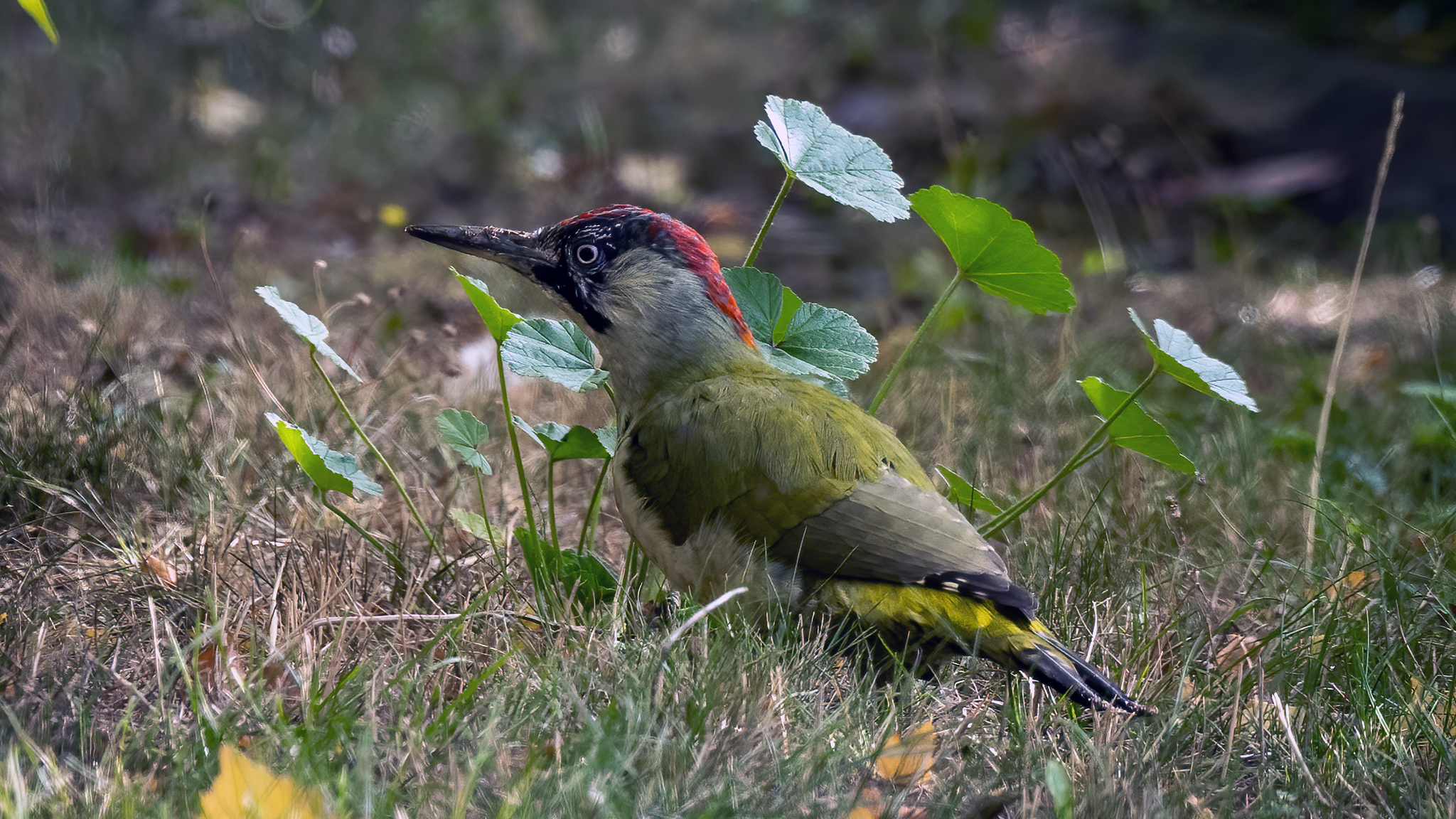
The European Green Woodpecker (Picus viridis) is a striking bird found across much of Europe and the western Palearctic.

Physical Characteristics:
- The European Green Woodpecker is a large green bird with a bright red crown and a distinctive black moustache.
- Both males and females exhibit green plumage above and pale yellowish-green coloring below.
- The moustachial stripe has a red center in males, while it remains solid black in females.
- Juveniles are spotty and streaked, and their moustache initially appears dark, though some males may develop red feathers by early June or usually by July or August.

Diet:
- The main food source for the European Green Woodpecker is ants from the genera Lasius and Formica.
- It spends much of its time foraging on the ground, diligently seeking out ants.
- Occasionally, it also consumes other insects and small reptiles.
- Interestingly, the bird’s elongated, cylindrical droppings often consist entirely of ant remains.

Abundance and Distribution:
- European Green Woodpeckers are widely distributed in Europe, but they are absent from some northern and eastern regions, as well as from Ireland, Greenland, and the Macaronesian Islands.
- They also occur in western Asia.
- Unlike migratory birds, European green woodpeckers rarely move more than around 500 meters between breeding seasons.
- They prefer old deciduous trees for nesting and nearby feeding grounds rich in ants.
- These habitats are typically found in semi-open landscapes with small woodlands, hedges, scattered old trees, forest edges, and floodplain forests.
- For foraging, they frequent grasslands, heaths, plantations, orchards, and lawns.

IUCN Red List Status:
The European Green Woodpecker is currently assessed as Least Concern on the IUCN Red List. Its population size ranges from 1.2 to 2.2 million individuals. These woodpeckers have a life span of up to 15 years. Despite their widespread distribution, they face no imminent threat of extinction.
For more information, you can explore the IUCN Red List and learn about the conservation status of various species.

EURASIAN GREEN WOODPECKER WAS LIFER #799

Leave a Reply