
SIERRA NEVADA BIRDS – FEATHERS IN THE RANGE OF LIGHT Blog Post #20
California’s “Range of Light” is home to a diverse array of both colorful and cryptic birds (the feathers). It is my intent to use my passion for birds and photography to paint a story about 120 of the most common or most sought-after Sierra Nevada (Range of Light) birds by most nature enthusiasts.
Sierra Nevada Birds – Feathers in the Range of Light is a Reflections of the Natural World Blog Post Series by Jim Gain
(Formerly Pacific-slope Flycatcher)

WHAT’S IN A NAME
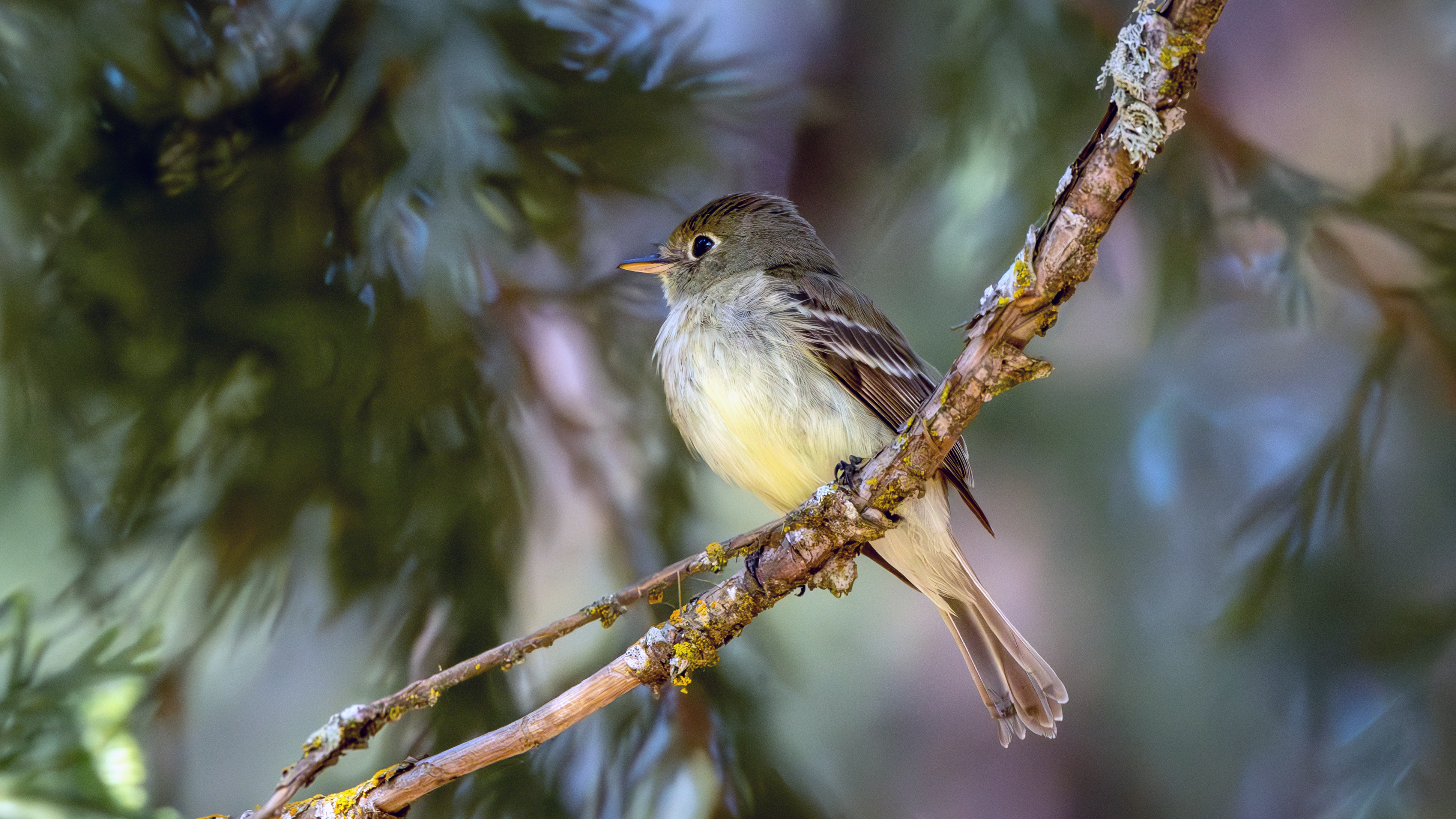
Western Flycatcher – Empidonax difficilis
Name Roots: (Gr. empis, “a gnat”; anax, “king” – L. difficilis difficult, troublesome)
The Western Flycatcher was recognized as a single species until 1989, when the American Ornithologists’ Union split it into two different species: the Pacific-slope flycatcher (E. difficilis) of coastal western North America & parts of the western Rocky Mountains, and the Cordilleran flycatcher (E. occidentalis) of the interior Rocky Mountains, with both species wintering in Mexico. Both species looked virtually identical to one another, with the split being based on differing breeding habitats and apparent differences in songs and calls. The split was recognized until 2023, when the American Ornithologists’ Union and International Ornithological Congress again lumped both species due to a lack of consistent vocal, genetic, morphological differences and extensive hybridization across much of their range.

PHYSICAL CHARACTERISTICS
The Western Flycatcher adults has olive-gray upperparts, darker on the wings and tail, with yellowish underparts; they have a conspicuous teardrop-shaped white eye ring, white wing bars, a small bill and a short tail.

DISTRIBUTION & OCCURRENCE IN THE SIERRA NEVADA
The Western Flycatcher is a Fairly Common Summer Visitor of the Sierra Nevada in the Foothill Woodland & Lower Montane biotic zones.


CONSERVATION STATUS – IUCN Red List Category

The Western Flycatcher is classified as Least Concern by the IUCN.
Redlist Classification Justification: This species has an extremely large range, the population trend appears to be stable, and the population size is extremely large. For these reasons the species is evaluated as Least Concern. (DataZone WEFL Link)
PLAYING WITH PHOTOSHOP – Paint Dabs Filter

Leave a Reply