
Shorebirds and Seabirds of the Central California Coastline – Blog Series Post #1
From its rocky shoreline to the depths of the great Monterey Canyon, the Central California coastline and its offshore waters are home to a diverse array of interesting birds. Its habitat diversity and famous coastal cold-water upwelling currents are the secret to its exceptional avian population. In each blog post followers will enjoy my high-quality photographs while learning about the natural history of these interesting birds.
A Reflections of the Natural World Blog Post Series by Jim Gain

WHAT’S IN A NAME
Wandering Tattler – Tringa incana
L. tringa name given to the Green Sandpiper in 1599; L. incanus light grey, hoary, quite grey.

PHYSICAL CHARACTERISTICS
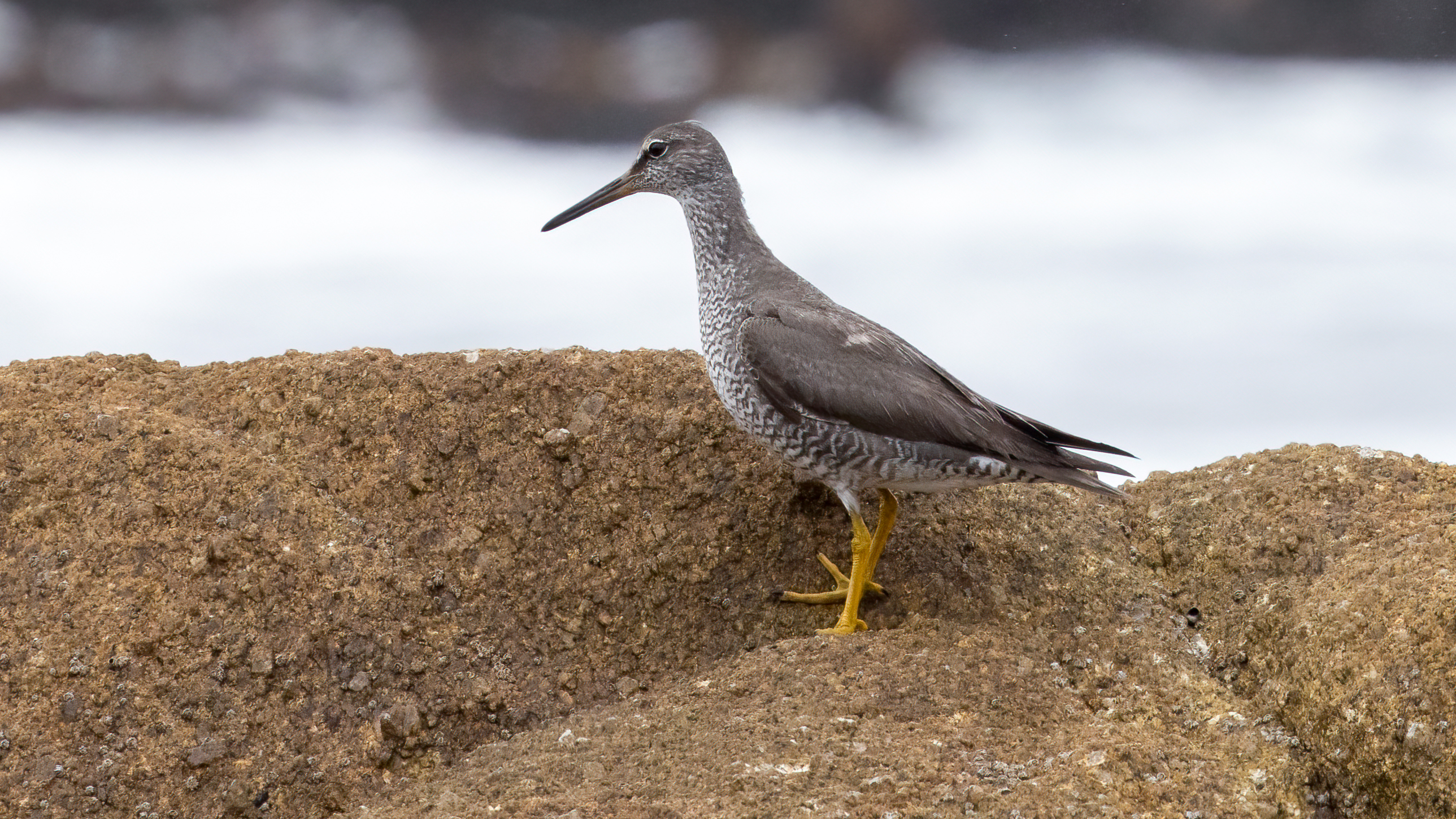
The Wandering Tattler (Tringa incana) is a medium-sized shorebird with distinctive physical features. It has a mottled grayish-brown plumage on its upperparts and white underparts. This bird is characterized by its relatively long, slightly upturned bill, which it uses to probe for invertebrates along rocky coastlines and in intertidal zones. Its legs are relatively short and yellowish-orange, and it displays a white eyeline that contrasts with its darker head.

The Wandering Tattler (Tringa incana) is a migratory shorebird with an intriguing natural history. It is known for its extensive long-distance migrations, breeding in rocky, high-latitude areas of North America and Asia, such as Alaska, and wintering along coastlines from California to South America. During the non-breeding season, these birds forage along rocky shorelines, probing for marine invertebrates in crevices and seaweed.

One interesting fact about Wandering Tattlers is their exceptional navigation abilities. They embark on some of the longest migrations of any shorebirds, flying thousands of miles between their breeding and wintering grounds. To do this, they rely on celestial cues, such as the positions of the sun and stars, making them remarkable avian navigators in the natural world.
HABITAT MOST LIKELY TO BE ENCOUNTERED
The Wandering Tattler is almost completely confined to the rocky coastlines where it continually probes the crevices for inter-tidal crustaceans and worms.

Leave a Reply