By Jim Gain

Learn 100 Birds is a photo blog series highlighting 100 common bird species found in California’s Central Valley.
Post #7 in the Learn 100 Common Valley Birds series. (Species 11 and 12/100.)
This is a three-fer post featuring the three species of Goldfinch that occur in the Central Valley. The first two, American Goldfinch and Lesser Goldfinch are Common Year-round Residents of the valley, while the third species, Lawrence’s Goldfinch is a Bonus Species Rare Year-round Resident here.
AMERICAN GOLDFINCH – Spinus tristis
Introduction
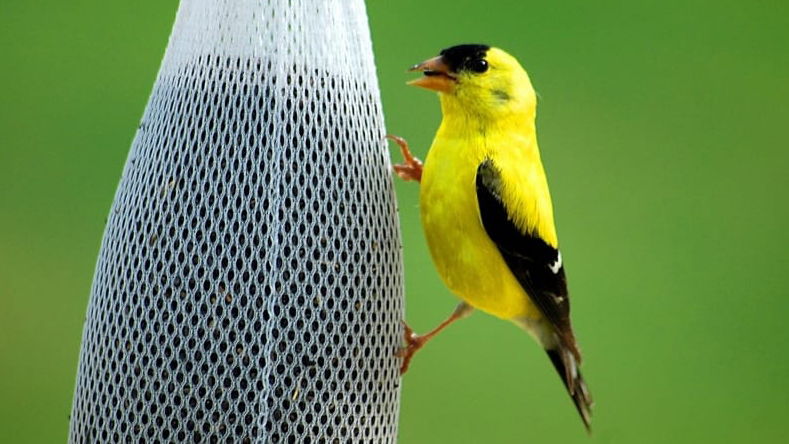
The American Goldfinch is a Common Year-round Resident. It is one of our smallest bird species and the only pure granivore (seedeater). It is a frequent visitor to home feeders that feature Black Thistle seeds.
Appearance
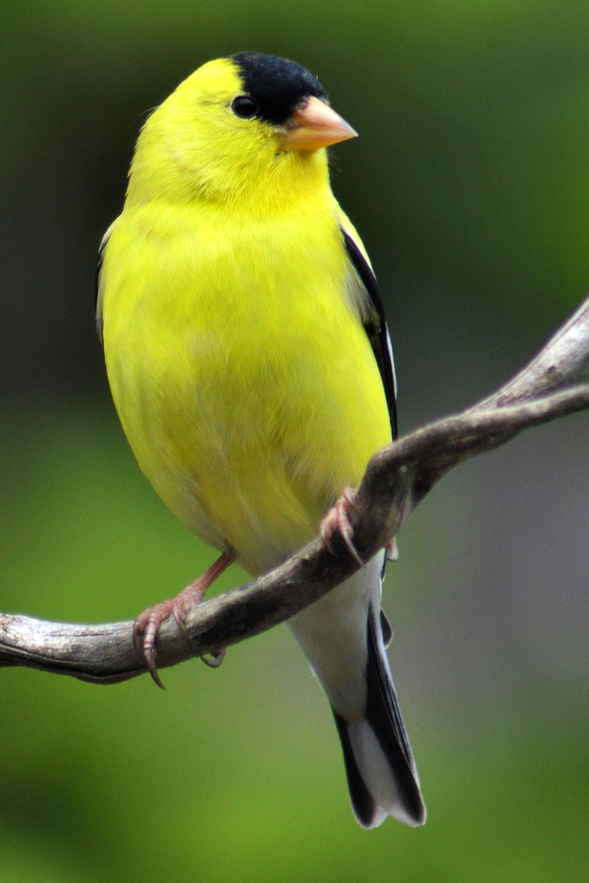
The American Goldfinch is a sexually dimorphic species in that the males and females sport entirely different plumages. From March through September, males feature a distinctive black forehead, bright yellow bodies, black wings with white stripes and white undertail feathers.

During the same time period, females have a pale lemony head and body with dark wings and white stripes.
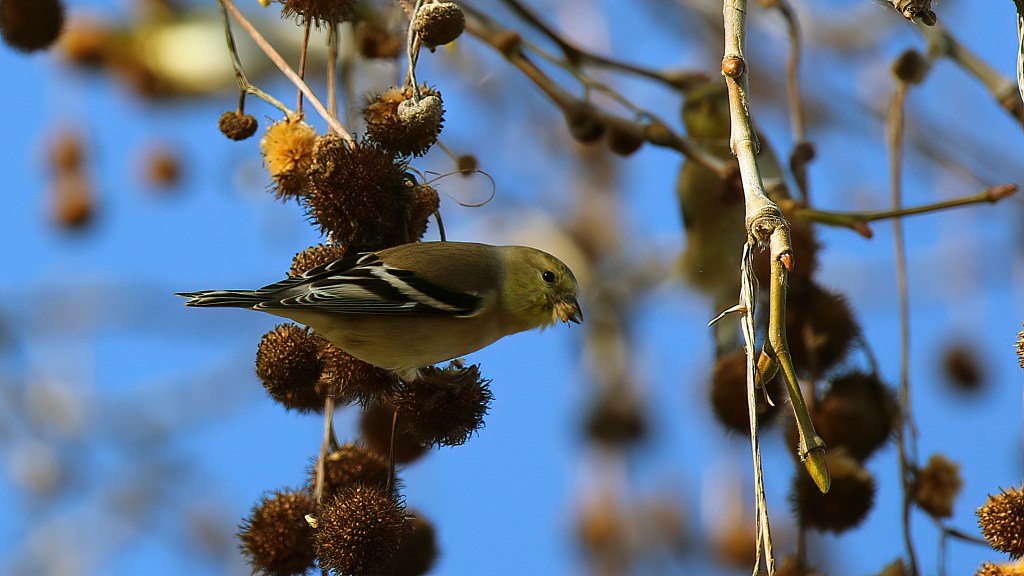
In the winter, males lose the black cap and bold yellow body feathers and molt into a pale olive-brown version of the female. Winter females take on an even paler version of the male’s winter coloration.
Distribution
American Goldfinches can be encountered in most wild grassy areas, especially those with thistles. Unlike the southern US, Valley American Goldfinches are sedentary and aren’t know to migrate far away from their wintering grounds.
LESSER GOLDFINCH – Carduelis psaltria
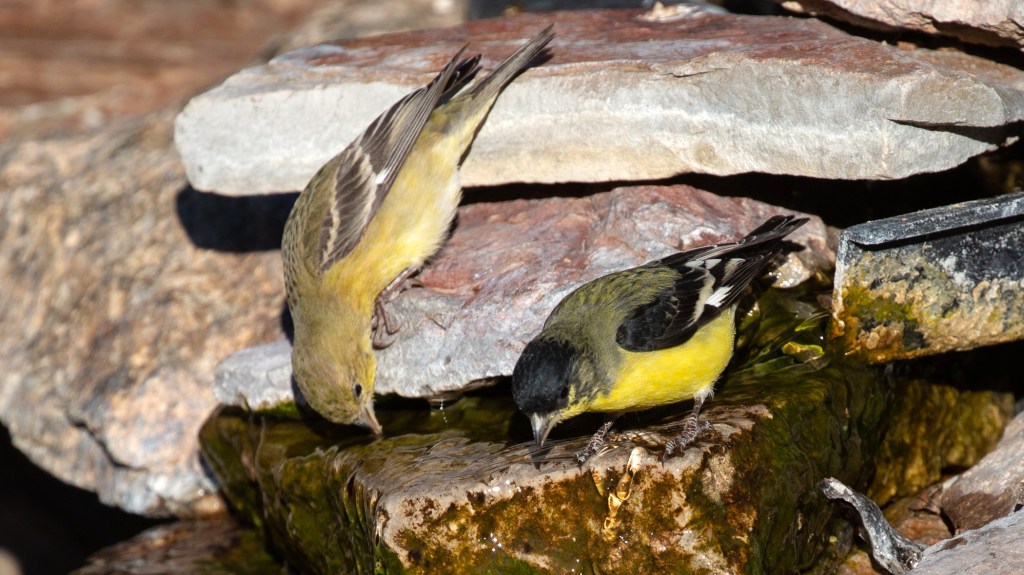
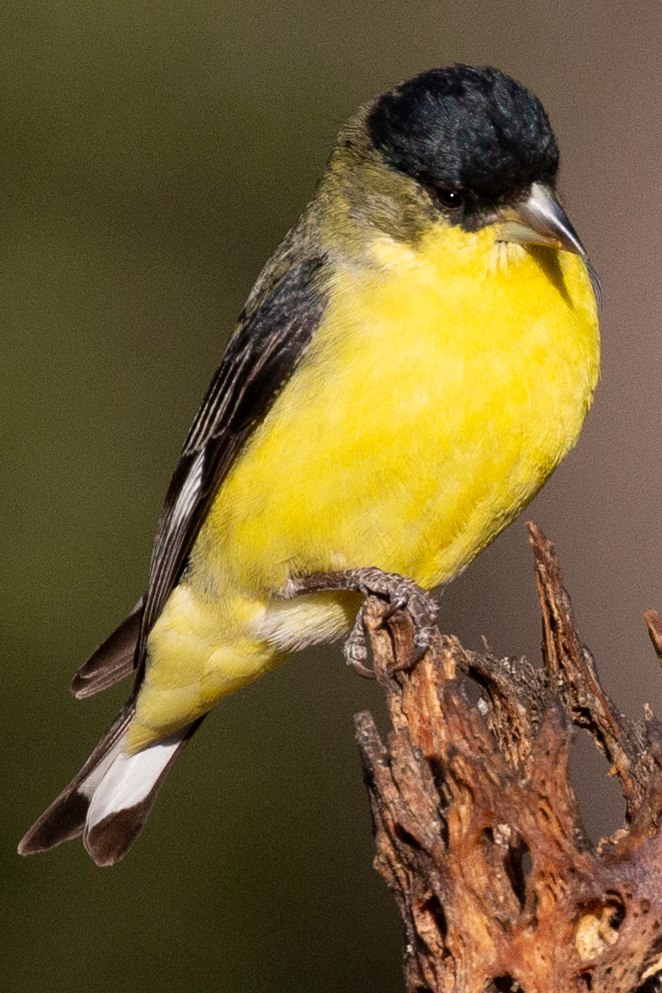
The other species of Goldfinch likely to be confused with the American, is the Lesser Goldfinch. In breeding-plumaged males, the Lesser Goldfinch sports a more extensive black cap that completely surrounds the eye and has a much darker back.
Introduction
Lesser Goldfinches are primarily seedeaters and eat mostly small weed seeds, especially thistle. They eat some small insects in the summer, particularly aphids, which they regurgitate for their young. Lesser Goldfinches are active foragers and form flocks outside of the breeding season. They often mimic short bits of other birds’ songs, and like American Goldfinches, they often call in flight.
Appearance
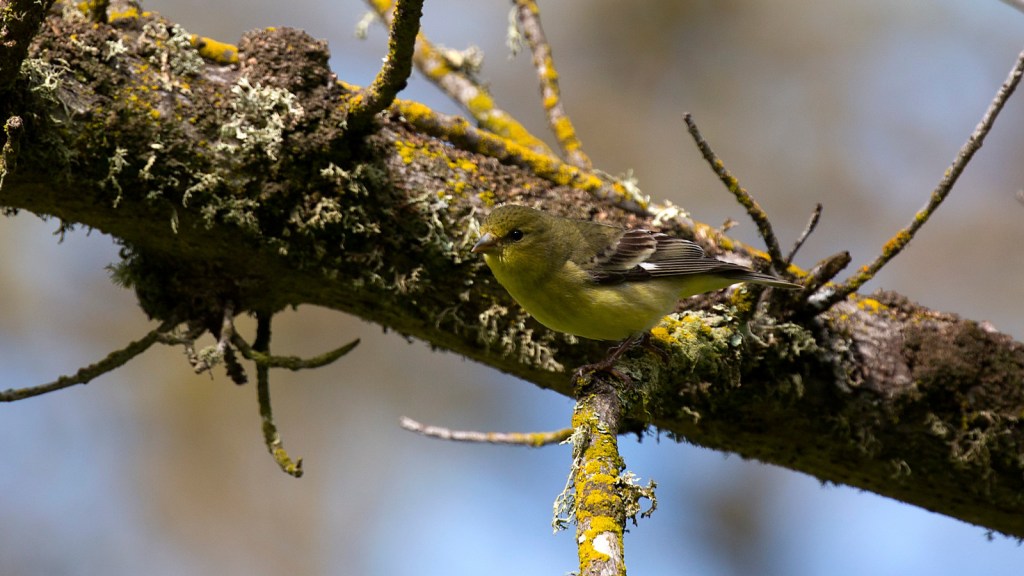
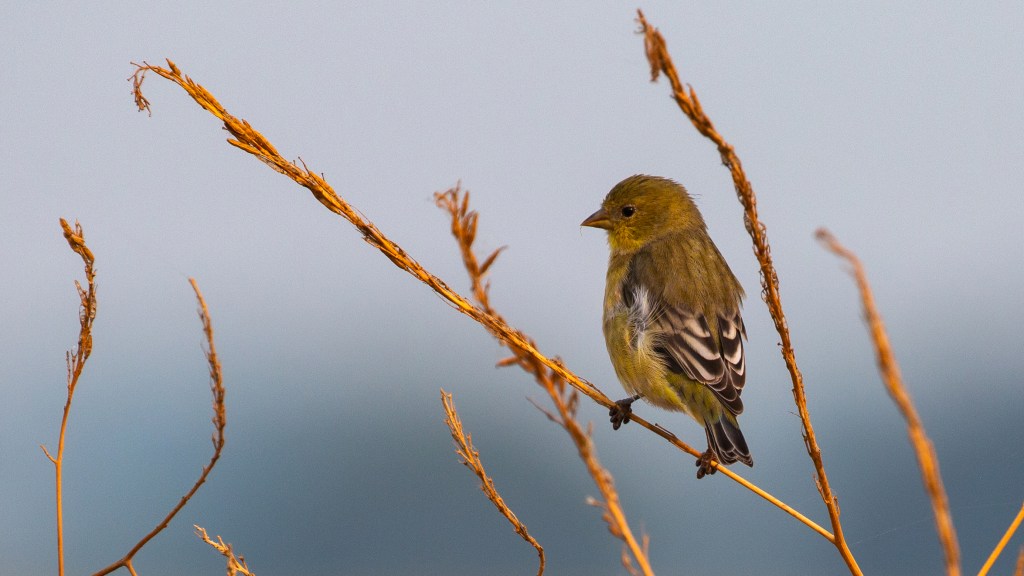
Lesser Goldfinches are small finches with bright yellow undersides. Males have greenish-brown backs, black caps and wings with two white wing-bars, and a white patch on each wing. Their tails are black with white patches on either side, and their undertail coverts are yellow (contrasting with the white undertail coverts of American Goldfinches). Females lack the black cap and wing-bars of the males, are not as brightly colored, and lack the white on the tail; they do have white patches on each wing.
Distribution
Throughout much of their range, Lesser Goldfinches are permanent residents.
BONUS BIRD: LAWRENCE’S GOLDFINCH – Spinus lawrencei
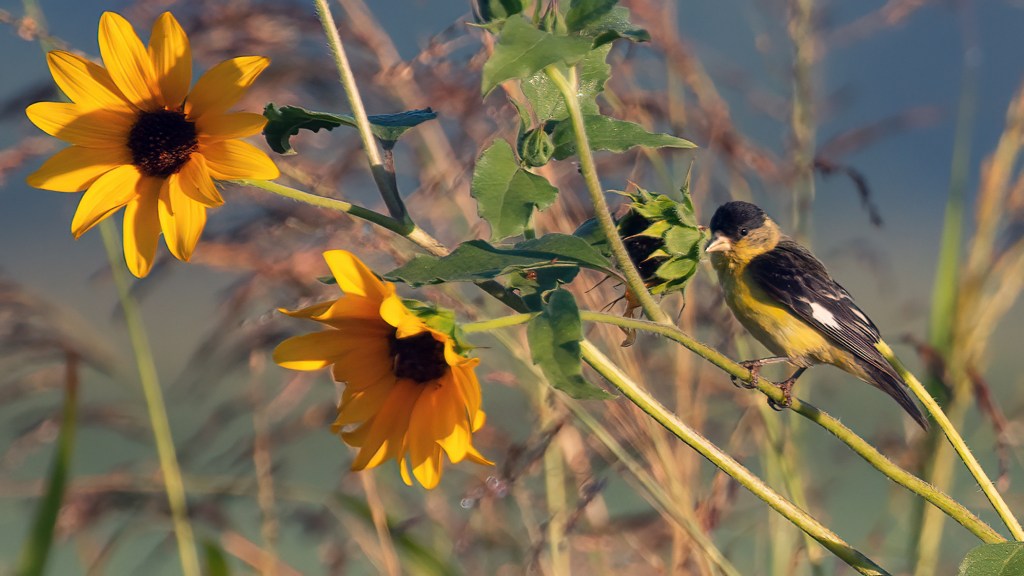
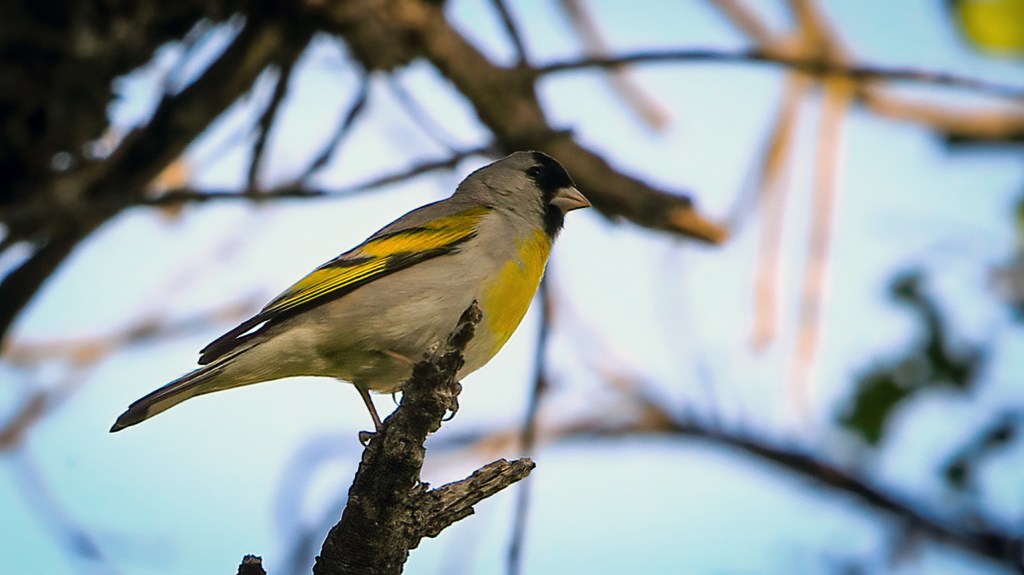
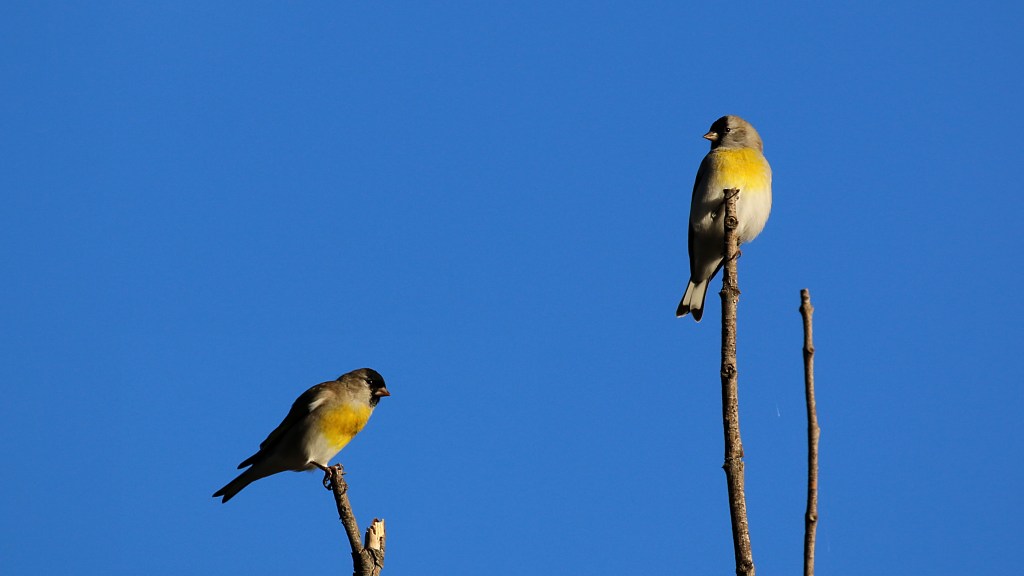
Unique among goldfinches because of its mostly gray body. Male has black forehead and throat, yellow breast, and complex black and yellow pattern on wings. It’s also a nomadic species that moves around at all times of year in search of rainfall, seeding plants, and drinking water. Though still fairly numerous within its range, Lawrence’s Goldfinch is on the Yellow Watch List for species with restricted ranges. In the Central Valley, Lawrence’s Goldfinches are Rare, but regular Year-Round Residents.
COOL FACT
Male Lawrence’s Goldfinches don’t get their lemon yellow breeding plumage through molting. Rather, the feathers become yellower as they wear, shedding their brownish color and exposing yellow parts of the feather beneath. No other goldfinches acquire breeding plumage in this manner.
Previous posts from the Learn 100 Common Valley Birds series,


 Reflections of the Natural World
Leave a reply to Valley Goldfinches | Nature Cancel reply