Western Europe Birds & Birding (#37/52): From the Highland Willow Scrub of Scotland to the Aegean Islands in the Sea of Crete, Western Europe is home to over 800 resident, migratory and vagrant birds. From songbirds to gamebirds and from waterfowl to raptors, you can find birds virtually in every nook and cranny of this beautiful area. *All images showcased in this blog series were taken and edited by me.
A Reflections of the Natural World Blog Post Series by Jim Gain
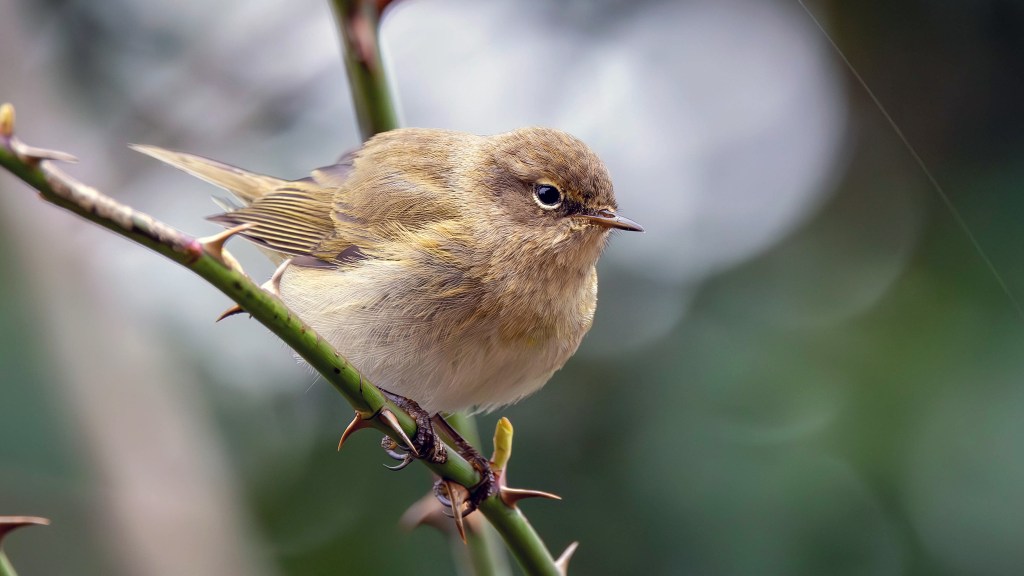
The Common Chiffchaff (Phylloscopus collybita) is a delightful leaf warbler with a wide distribution, intriguing behavior, and a penchant for insect hunting.

Physical Characteristics:
The Common Chiffchaff measures approximately 10-12 cm (4-4.7 inches) in length and weighs 6-8 grams. Its plumage is greenish-brown on the upper side and off-white below. Dark legs, a fine dark bill, and a short primary projection (the extension of flight feathers beyond the folded wing) characterize its appearance. As the plumage wears, it becomes duller and browner, and the yellow on the flanks tends to fade.
Newly fledged juveniles are browner above than adults, with yellow-white underparts. They molt about 10 weeks after acquiring their initial plumage, resulting in brighter and greener upper parts and a paler supercilium (also known as an “eyebrow”).


Diet:
The Common Chiffchaff is primarily an insectivore. Its diet consists mainly of flies, along with other small and medium-sized invertebrates. Additionally, it will consume the eggs and larvae of butterflies and moths.

Abundance and Distribution:
- These charming birds breed across Europe and Asia, with isolated populations in northwest Africa, northern and western Turkey, and northwestern Iran.
- During migration, they winter in southern and western Europe, southern Asia, and North Africa.
- Their breeding habitat includes open woodlands with some taller trees and ground cover suitable for nesting.
- In winter, Common Chiffchaffs utilize a wider range of habitats, including scrub, willow thickets, and areas near water. They can also be found in parks, gardens, hedgerows, and cultivated spaces.

IUCN Red List Status:
The Common Chiffchaff has a large range and population, which contributes to its secure status.
For more information, you can explore the IUCN Red List and learn about the conservation status of various species.

COMMON CHIFFCHAFF WAS LIFER #795

 Reflections of the Natural World
Leave a comment