
Western Europe Birds & Birding (#36/52): From the Highland Willow Scrub of Scotland to the Aegean Islands in the Sea of Crete, Western Europe is home to over 800 resident, migratory and vagrant birds. From songbirds to gamebirds and from waterfowl to raptors, you can find birds virtually in every nook and cranny of this beautiful area. *All images showcased in this blog series were taken and edited by me.
A Reflections of the Natural World Blog Post Series by Jim Gain
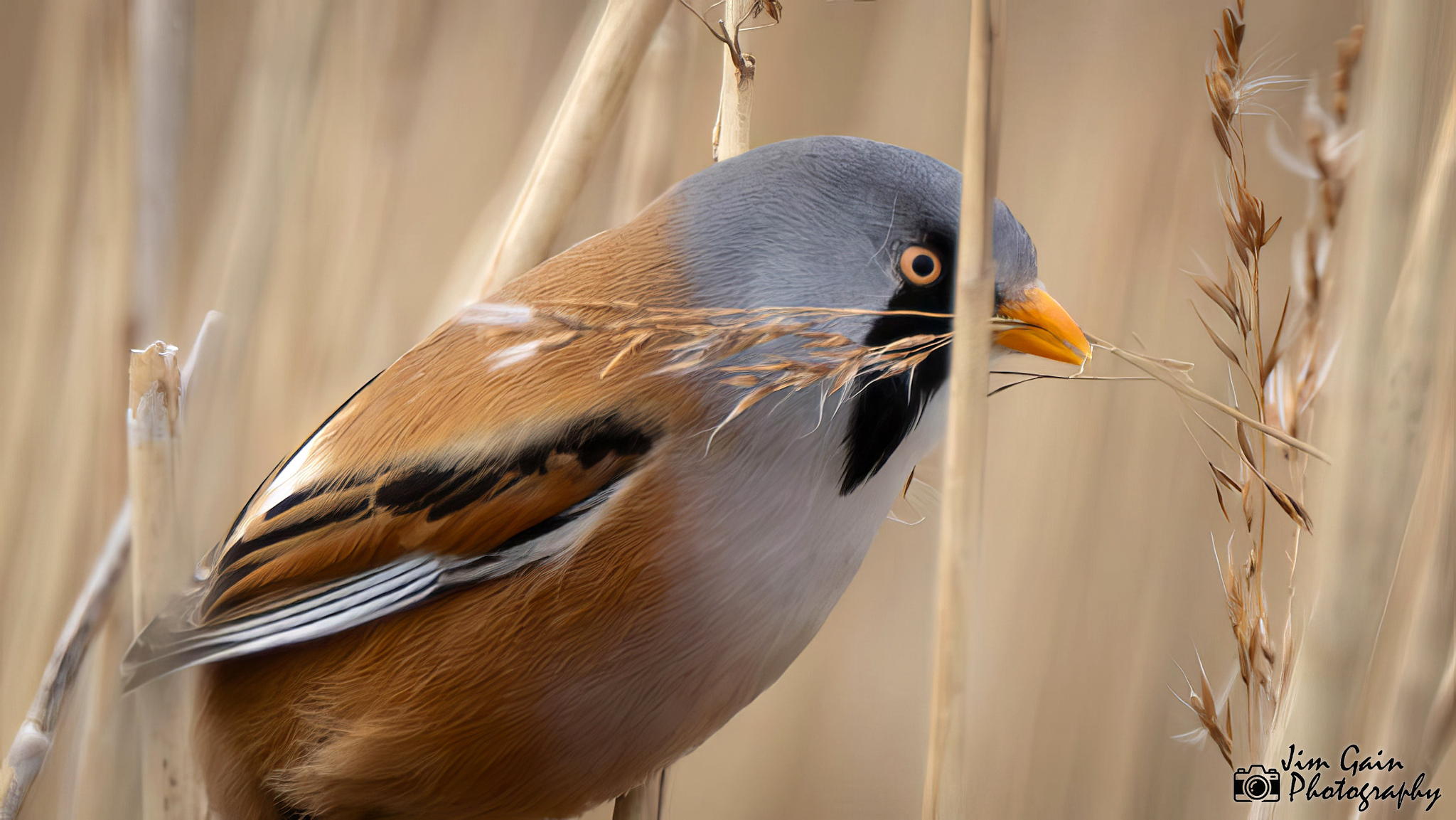
the Bearded Reedling (Panurus biarmicus) is a delightful avian resident of reed-filled habitats, sporting its distinctive “beard” and adapting its diet to the changing seasons.

Physical Characteristics:
The Bearded Reedling boasts a plump, round body with a long, thin tail. Its plumage is a delightful blend of soft brown and gray, adorned with a striking black moustache-like streak on the male’s face. Both males and females exhibit this unique facial feature, but the male’s “beard” is more pronounced. Their legs are stout and short, ideal for navigating reed beds.


Diet:
Bearded reedlings are versatile eaters. During the summer, they feast on a variety of invertebrates, including reed insects, bugs, beetles, moths, mosquitoes, spiders, snails, larvae, and pupae. In the colder months, their diet shifts to reed seeds.

Abundance and Distribution:
- These delightful birds are habitat specialists. You’ll find them primarily in reed beds, especially those dominated by common reed.
- They thrive near fresh or brackish water lakes, swamps, and rivers.
- Bearded reedlings also inhabit nearby tall grass-like vegetation, such as bulrushes and true sedges.

IUCN Red List Status:
The Bearded Reedling’s conservation status is assessed by the IUCN Red List. As of the latest evaluation, it falls under the category of Least Concern. This designation indicates that their population is relatively stable, and they are not currently facing significant threats.
For more information, you can explore the IUCN Red List and learn about the conservation status of various species.

BEARDED REEDLING WAS LIFER #1058

Leave a Reply