
Western Europe Birds & Birding (#35/52): From the Highland Willow Scrub of Scotland to the Aegean Islands in the Sea of Crete, Western Europe is home to over 800 resident, migratory and vagrant birds. From songbirds to gamebirds and from waterfowl to raptors, you can find birds virtually in every nook and cranny of this beautiful area. *All images showcased in this blog series were taken and edited by me.
A Reflections of the Natural World Blog Post Series by Jim Gain
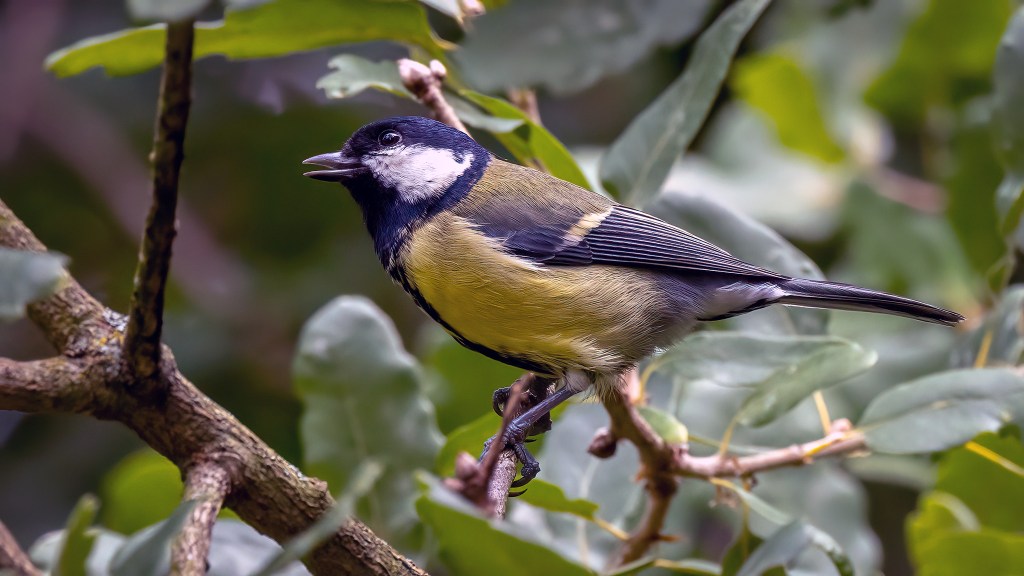
The Great Tit (Parus major) is a small songbird with a green and yellow body, a glossy black head, and white cheeks.

Physical Characteristics:
The Great Tit boasts a distinctive appearance that makes it easily recognizable. Here are its key features:
- Crown and Head: The nominate race has a bluish-black crown, black neck, throat, bib, and head.
- Cheeks and Ear Coverts: White cheeks and ear coverts.
- Breast: Bright lemon-yellow.
- Mid-line Stripe: A broad black mid-line stripe runs from the bib to the vent.
- Nape: A dull white spot on the neck turns greenish-yellow on the upper nape.
- Back: The nape and back are green-tinged with olive.
- Wings: Green wing-coverts and bluish-grey wings with a white wing bar.
- Tail: Bluish-grey with white outer tips.
- The female’s plumage is similar to the male’s but overall duller in color.

Diet:
Great Tits exhibit a versatile palate:
- Summer Diet: Primarily insectivorous, they feast on insects and spiders. Their menu includes cockroaches, grasshoppers, crickets, lacewings, earwigs, bugs, ants, flies, caddisflies, beetles, scorpionflies, harvestmen, bees, wasps, snails, and woodlice¹[1].

Abundance and Distribution:
- Population Size: The total population of Great Tits comprises approximately 433,300,000 to 703,300,000 mature individuals. In Europe, the breeding population consists of 65,100,000 to 106,000,000 pairs (equivalent to 130,000,000 to 211,000,000 mature individuals).
- Geographic Range: These songbirds are widespread across much of Eurasia. They inhabit:
- Europe: Except for Iceland and northern Scandinavia.
- Mediterranean Islands: Numerous islands.
- North Africa: Morocco, Algeria, and Tunisia.
- Middle East: Various regions.
- Central Asia: From northern Iran and Afghanistan to Mongolia.
- Northern Asia: From the Urals to northern China and the Amur Valley.
- Preferred Habitats: Great Tits thrive in open deciduous woodlands, mixed forests, forest edges, and gardens. In northern Siberia, they inhabit boreal taiga. In North Africa, they favor oak forests, Atlas cedar stands, and even palm groves.

IUCN Red List Status:
The Great Tit holds a Least Concern status on the IUCN Red List. Its adaptability to human-altered environments and widespread presence contribute to its resilience. As an important study species in ornithology, the Great Tit continues to captivate bird enthusiasts and researchers alike.
For more information, you can explore the IUCN Red List and learn about the conservation status of various species.

GREAT TIT WAS LIFER #771

 Reflections of the Natural World
Leave a comment