Western Europe Birds & Birding (#26/52): From the Highland Willow Scrub of Scotland to the Aegean Islands in the Sea of Crete, Western Europe is home to over 800 resident, migratory and vagrant birds. From songbirds to gamebirds and from waterfowl to raptors, you can find birds virtually in every nook and cranny of this beautiful area. *All images showcased in this blog series were taken and edited by me.
A Reflections of the Natural World Blog Post Series by Jim Gain
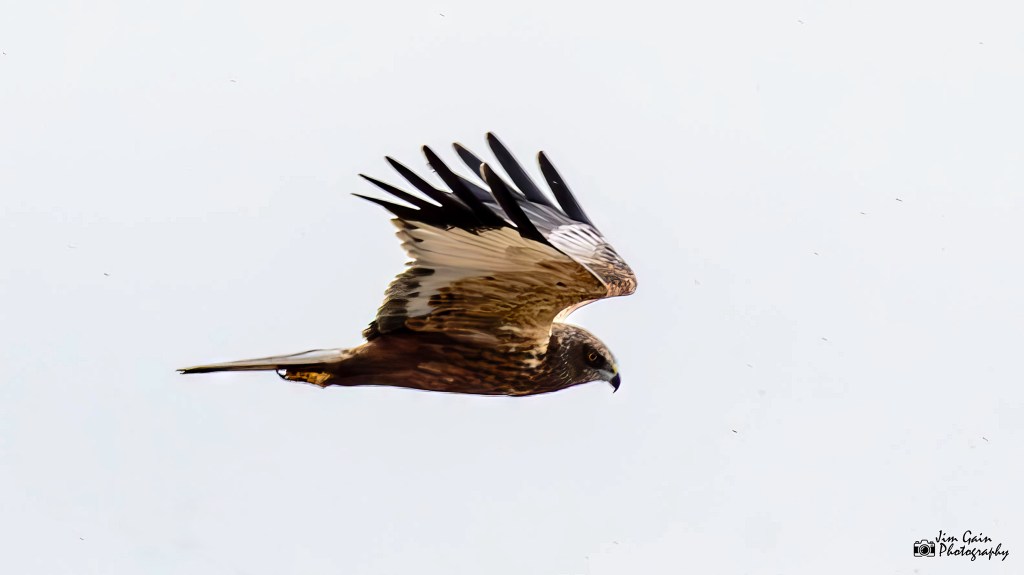
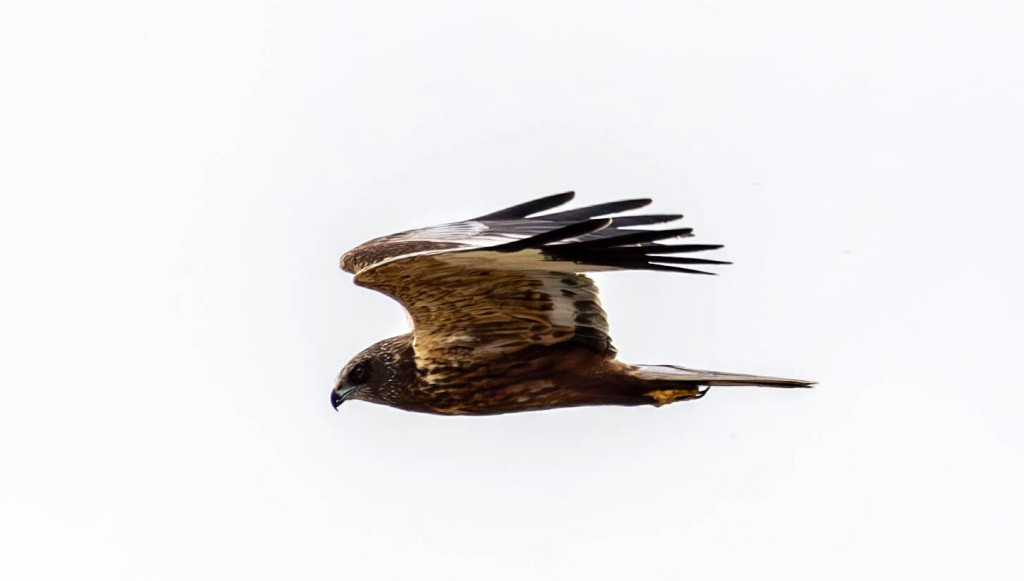
The Western Marsh Harrier (Circus aeruginosus) is an elegant raptor that graces wetlands with its presence, preying on small creatures while maintaining a stable status in the natural world.

Physical Characteristics:
The Western Marsh Harrier is a medium-sized raptor with a wingspan ranging from 110 to 130 centimeters. Its plumage exhibits sexual dimorphism:
- Male: Males have striking chestnut-brown upperparts, a pale head, and a distinctive white rump. Their underparts are pale gray with streaks.
- Female: Females are larger and exhibit a darker coloration. Their upperparts are brown, and their underparts are streaked with buff.
- In flight, both sexes display a characteristic V-shaped silhouette, with long wings and a long tail.
Diet:
The Western Marsh Harrier primarily feeds on small mammals, birds, and amphibians. Its diet includes:
- Rodents: Such as voles and mice.
- Birds: Especially young waterfowl and passerines.
- Amphibians: Frogs and toads.
It hunts by gliding low over marshes and wetlands, scanning the ground for prey.

Abundance and Distribution:
This harrier species prefers wetland habitats, including marshes, reed beds, and coastal areas. Its distribution spans across:
- Europe: From the Iberian Peninsula to Scandinavia.
- Asia: Including parts of Russia, Central Asia, and the Indian subcontinent.
- Africa: Particularly in northern Africa.
The Western Marsh Harrier is a migrant bird, with populations moving south during winter.

IUCN Red List Status:
According to the IUCN Red List of Threatened Species, the Western Marsh Harrier is currently assessed as Least Concern. However, it’s essential to monitor its habitat quality and population trends to ensure its conservation.
For more information, you can explore the IUCN Red List and learn about the conservation status of various species.

WESTERN MARSH HARRIER WAS LIFER #1057

 Reflections of the Natural World
Leave a comment