Western Europe Birds & Birding (#15/52): From the Highland Willow Scrub of Scotland to the Aegean Islands in the Sea of Crete, Western Europe is home to over 800 resident, migratory and vagrant birds. From songbirds to gamebirds and from waterfowl to raptors, you can find birds virtually in every nook and cranny of this beautiful area. *All images showcased in this blog series were taken and edited by me.
A Reflections of the Natural World Blog Post Series by Jim Gain
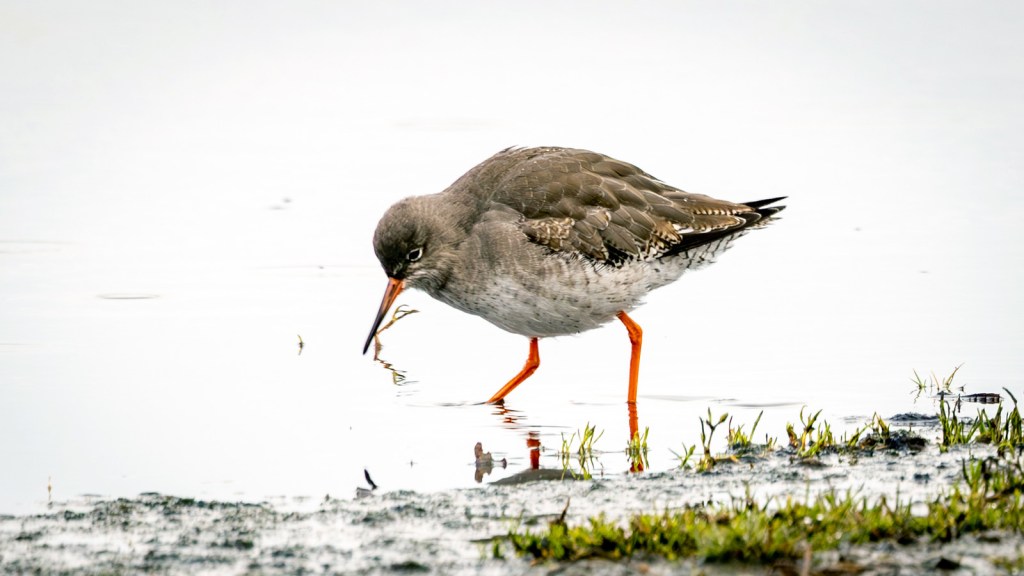
The Common Redshank (Tringa totanus) is a stocky brown wader with striking bright red legs.

Physical Characteristics:
When compared to the slenderer Spotted Redshank in juvenile and non-breeding plumage, the Common Redshank stands out. It tends to be rather wary, often alerting other birds with its loud, fluty, whistled calls. When nervous, it bobs its tail and then takes flight, revealing a flashy white trailing edge on its wings and a white rump patch. This bird feeds in muddy shallows, probing and picking with its bill. Females and young birds have shorter crests and less pronounced head markings, but their overall plumage is similar.

Diet:
Breeding Season: During breeding, the Common Redshank primarily consumes insects, spiders, and annelid worms.
Non-breeding Season: Outside the breeding season, it continues to feed on insects, spiders, and annelid worms. Additionally, it includes mollusks, crustaceans (especially amphipods like Corophium spp.), and occasionally other prey.

Abundance and Distribution:
The Common Redshank boasts an extremely large range, spanning across various realms: Afrotropical, Indomalayan, Oceanic, and Palearctic.
It inhabits freshwater, terrestrial, and marine biomes.

IUCN Red List Status:
Due to its large population size and lack of significant decline, it is evaluated as Least Concern according to the IUCN Red List criteria.
For more information, you can explore the IUCN Red List and learn about the conservation status of various species.

COMMON REDSHANK WAS LIFER # 809


 Reflections of the Natural World
Leave a reply to Birder’s Journey Cancel reply