
Chronicles of a Birders Life List
Over the past 40 years I have had the good fortune to photographically document 85% of the bird species added to my “Life List.” This blog series showcases the images and anecdotal accounts that document those “Lifer” sightings and a little about the environment and culture of the area. This Lifer blog series begins with the first LIFER outside of the US, Lifer #624 and proceeds chronologically forward from there.
A Reflections of the Natural World Blog Post Series by Jim Gain
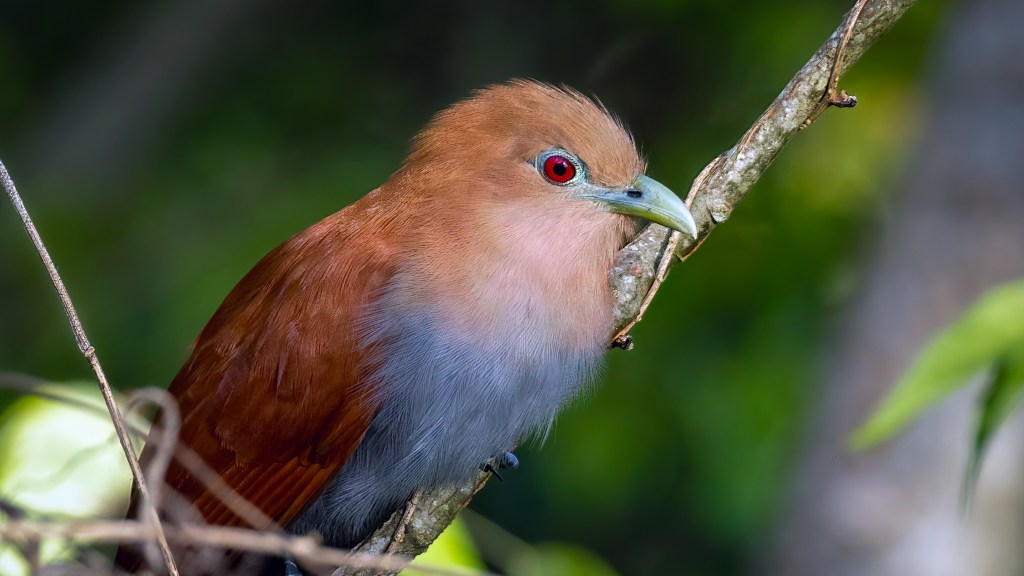
Squirrel Cuckoo (Piaya cayana) > Cuculidae > Cuculiformes
IDENTIFICATION: Very striking and long-tailed bright rusty cuckoo, widespread in tropical lowlands and locally up into foothills. No similar species in Mexico and Central America. Occurs in a wide range of wooded and forest edge habitats. Mostly forages stealthily at mid-upper levels in trees, where can be surprisingly difficult to see. Often seen swooping across roads and eliciting a ‘wow’ reaction. Underside of white-tipped tail feathers is rusty overall in West Mexico, blackish overall in other areas.

FIRST “LIFER” OBSERVATION:
Birding with: Miguel Amar Uribe, Claudio Gomez, and Santiago Contreras from Mexico Kan Tours
Date First Observed: 10 Jan 2022 @ El Tajo, Yucatán, MX
Carrt. El Tajo, Yucatán, MX (21.395, -88.565) | MX-YUC
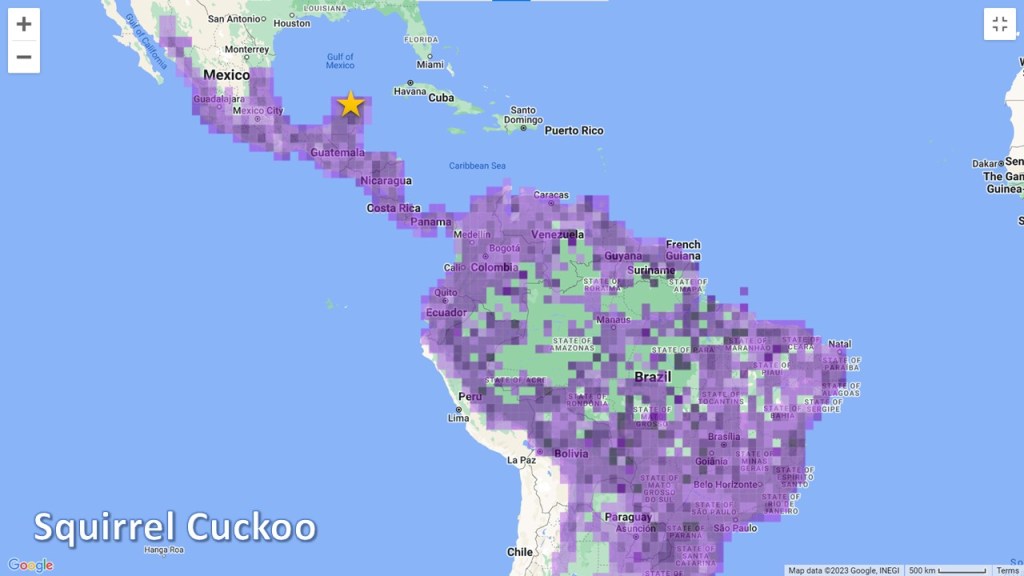
SPECIES GLOBAL eBIRD DISTRIBUTION MAP
Yellow Star indications the location of my Lifer sighting
DETAILS ABOUT SIGHTING: We found an Army Ant swarm working its way in the vegetation along the side of the road. We first saw several Groove-billed Anis and then saw this flashy, gorgeous Squirrel Cuckoo. While its head and upper body were in the open most of the time, with such a long tail, I had a hard time getting the entire bird in view. I would eventually see this species in Quintana Roo, Campeche, Belize and Guatemala.
PHOTOS TAKEN: Image titles indicate location.


ABOUT THE AREA: The northern regions of the State of Yucatan are composed of Yucatan Dry Forests where the climate is tropical subhumid with a long dry season. The average annual rainfall in this ecoregion does not exceed 1,200 mm per year. Dominant vegetative species in the central portion of the region include wild tamarind and Jamaican dogwood trees. They are often intermixed with other tree species such as Spanish cedar, gumbo-limbo, dryer’s mulberry, and Spanish elm. In the northern part of the ecoregion, near the coast, cacti become more abundant. The dry forests of Yucatán constitute a unique island of vegetation in the Gulf of Mexico region. They are isolated from other dry forests by the sea and by a vast extension of moist forests in the Maya region.

Miguel Amar Uribe, Claudio Lopez, Santiago Contreras and I spent the morning and early afternoon in search of several of the Yucatan specialty birds that can occur in these dry forests; such as Yucatan Poorwill, Yucatan Wren, Yucatan Woodpecker, Yucatan Flycatcher, Yucatan Vireo, Mexican Sheartail, Yucatan Gnatcatcher and Orange Oriole. Over the course of the next 7 hours we would find 15 new “Lifers” for me.
Previous 3 posts in my LIFER Blog Series.


 Reflections of the Natural World
Leave a comment