
Chronicles of a Birders Life List
Over the past 40 years I have had the good fortune to photographically document 85% of the bird species added to my “Life List.” This blog series showcases the images and anecdotal accounts that document those “Lifer” sightings and a little about the environment and culture of the area. This Lifer blog series begins with the first LIFER outside of the US, Lifer #624 and proceeds chronologically forward from there.
A Reflections of the Natural World Blog Post Series by Jim Gain


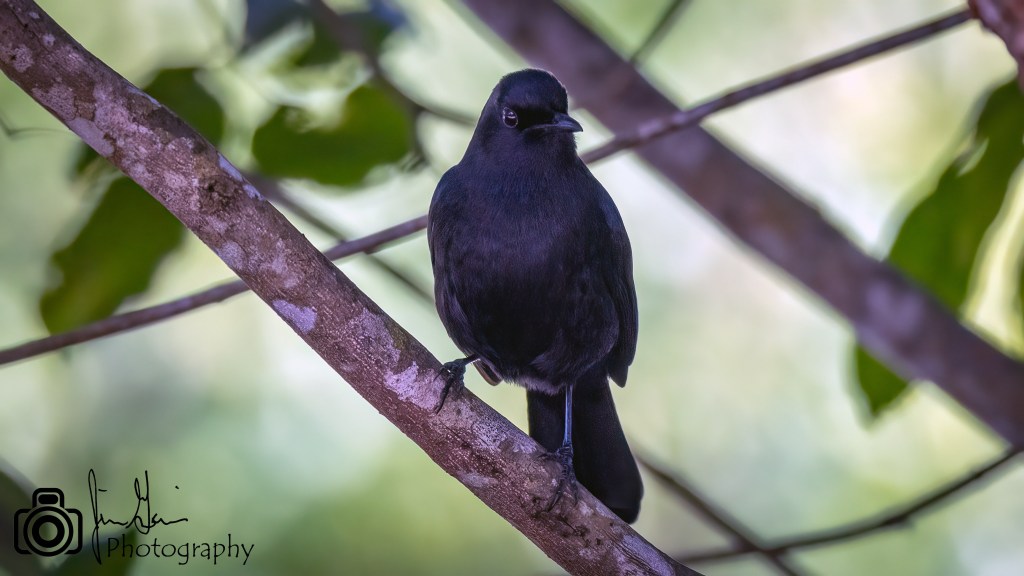
Black Catbird (Laterallus ruber) > Rallidae > Gruiformes
IDENTIFICATION: Slender-billed, glossy black bird of humid forest, woodland, thickets, and overgrown clearings; shape and habits like Gray Catbird of North America. Common on Cozumel Island, but generally uncommon to rare on the Yucatan mainland. Often sings from a prominent perch, but otherwise rather retiring and easily overlooked, mainly at low levels in bushes; also hops on the ground, flipping and fanning its tail. Told from other black songbirds in its geographic range by habits and slender bill.
CONSERVATION STATUS WARNING: The IUCN considers Black Catbird to be in the Near Threatened Red List Category. Despite the fact that the population trend appears to be decreasing, the decline is not believed to be sufficiently rapid to approach the thresholds for Vulnerable under the population trend criterion (>30% decline over ten years or three generations).

FIRST “LIFER” OBSERVATION:
Birding with: Miguel Amar Uribe from Mexico Kan Tours and my wife Maria
Date: 10 Dec 2021 @ San Miguel Water Treatment Plant, Cozumel Island, MX
Planta de Tratamiento de Aguas Residuales de San Miguel | MX-ROO
SPECIES GLOBAL eBIRD DISTRIBUTION MAP
Yellow Star indications the location of my Lifer sighting

DETAILS ABOUT SIGHTING: As is typical with all rails, they are very secretive and usually heard long before they are seen. Although they can be easily coaxed out with a little call playback. When we arrived at the water treatment plant it was quite windy and therefore hard to hear bird calls. Fortunately after a half hour, the winds died down and the Ruddy Crakes spontaneously started calling. We only saw one briefly as it scooted through an opening in the marsh. Fortunately I was able to get some really good images on later trips.
PHOTOS TAKEN: No images were captured of the first crakes on Cozumel, but many were successfully photographed on subsequent birding expeditions. All images below are from near Río Lagartos, Yucatán, MX


Previous 3 posts in my LIFER Blog Series.


 Reflections of the Natural World
Leave a comment