
Chronicles of a Birders Life List
Over the past 40 years I have had the good fortune to photographically document 85% of the bird species added to my “Life List.” This blog series showcases the images and anecdotal accounts that document those “Lifer” sightings and a little about the environment and culture of the area. This Lifer blog series begins with the first LIFER outside of the US, Lifer #624 and proceeds chronologically forward from there.
A Reflections of the Natural World Blog Post Series by Jim Gain
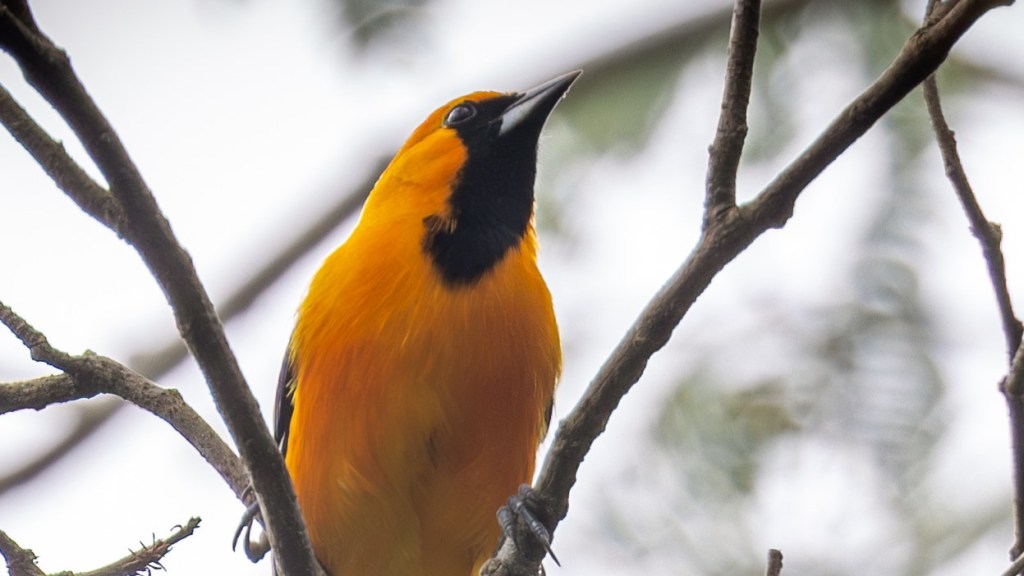
Orange Oriole (Icterus auratus) > Icteridae > Passeriformes
IDENTIFICATION: Attractive orange-and-black oriole of the Yucatan Peninsula, found in brushy woodland, forest edge, and semi-open areas with hedges and scattered trees. Rather similar to local population of Hooded Oriole, which often occurs in the same areas, even in the same flocks at flowering trees. Male Orange Oriole has an orange back, and both sexes have a straight bill (not slightly decurved, as on Hooded), and a less extensive black face and throat mask than Hooded.
FIRST “LIFER” OBSERVATION:
Birding with: My wife Maria
Date: 06 Dec 2021 @ Cobá Archeological Ruins, Quintana Roo, MX
Zona Arqueológica Cobá | MX-ROO
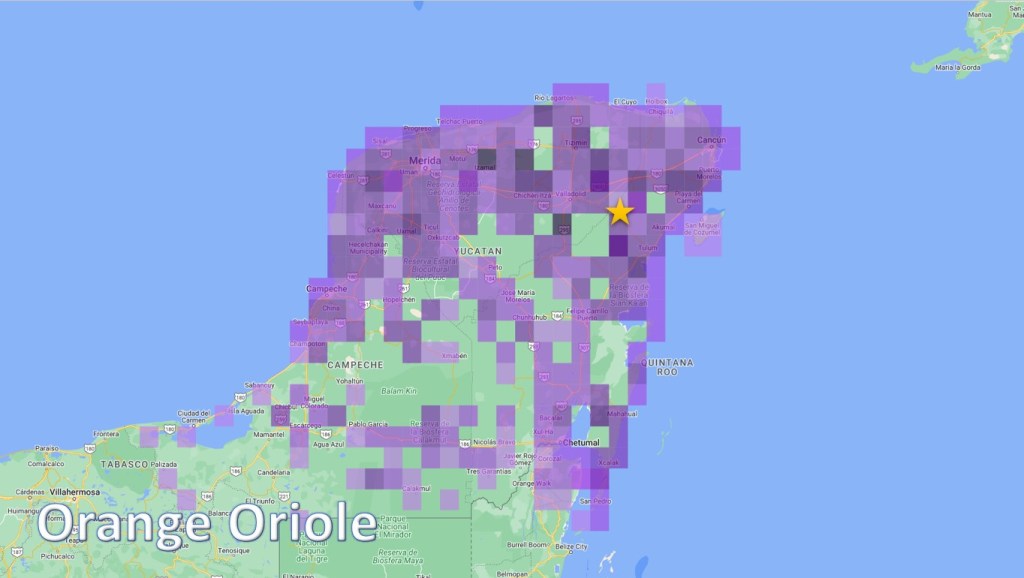
SPECIES GLOBAL eBIRD DISTRIBUTION MAP
Yellow Star indicates the location of my Lifer sighting
DETAILS ABOUT SIGHTING: In Cobá, Maria and I were walking along the trail to the Grupo Nohoch Mul ruins absolutely enjoying the shade and nice road. My attention was grabbed by a small flock of Yucatan Jays that seemed to be mobbing something. And then I noticed at first one woodcreeper and then more. Suddenly we were surrounded by lots of birds flying back and forth to the ground and back up to the trees. Then I noticed the SWARM! A huge swarm of Army Ants was making its was along the side of the road. I discovered 5 LIFER bird species working around this ant swarm.
4th Cobá Ant Swarm Lifer
Lifer #666 Orange Oriole. Right after recording the Lifer Northern Barred-Woodcreeper, a Ruddy Woodcreeper (non-lifer) came in to the fray soon followed by two Tawny-winged Woodcreepers and a single Olivaceous Woodcreeper. Up higher in the trees, a single orange Oriole flew in closer.
PHOTOS TAKEN: Images below were taken at Cobá.


Previous 3 posts in my LIFER Blog Series.


 Reflections of the Natural World
Leave a comment