
Chronicles of a Birders Life List
Over the past 40 years I have had the good fortune to photographically document 85% of the bird species added to my “Life List.” This blog series showcases the images and anecdotal accounts that document those “Lifer” sightings and a little about the environment and culture of the area. This Lifer blog series begins with my first LIFER outside of the US, Lifer #624 and proceeds chronologically forward from there.
A Reflections of the Natural World Blog Post Series by Jim Gain

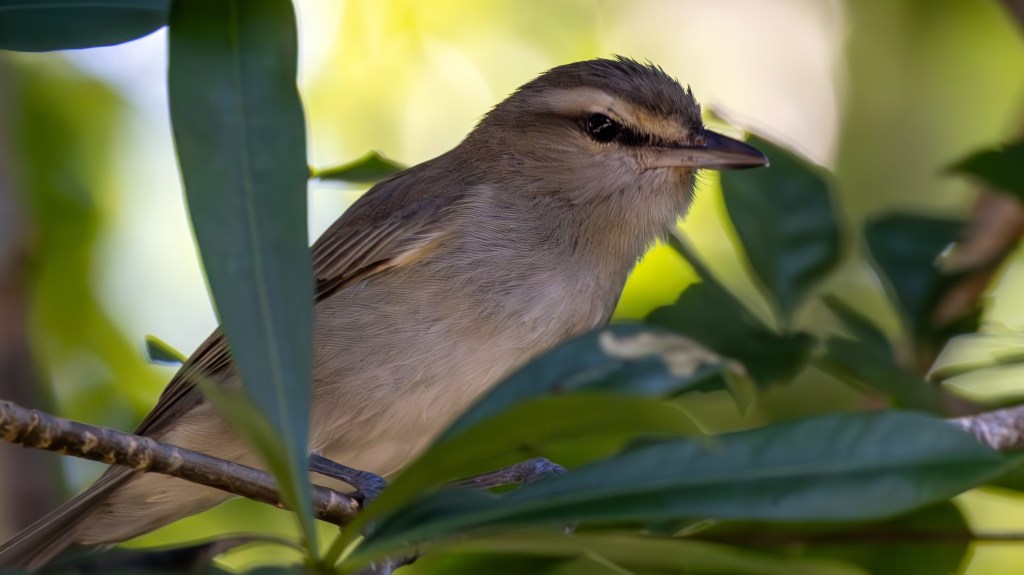
Yucatan Vireo (Vireo magister) > Vireonidae > Passeriformes
IDENTIFICATION: Large, big-billed vireo of eastern Yucatan Peninsula, offshore islands, and Grand Cayman. Forages low to high in tropical woodland, thickets, and overgrown clearings; like many vireos, often found eating berries. Rather drab but distinctive, with olive-gray upperparts, dingy underparts, and a broad pale eyebrow set off by a thick black eyestripe thickest forward of eyes.
FIRST “LIFER” OBSERVATION:
Birding with: My wife Maria
Date: 03 Dec 2021 @ Parque Nacional Tulum, Quintana Roo, MX
PN Tulum | MX-ROO
SPECIES GLOBAL eBIRD DISTRIBUTION MAP
Yellow Star indications the location of my Lifer sighting
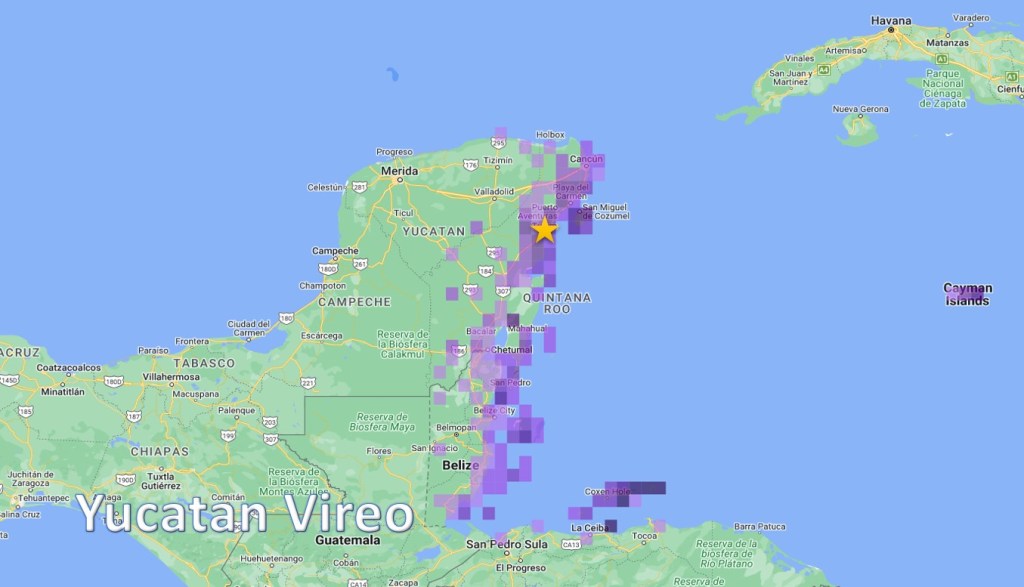
DETAILS ABOUT SIGHTING: This visit was certainly not primarily for birds, but for the breath-taking beautiful Mayan Temples and the surrounding tropical paradise. Unusual for its close proximity to the ocean, the buildings are surrounded by palm trees and other mixed broadleaf vegetation. I got two new Lifers, the Mangrove Swallow and this species, the Yucatan Vireo. We were also treated to repeat views of Yucatan Jays, Tropical Mockingbirds, and Olive-throated Parakeets.
PHOTOS TAKEN: No photos were taken of this species at Tulum where we first saw them. Fortunately, I was able to photograph them on Cozumel Island.


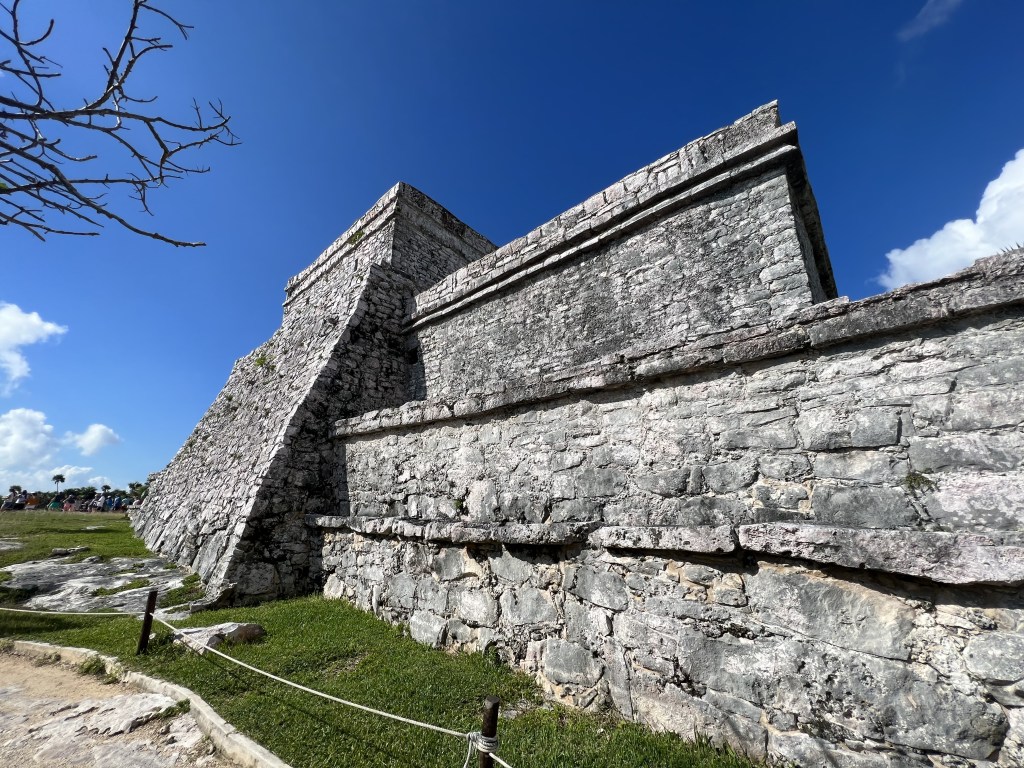
BACKGROUND ABOUT THE TULUM ARCHEOLOGICAL ZONE

The 13th-century, walled Mayan archaeological site at Tulum National Park overlooks the sea. It incorporates the clifftop Castillo, built as a watchtower, and the Templo de las Pinturas, with a partially restored mural. Inland, the Cobá archaeological site has pyramid-shaped temples with views over the surrounding jungle.


Previous 3 posts in my LIFER Blog Series.


 Reflections of the Natural World
Leave a comment