

Chronicles of a Birders Life List
Over the past 40 years I have had the good fortune to photographically document 85% of the bird species added to my “Life List.” This blog series showcases the images and anecdotal accounts that document those “Lifer” sightings and a little about the environment and culture of the area. This Lifer blog series begins with my first LIFER outside of the US, Lifer #624 and proceeds chronologically forward from there.
A Reflections of the Natural World Blog Post Series by Jim Gain

Spot-breasted Wren (Pheugopedius maculipectus) > Troglodytidae > Passeriformes

IDENTIFICATION: Small, skulking wren of vine tangles and thickets in tropical lowlands. Like most wrens, heard far more often than seen. Rollicking, ‘happy,’ whistled song is a duet between male and female, keeping them in touch with each other. Rising call note sounds like a finger run along a comb. Plumage is rich rusty brown overall, with white eyebrow and dense black spotting on whitish breast.
FIRST “LIFER” OBSERVATION:
Birding with: Miguel Amar Uribe from Mexico Kan Tours and my wife Maria
Date: 02 Dec 2021 @ Zona Arqueológica Muyil (Chunyaxché), Quintana Roo, MX
Zona Arqueológica Muyil (Chunyaxché) | MX-ROO
SPECIES GLOBAL eBIRD DISTRIBUTION MAP
Yellow Star indications the location of my Lifer sighting
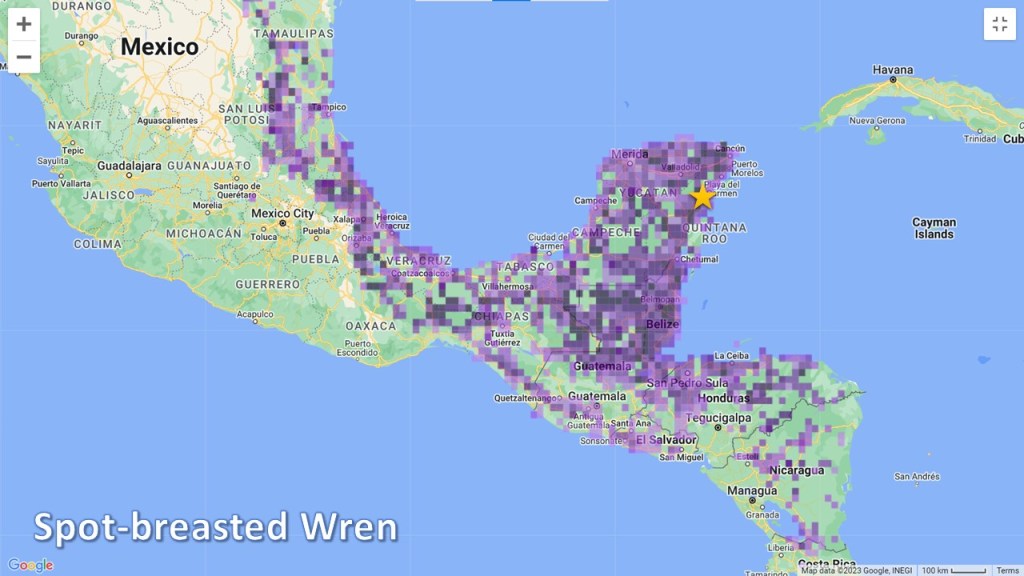
DETAILS ABOUT SIGHTING: Highway 307, the main road from Tulum to Felipe Carrillo Puerto and eventually to Chetumal, runs right through the town of Chunyaxché and effectively separates the taller forerst habitat northwest of town from the ruins area with shorter vegetation and includes mangrove swamps. After strolling through the town side of the area, we headed east down the side road to see the lagoon. After birding the lagoon we returned through the mangrove swamp on an interesting boardwalk and then explored the ruins and park area back at the entrance. This circuit netted us 4 new Lifers, #649 to #652.
Muyil Ruins Lifer # 651 – Spot-breasted Wren
While we were finishing up taking photographs of the Wood-Rail, Miguel heard a new “Lifer” for me, a Spot-breasted Wren. It was chattering up a storm and keeping hidden as it moved through the thick vegetation. I only got fleeting glimpses of rufous cap and black-and-white spotted chest. No photos from my lifer encounter, but fortunately I was able to see and photograph it many times in southern Quintana Roo, Belize and Guatemala.
PHOTOS TAKEN: None of the actual “Lifer” bird, but several from other sites. All images are tagged with the location.


BACKGROUND ABOUT THE MUYIL ARCHEOLOGICAL ZONE
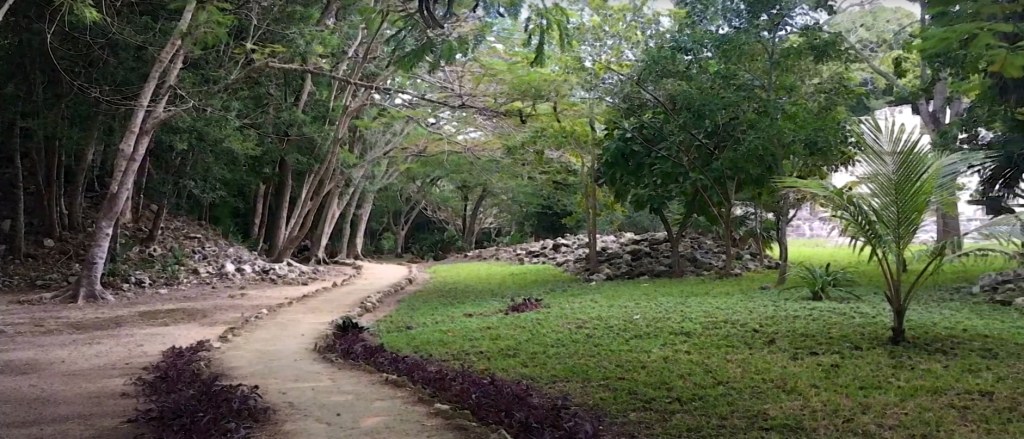
Muyil (also known as Chunyaxché) was one of the earliest and longest inhabited ancient Maya sites on the eastern coast of the Yucatan Peninsula. It is located approximately 15 kilometres (9.3 mi) south of the coastal site of Tulum, in the Municipality of Felipe Carrillo Puerto in the state of Quintana Roo, Mexico. The ruins of Muyil are an example of Peten architecture, like those found in southern Mayan sites with their steep walled pyramids such as Tikal in Guatemala. It is situated on the Sian Ka’an lagoon, a name meaning “Where the Sky is Born”. Muyil was located along a trade route on the Caribbean once accessible via a series of canals.


Previous 3 posts in my LIFER Blog Series.


 Reflections of the Natural World
Leave a comment