
Chronicles of a Birders Life List
Over the past 40 years I have had the good fortune to photographically document 85% of the bird species added to my “Life List.” This blog series showcases the images and anecdotal accounts that document those “Lifer” sightings and a little about the environment and culture of the area. This Lifer blog series begins with my first LIFER outside of the US, Lifer #624 and proceeds chronologically forward from there.
A Reflections of the Natural World Blog Post Series by Jim Gain

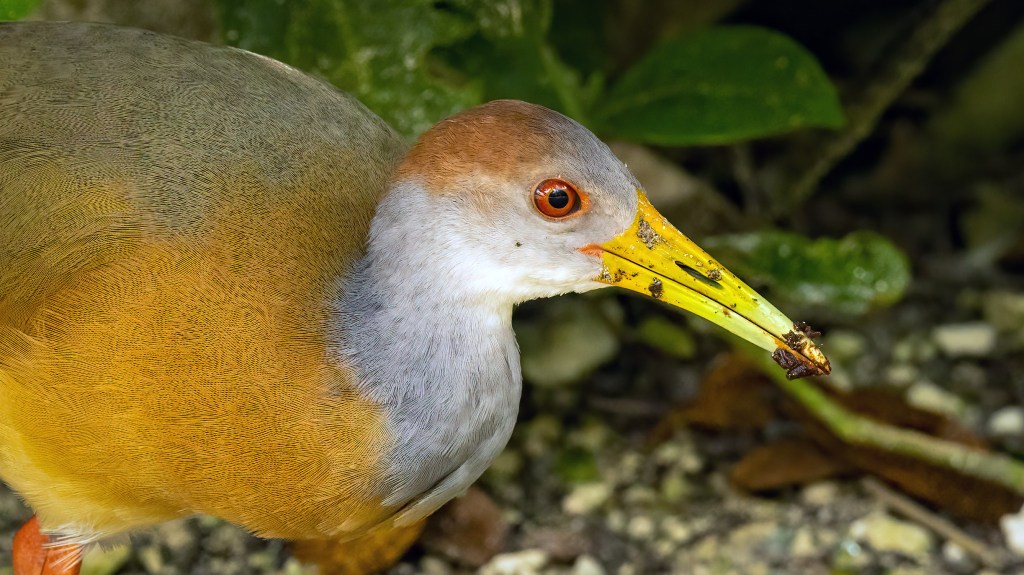
Russet-naped Wood-Rail (Aramides albiventris) > Rallidae > Gruiformes

IDENTIFICATION: Large, brightly colored, chicken-like rail of freshwater marshes and damp woodland, less often occurs in mangroves. Unlike many rails, can be conspicuous, even bold, walking in the open along the edge of ponds and rivers, twitching its short black tail; usually seen singly or in pairs. Note long yellowish bill, hot-pink legs, and gray head and neck contrasting with orangey breast. Similar to Gray-cowled Wood-Rail, but barely any range overlap, and Russet-naped has a bright reddish-brown patch on the back of the head.
FIRST “LIFER” OBSERVATION:
Birding with: Miguel Amar Uribe from Mexico Kan Tours and my wife Maria
Date: 02 Dec 2021 @ Zona Arqueológica Muyil (Chunyaxché), Quintana Roo, MX
Zona Arqueológica Muyil (Chunyaxché) | MX-ROO
SPECIES GLOBAL eBIRD DISTRIBUTION MAP
Yellow Star indications the location of my Lifer sighting

DETAILS ABOUT SIGHTING: Highway 307, the main road from Tulum to Felipe Carrillo Puerto and eventually to Chetumal, runs right through the town of Chunyaxché and effectively separates the taller forerst habitat northwest of town from the ruins area with shorter vegetation and includes mangrove swamps. After strolling through the town side of the area, we headed east down the side road to see the lagoon. After birding the lagoon we returned through the mangrove swamp on an interesting boardwalk and then explored the ruins and park area back at the entrance. This circuit netted us 4 new Lifers, #649 to #652.
Muyil Ruins Lifer # 650 – Russet-naped Wood-Rail
We had walked down the road from the restaurant east towards the lagoon and were specifically looking for the Wood-Rail as Miguel said they were frequently seen there. We carefully surveyed the last 100 yards unsuccessfully and looked out over the lagoon from the pier. While it was beautiful, it was essentially devoid of life except for some very distant Little Blue Herons. As I was trying to get photos of the herons for proof of sighting, Miguel called to me. A Wood-Rail was slowly emerging from the edges of the swamp. It gradually worked its way on to the road and casually sauntered along ignoring us completely. It did get quite aggitated however when another Wood-Rail came out for the other side of the entrance road.
PHOTOS TAKEN: In addition to the two birds here at Muyil, I also saw them at Cobá, Tikal in Guatemala and at Crooked Tree Wildlife Sanctuary in Belize.


BACKGROUND ABOUT THE MUYIL ARCHEOLOGICAL ZONE
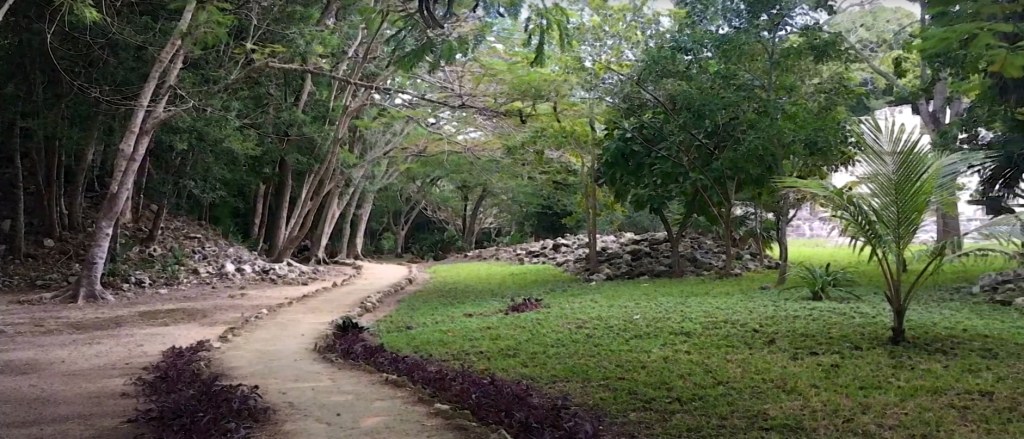
Muyil (also known as Chunyaxché) was one of the earliest and longest inhabited ancient Maya sites on the eastern coast of the Yucatan Peninsula. It is located approximately 15 kilometres (9.3 mi) south of the coastal site of Tulum, in the Municipality of Felipe Carrillo Puerto in the state of Quintana Roo, Mexico. The ruins of Muyil are an example of Peten architecture, like those found in southern Mayan sites with their steep walled pyramids such as Tikal in Guatemala. It is situated on the Sian Ka’an lagoon, a name meaning “Where the Sky is Born”. Muyil was located along a trade route on the Caribbean once accessible via a series of canals.


Previous 3 posts in my LIFER Blog Series.


 Reflections of the Natural World
Leave a comment