
Shorebirds and Seabirds of the Central California Coastline – Blog Series Post #8
From its rocky shoreline to the depths of the great Monterey Canyon, the Central California coastline and its offshore waters are home to a diverse array of interesting birds. Its habitat diversity and famous coastal cold-water upwelling currents are the secret to its exceptional avian population. In each blog post followers will enjoy my high-quality photographs while learning about the natural history of these interesting birds.
A Reflections of the Natural World Blog Post Series by Jim Gain

WHAT’S IN A NAME
Cassin’s Auklet – Ptychoramphus aleuticus
Gr. ptukhos plate, fold; rhamphos bill; Aleutian Is., Alaska, USA
PHYSICAL CHARACTERISTICS
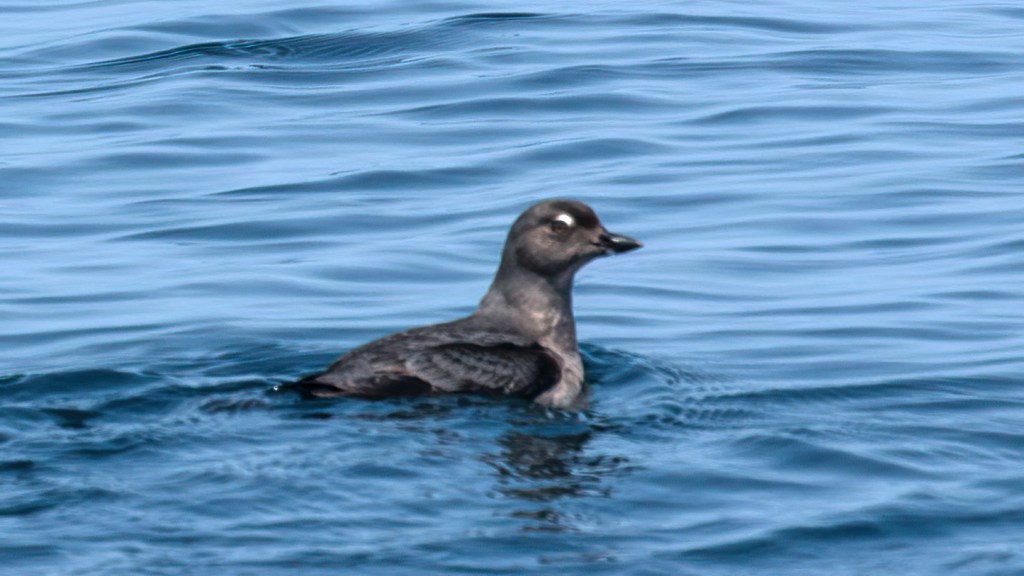
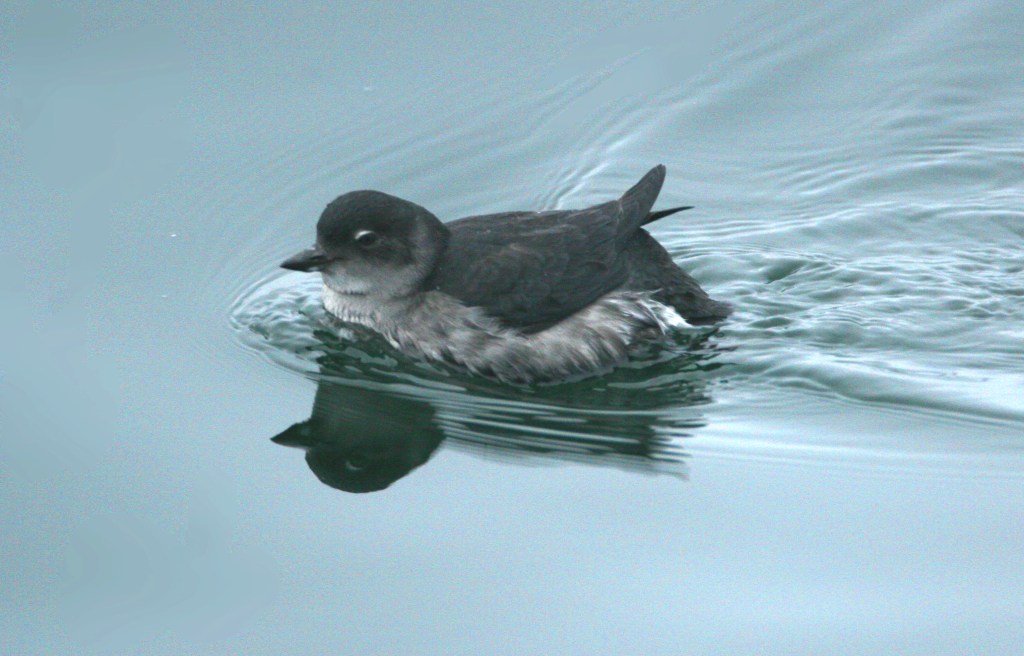
The Cassin’s Auklet (Ptychoramphus aleuticus) is a small seabird with distinctive physical characteristics. It features a dark, slate-blue plumage on its head, neck, and upperparts, which contrasts with its white underparts. This auklet is known for its striking white eye-ring, giving it a distinct appearance. Additionally, it has a short, stout bill, adapted for capturing zooplankton and small fish while foraging at sea, and its legs are set far back on its body, making it a strong swimmer and diver.

The Cassin’s Auklet (Ptychoramphus aleuticus) is a fascinating seabird with an intriguing natural history. These birds are pelagic, spending most of their lives at sea and returning to land only for breeding. They nest in burrows on remote islands along the west coast of North America, often in large colonies.
One interesting fact is that Cassin’s Auklets are known for their bioluminescent qualities. They have specialized glands near the base of their tail feathers that produce a luminescent fluid. When disturbed at night, they can release this fluid as a defense mechanism, creating a glowing display to confuse and deter predators in the dark waters.
HABITAT MOST LIKELY TO BE ENCOUNTERED
Can be found close to shore but most occur more than a mile from shore.

 Reflections of the Natural World
Leave a comment