

Shorebirds and Seabirds of the Central California Coastline – Blog Series Post #5
From its rocky shoreline to the depths of the great Monterey Canyon, the Central California coastline and its offshore waters are home to a diverse array of interesting birds. Its habitat diversity and famous coastal cold-water upwelling currents are the secret to its exceptional avian population. In each blog post followers will enjoy my high-quality photographs while learning about the natural history of these interesting birds.
A Reflections of the Natural World Blog Post Series by Jim Gain

WHAT’S IN A NAME
Long-billed Curlew – Numenius americanus
Gr. noumēnios traditionally associated with the curlew by reason of its crescent-shaped bill; L. Americanus American, of the Americas.
PHYSICAL CHARACTERISTICS
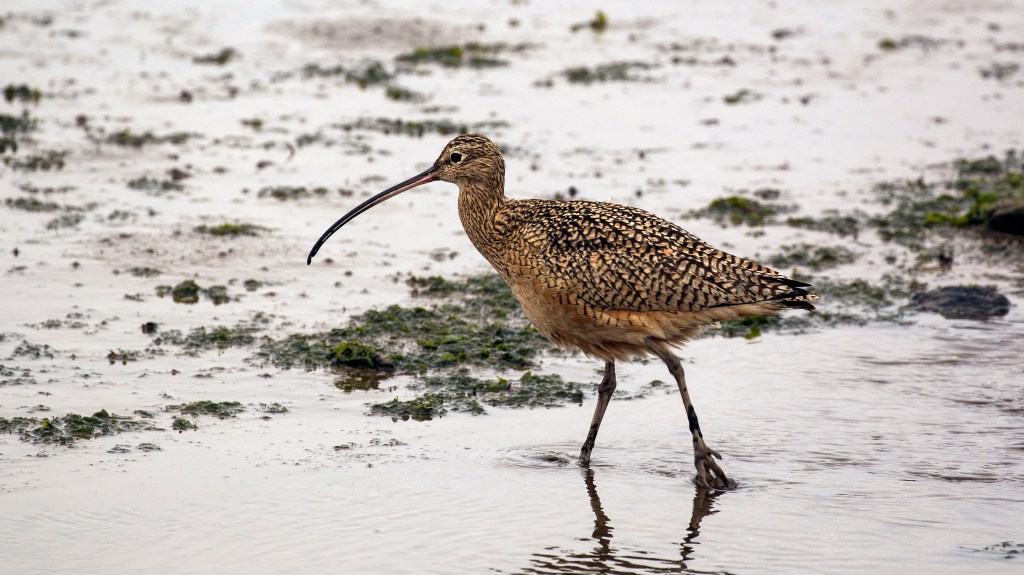
The Long-billed Curlew is a distinctive shorebird with several notable physical characteristics. It is recognized for its long, slender, down-curved bill, which can measure up to 8 inches (20 centimeters) in length. The overall plumage is a mottled brown, providing effective camouflage in its grassland and prairie habitats. In flight, its wings display cinnamon-colored undersides and white wing stripes, and it has relatively long legs

The Long-billed Curlew (Numenius americanus) is a fascinating shorebird with an intriguing natural history. It is known for its extensive migration, breeding in North America’s interior grasslands and wintering along the southern coasts of the United States, Mexico, and Central America. Long-billed Curlews primarily feed on a diet of insects and small invertebrates found in grassy habitats, which they detect using their long, sensitive bills.
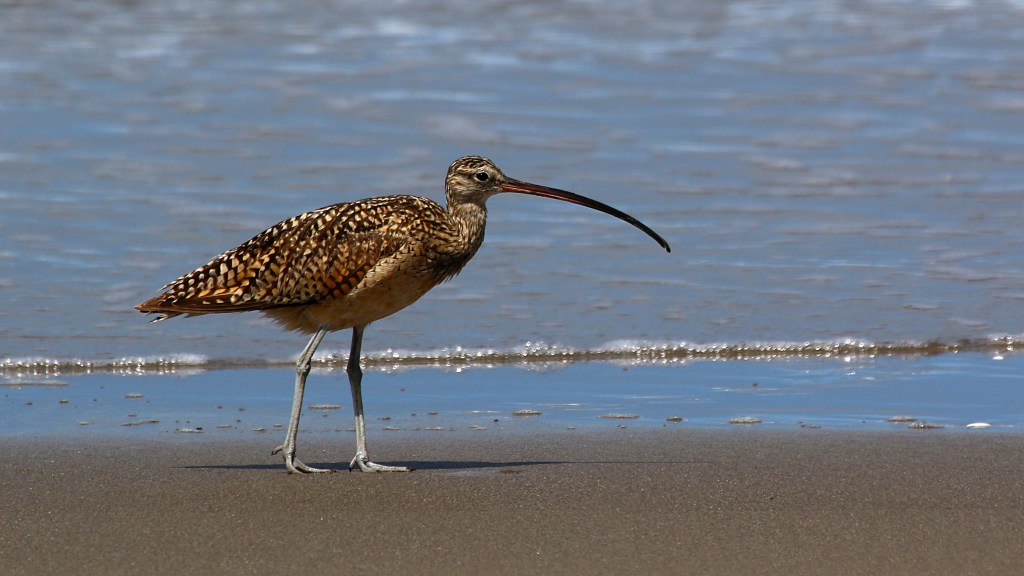
One interesting fact is their remarkable bill, which is not only used for foraging but also plays a role in courtship displays. During courtship, males engage in an aerial display where they toss items into the air with their bills, showcasing their skill and strength. This behavior is part of their elaborate courtship rituals and is quite a spectacle to witness.
HABITAT MOST LIKELY TO BE ENCOUNTERED
Found along the sandy beaches and tidal mudflats constantly probing for invertebrates.
3 Most Recent California Coastline Birds Blog Posts
- Cassin’s Auklet
 SHOREBIRDS AND SEABIRDS OF THE CENTRAL CALIFORNIA COASTLINEThe Cassin’s Auklet Is a small seabird with a dark, slate-blue plumage on its head, neck, and upperparts, which contrasts with its white underparts.
 - Semipalmated Plover
 SHOREBIRDS AND SEABIRDS OF THE CENTRAL CALIFORNIA COASTLINE The Semipalmated Plover is a small shorebird with a petite, round body and relatively short legs
 - Parasitic Jaeger
 SHOREBIRDS AND SEABIRDS OF THE CENTRAL CALIFORNIA COASTLINEThe Parasitic Jaeger is a seabird known for its sleek and agile appearance with long, pointed wings and a deeply forked tail.

 Reflections of the Natural World
Leave a comment