
Saskatchewan Birds – Oiseaux in the Land of Living Skies – Post #8
Saskatchewan’s slogan, “The Land of Living Skies” could refer as much to its magnificent birdlife as it does to its awe-inspiring Northern Lights and spectacular thunderstorms experienced there. This centrally located Canadian Province’s “Land of Living Skies” is home to over 400 recorded oiseaux (Fr. bird) species. Using my personal photographs in a blog post format, viewers will learn about the natural history and conservation status of these interesting birds in the Land of Living Skies!
A Reflections of the Natural World Blog Post Series by Jim Gain

WHAT’S IN A NAME
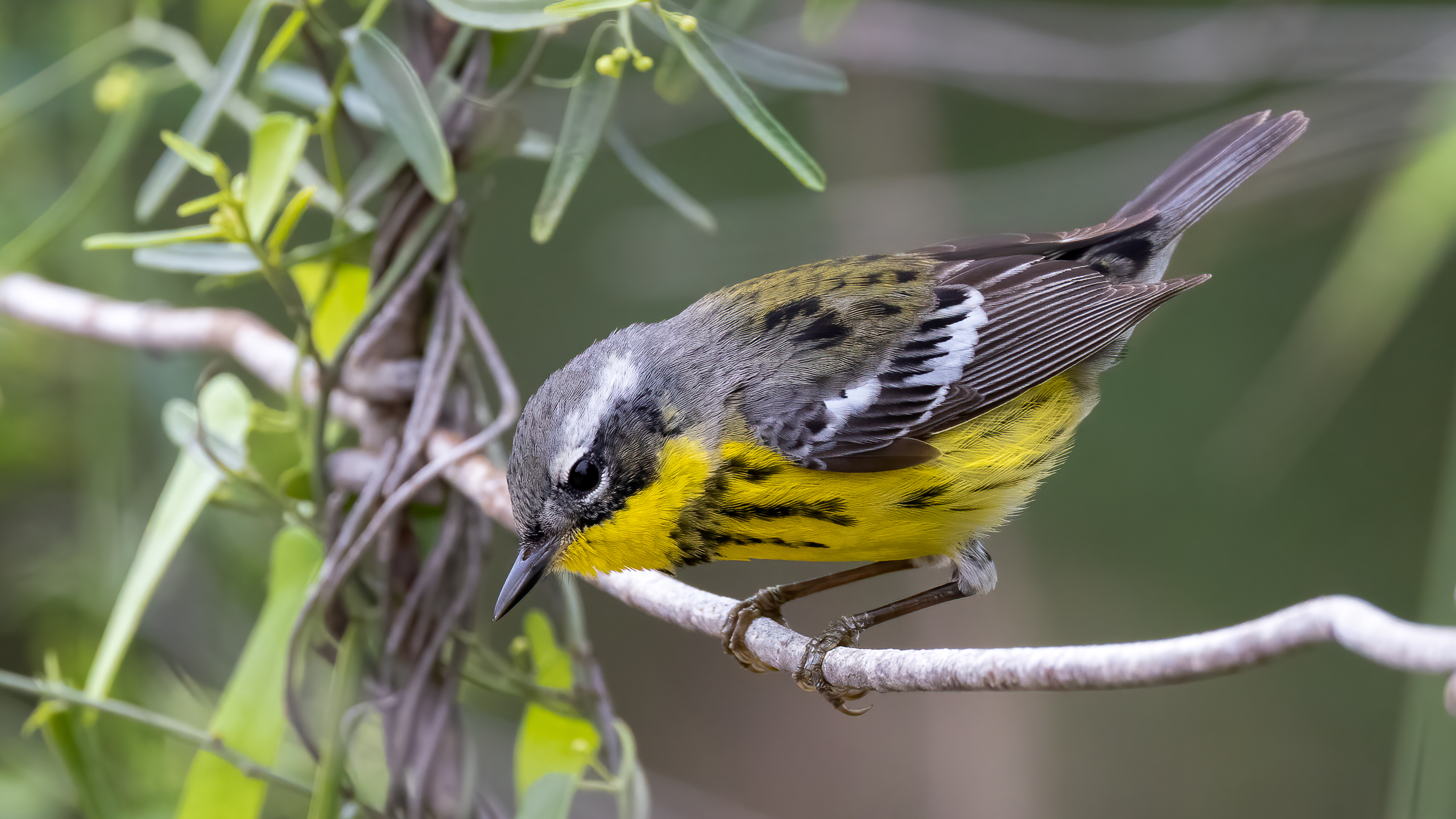
Magnolia Warbler – Setophaga magnolia
Name Roots: (Gr. sētos moth, phagos, “eating”; – [Wilson shot a specimen in a magnolia tree]
PHYSICAL CHARACTERISTICS
The Magnolia Warbler is a moderately small bird, around the size of a sparrow and slightly larger than a kinglet. They measure 4.3 to 5.1 inches in length and weigh between 0.23 and 0.53 ounces with a 6.3 to 7.9-inch wingspan. Adult males have distinctive black streaking that radiates from a black neck band creating a necklaced look. White undertail coverts and black-tipped tail are diagnostic at all ages. Many male warblers are black and yellow, but Magnolia Warblers take it up a notch, sporting a bold black necklace complete with long tassels, a black mask, and a standout white wing patch. The female doesn’t have the same flamboyant decorations as the male; instead, she has a chic white eyering on her gray head, two tiny white wingbars, and yellow underparts.

DISTRIBUTION & OCCURENCE IN THE LAND OF LIVING SKIES
Magnolia Warblers prefer coniferous and mixed forests. They breed most commonly in areas of short young spruce; also in young hemlocks and pines, and in dense understory of taller coniferous forest. During migration, they may be in any kind of deciduous shrubs or low trees.

eBird Bar Charts & Map Grid


CONSERVATION STATUS – International Union for Conservation of Nature (IUCN) Red List Category
The Magnolia Warbler is classified as Least Concern by the IUCN.
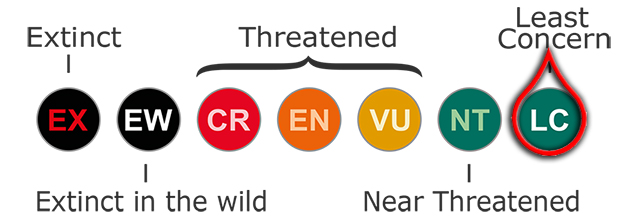
The Magnolia Warbler is classified as Least Concern by the IUCN.
Redlist Classification Justification: This species has an extremely large range, the population trend appears to be increasing, and the population size is extremely large. For these reasons the species is evaluated as Least Concern.
Leave a Reply