

- Scientific Name: Todirostrum cinereum
- Name in Spanish (Mexico): Mosquerito Espatulilla ComúnX
- ABA 4-Letter Bird Code: COTF
- Family: Tyrannidae – Tyrant Flycatchers
- Order: Passeriformes – Perching Birds
About this Species
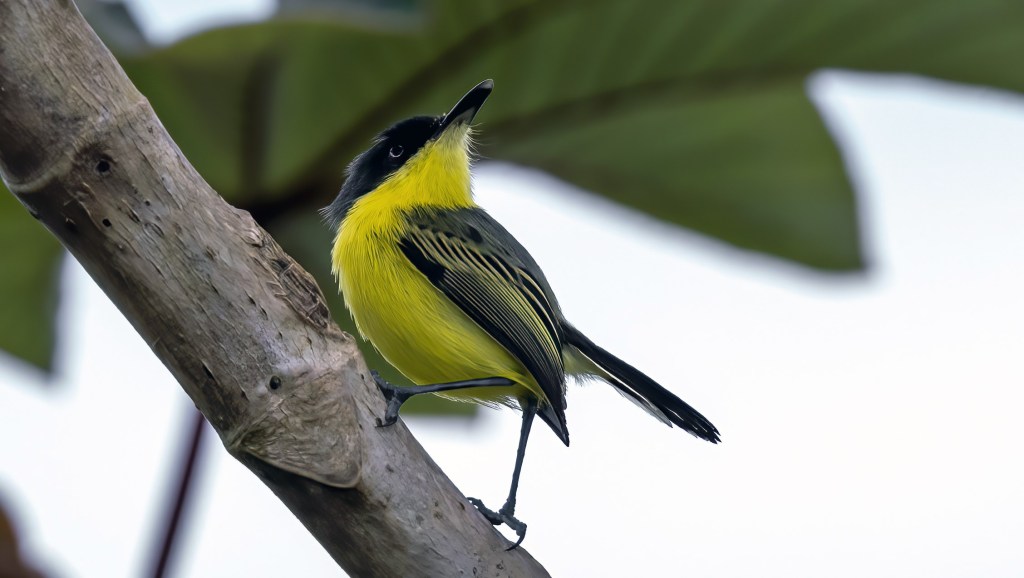
The Common Tody-Flycatcher (Todirostrum cinereum) is a small bird that can be found in Belize and other parts of Central and South America. They have a distinctive black head, dark back and wings, with a yellow throat and breast. Their beak is short and thin, perfect for catching insects, which make up the bulk of their diet.

In Belize, Common Tody-Flycatchers are most commonly found in humid forests and woodlands, where they can be seen flitting around in the underbrush or perching on low branches. They are also known to inhabit gardens and other urban areas with plenty of vegetation. During breeding season, which occurs from February to August, males will sing a series of high-pitched notes to attract mates.

These birds are monogamous and will typically lay two eggs in a cup-shaped nest made of plant fibers, mosses, and spider webs. The eggs are incubated for around 16 days before hatching, and the chicks fledge after about two weeks. Common Tody-Flycatchers are generally non-migratory, but some populations may move to lower elevations during the winter months. Overall, they are an important part of Belize’s diverse avian community and a fascinating species to observe in their natural habitat.
>> Next Post on Tuesday, 5/30/2023 – Laughing Falcon
Previous posts from Beautiful Birds of Belize Blog

 Reflections of the Natural World
Leave a comment