Birding Costa Rica – La Pura Vida Tropical – 1/29/2024 – 2/8/2024

Costa Rica’s national motto and tourism slogan, “La Pura Vida” loosely translates to Live Life or Enjoy Life. With over 900 bird species recorded, there is certainly lots to enjoy! Its varied topography results in a nice diversity of tropical and subtropical bird species . The birds of Costa Rica incite passion in budding and experienced birders alike and provide endless discovery.
A Reflections of the Natural World Blog Post Series by Jim Gain
LOCATIONS VISITED ON THE EAGLE-EYE TOUR COSTA RICA SAMPLER TRIP
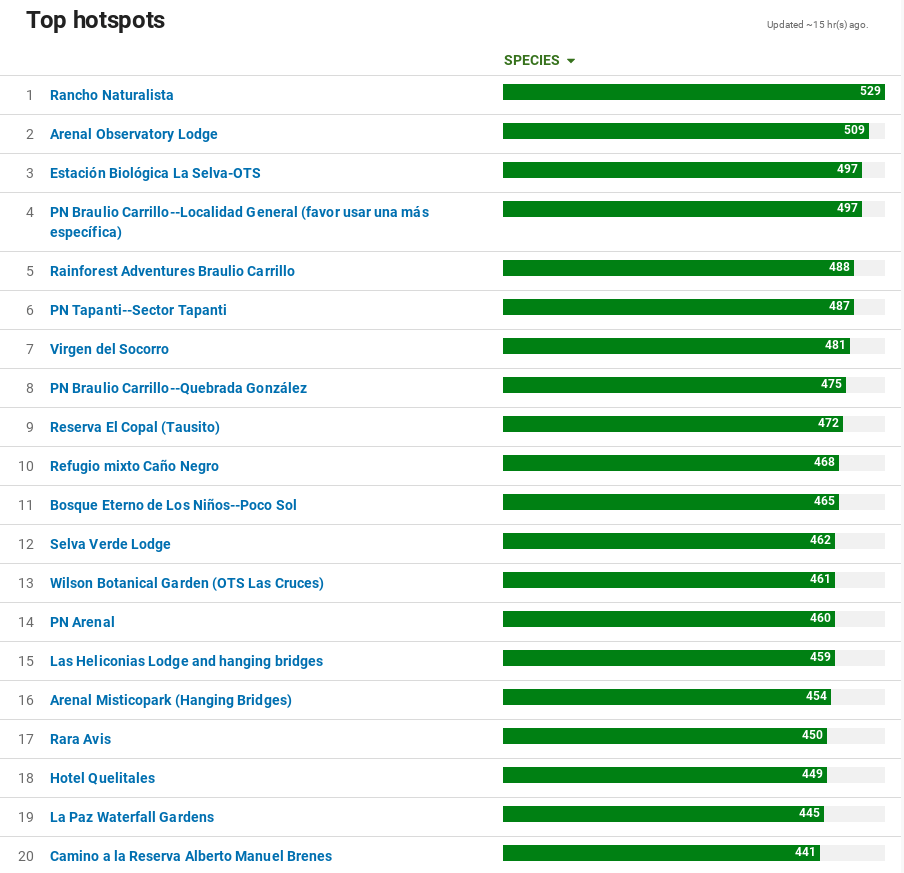
Including the Pre-Tour visit to Rancho Naturalista, I either created or was included in 64 eBird generated checklists. These checklists resulted in 358 species add to my brand new Costa Rica Life List with 167 of those species being new lifers added to my World Life List (1047).
Chronological Reports (Location name will be hyperlinked once the Blog Post has been published)
Prologue – Why did I choose Costa Rica and how did I prepare for my “Pura Vida” Adventure.
- Rancho Naturalista – Jan 29, 2024
- Caldera Mangrove/Mata de Limón Area – Jan 30, 2024
- Punta Leona Resort – Jan 30 – Feb 1, 2024
- Carara National Park – Jan 31, 2024
- Tárcoles Boat Tour – Jan 31, 2024
- Paraíso Quetzal Lodge – Feb 1, 2024
- Quetzal Spot – Feb 1, 2024
- El Toucanet Lodge Area – Feb 1 – Feb 3, 2024
- Cerro de la Muerte Area – Feb 2, 2024
- Miriam’s Restaurant – Feb 2, 2024
- San Gerardo de Dota Area – Feb 2, 2024
- Finca Cristina Area – Feb 3, 2024
- Chilamate Rainforest Eco Retreat Area Feb 3 – Feb 5, 2024
- La Selva Biological Station Feb 4, 2024
- Villa El Limón Area – Feb 4, 2024
- Galeria de Colibri y Soda Cinchona – Feb 5, 2024
- Arenal Observatory Lodge Area – Feb 5 – Feb 7, 2024
- Arenal Road to Dam Area – Feb 6 – Feb 7, 2024
- Parque Aventura San Luis – Feb 7, 2024
- Hotel Robledal – Feb 7 – Feb 8, 2024
Epilogue – Highlites, Fun-Facts and more…
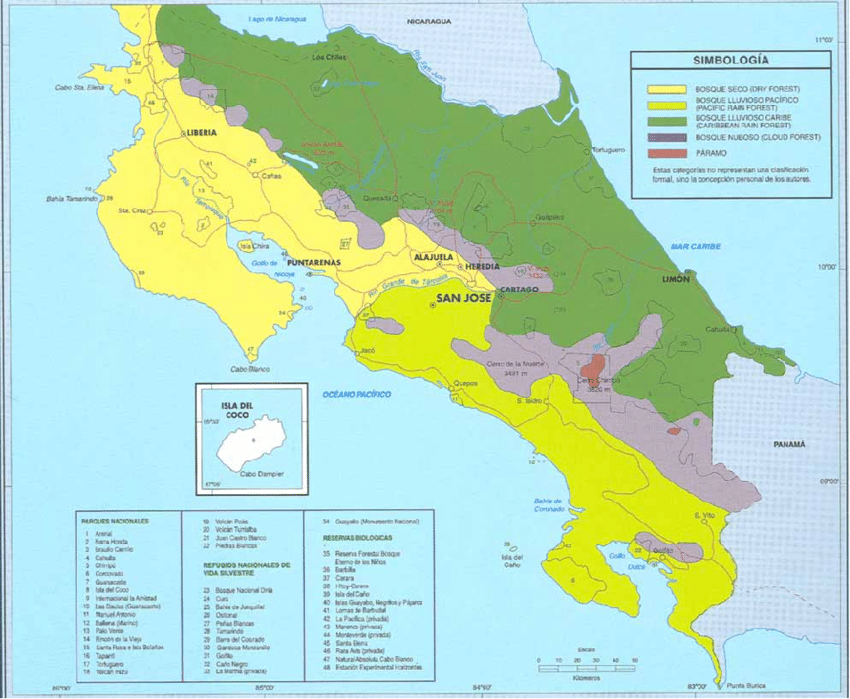
Biotic Zones Visited During Eagle-eye Tours Costa Rica Sampler Trip
- Tropical Dry/Seasonal Moist Forest – Along the lowlands plain north of the Tárcoles River. The tropical dry forest is full of contrasts; during the dry season (from December to April) trees change their leaves for flowers, forming a natural rainbow in the treetops, then the rainy season (May to November) gives way to life when new leaves are born, allowing visitors to see a green forest with characteristics similar to those of other humid forests.
Max temperature reaches 91.4º F (33 ºC) and min 71.6º F (22 ºC).
Trees like espavel, guanacaste (Costa Rica’s national tree), cenízaro, and guapinol can be easily spotted and many shrubs and ground plant species. - Pacific Lowland Rainforest – Lowlands south of the Tárcoles River up to about 500 m (1,640′). Lowland rain-forests have a short dry season. They experience some of the highest rainfall in the country (up to 8 m). These are semideciduos or evergreen forests where the trees can reach 50 meters tall, and palms and ferns are abundant in the understory. These forests are the most abundant in Costa Rica. It is an amazing biological system and a magical sanctuary full of life, shapes, colors, sounds, and aromas. Thanks to constant rainfall and an average of 200 inches of rain per year due to its location, Costa Rica’s rainforests are evergreen.
Max temperature reaches 91.4º F (33 ºC) and Min 71.6º F (22 ºC).
Vegetation is represented by bromeliads, mosses, lichens, and orchids, as well as countless trees such as laurel, caobilla, coral oak, golden fruit, ojoche, cedro maría, and botarrama, just to name a few. - Pacific Mid-Elevation Rainforest – West side of the highlands between 500-1500 m (1,640-4,921′). This forest typically consists of evergreen or semi-deciduous trees, depending on the amount of rain. Tree height varies between 25 and 40 meters; the understory is very dense, and in the rain forest ground is covered by mosses and ferns.
- Cloud Forest – Highlands between 1500-2800 m (4,921-9,186′). As the name suggests, these types of forests are known for having cloudy conditions and almost 100% humidity throughout the year. They are located in the highest parts of the mountains of Costa Rica and in some of the volcanoes. These forests are usually covered by a thin layer of clouds and bathed in a light drizzle, giving visitors the sense of being close to touching the sky.
Immersion in the clouds for long periods of time is what shapes the architecture and species composition of the cloud forest. They generally have an abundant cover of mosses, evergreen vegetation, and rich biodiversity. Just 1% of the worldwide woodland area is comprised of cloud forests, making them extremely rare. It is estimated that around 50% of Costa Rica’s biodiversity can be found there, an impressive 2.5% of the total world biodiversity.
The hottest month is April with an average temperature of 74° F (23° C), while the coldest month is February with an approximate temperature of 57° F (13.88° C). - Páramo – Generally treeless zone above 2800 m (9,186′). The subalpine Páramo generally only occurs in the highest peaks of the Talamanca Range.
- Caribbean Mid-Elevation Rainforest –
- Caribbean Lowland Rainforest –
- Mangrove Wetlands – occur in intertidal zones along the coast. Mangroves are forests that grow in between the area of low and high tide, with an influence of freshwater. At least five species of trees can be found growing in these estuarine habitats. The mangrove ecosystems serve as wildlife refuges, nursery and spawning areas. Several species of marine organisms spent their initial stages of development among the roots of the mangroves. Mangroves also help as nutrient and sediment retention areas and shoreline protection. The Terraba-Sierpe mangroves in the South Pacific, Puntarenas Province, were declared RAMSAR sites, as well as the Tamarindo wetlands, the Potrero Grande Mangroves (Guanacaste) and those in the Gandoca-Manzanillo NP (Limón Province, Atlantic coast) .

 Reflections of the Natural World