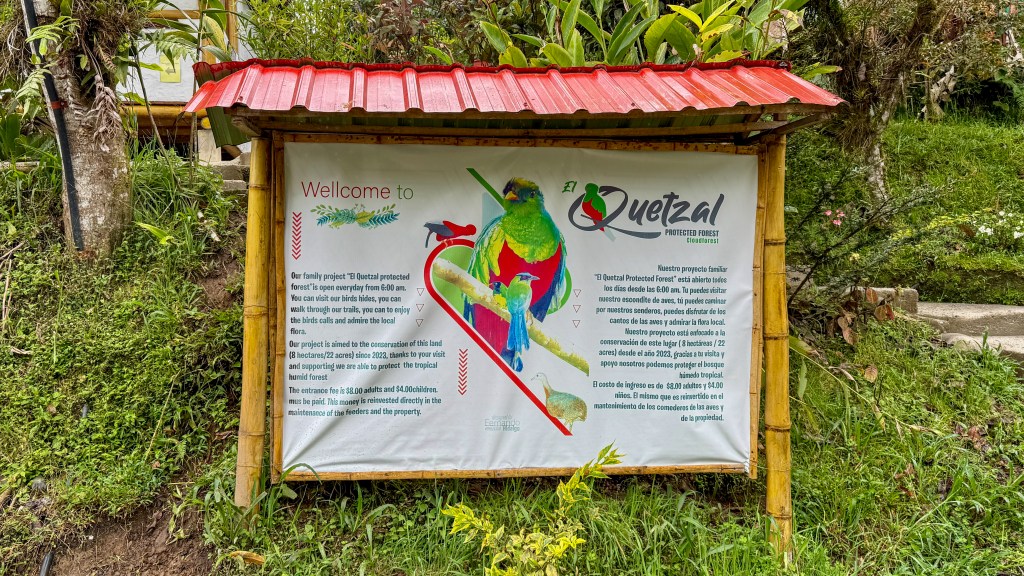
Synopsis: El Quetzal Bosque Protegido unfolded as a lush, hummingbird‑filled sanctuary where the cloudforest’s color, motion, and quiet magic set the stage for a vibrant midday interlude before the forest shifted toward an entirely new cast of characters.

Ecuador Birding – Where Every Feather Tells a Story
From October 26, 2025 through November 8, 2025 I joined 5 other adventurers and an outstanding photographer and birding guide (Liron Gertsman) with Eagle-Eye Tours to Ecuador. This blog series highlights the animals (mostly birds), people and locations we encountered over the 14 full days in this beautiful land.
A Reflections of the Natural World Blog Post Series by Jim Gain
**Due to the high resolution and quality of the images in this blog series it is highly recommended
that readers view posts in Landscape Mode on a desktop PC from the actual blogsite at Ecuador Birding**
DAY 8 – Mid-Morning
As we left San Isidro behind, the landscape tightened into steeper, wetter forest, signaling our arrival at El Quetzal Bosque Protegido.

El Quetzal Bosque Protegido sits nestled in the lush Andean foothills, a protected sweep of cloudforest where moisture hangs in the air and every surface seems alive with moss, orchids, and bromeliads. The habitat here is classic east‑slope mid‑elevation forest—steep, layered, and endlessly green. Narrow trails wind through dripping understory and open suddenly into clearings where shafts of sunlight ignite the air and hummingbirds rule the space like jeweled guardians. After the calm renewal of the morning at San Isidro, stepping into this forest felt like entering a sanctuary of color and motion.
And right on cue, the first hummingbird swept into view

The hummingbirds were the first to greet us. A Tawny-bellied Hermit swept low through the understory, its long decurved bill and warm cinnamon tones perfectly matched to the dim, tangled vegetation it favors. This species moves like a shadow—soft, deliberate, and almost secretive—its muted plumage blending seamlessly with the forest gloom. When it pauses to feed, its throat quivers with a quiet intensity, as if the bird itself is part of the forest’s pulse.
At the feeders, a very different kind of presence awaited.

A Chestnut-breasted Coronet, one of my top target birds, also made an appearance at the hummingbird feeders. Its burnished chestnut tones glowed like polished wood, contrasting beautifully with its emerald wings. Even as it fed, it carried itself with a bold, almost regal confidence, as though fully aware of its own striking beauty.
And then the forest offered a flash of pure iridescence

Moments later, the Long-tailed Sylph appeared like a streak of living iridescence, its impossibly long tail trailing behind it in shimmering greens and blues. Up close, the bird looks sculpted from gemstones, each feather catching the light in a different hue. Its tail feathers sway with a languid grace, giving the impression that the bird is painting color through the air with every movement.
Not to be outdone, another coronet burst into the clearing.

A Buff-tailed Coronet buzzed in next—bold, metallic, and full of attitude—flaring its tail as it defended its perch with the confidence of a bird twice its size. Its plumage glows with bronzy greens that seem to ignite when the sun hits them just right. The coronet’s wings beat with a sharp, insistent whir, a sound that announces its presence long before it comes into view.
And then came one of the forest’s most whimsical designs.

Then came the whimsical Peruvian Racket-tail, its twin racket-tipped tail feathers swinging like tiny pendulums as it hovered, one of the Andes’ most improbable designs brought to life. The bird’s delicate body contrasts with its bizarre, sculptural tail, which seems almost too fanciful to be real. When it darts between flowers, the rackets flick and sway like ornaments on invisible strings.
Higher above, a flash of emerald signaled another arrival.

Higher in the canopy, a Green-backed Hillstar flashed emerald and white, a high‑elevation specialist that carried itself with regal poise. Its plumage glitters like frost-tipped moss, perfectly suited to the cold, windswept habitats it calls home. Even in flight, it maintains a composed, almost stately bearing, as though aware of its own elegance.
In the midstory, two larger hummingbirds lived up to their names.


And in the dappled midstory, the Fawn-breasted Brilliant and Violet-fronted Brilliant lived up to their names—broad-shouldered, gleaming, and impossibly photogenic. The Fawn-breasted glows with warm, honeyed tones that shift subtly with the light, giving it a soft, burnished appearance. The Violet-fronted, by contrast, sports a dazzling splash of purple on its forehead that seems to ignite when it turns its head, a tiny beacon in the forest gloom.
And even the smallest hummingbird refused to be overlooked.

Even the tiny Gorgeted Woodstar, no bigger than a bumblebee, zipped through the clearing with an insect‑like hum, pausing just long enough for its iridescent throat to catch the light. Its flight is erratic and darting, more like a bee than a bird, making each brief hover feel like a small miracle. When its gorget flashes, it’s as if a spark has been struck in midair.
By midday, the forest itself seemed to exhale.

By late morning, the forest had already offered a kaleidoscope of color and motion. As we settled in for our lunch break, the hummingbirds continued to buzz around us, their energy filling the clearing like a living soundtrack. It was the perfect midpoint—an opportunity to rest, reflect, and prepare for the second half of the visit, when an entirely different cast of characters would emerge from the shadows.
NEXT UP: EB#46 “El Quetzal Bosque Protegido: Songbirds of the Afternoon”
Additional Photographs and Video


Previous Ecuador Birding Blog Posts:
- EB45 – Midday Birding Adventures in the El Quetzal Protected Forest
 El Quetzal Bosque Protegido unfolded as a lush, hummingbird‑filled sanctuary where the cloudforest’s color, motion, and quiet magic set the stage for a vibrant midday interlude before the forest shifted toward an entirely new cast of characters. This blog series chronicles Jim Gain’s experiences with a birding tour in Ecuador.
 - EB44 – Warm Light in a Cool World: The Cinnamon Flycatcher of San Isidro
 In October 2025, Jim Gain joined a birding tour in Ecuador, exploring its rich biodiversity and stunning landscapes over 14 days. The blog series chronicles his experiences with birds and nature.
 - EB43 – A New Day of Luck and Light at Cabañas San Isidro
 In October 2025, Jim Gain joined a birding tour in Ecuador, exploring its rich biodiversity and stunning landscapes over 14 days. The blog series chronicles his experiences with birds and nature.
 - EB42 – The Day the Photos Disappeared at Cabañas San Isidro
 In October 2025, Jim Gain joined a birding tour in Ecuador, exploring its rich biodiversity and stunning landscapes over 14 days. The blog series chronicles his experiences with birds and nature.
 - EB41 – Same Jay, New World: Discovering the Inca Green Jay of Ecuador
 In October 2025, Jim Gain joined a birding tour in Ecuador, exploring its rich biodiversity and stunning landscapes over 14 days. The blog series chronicles his experiences with birds and nature.
 - EB40 – Early Morning Wings at the Moth Light Feeders of Cabañas San Isidro
 In October 2025, Jim Gain joined a birding tour in Ecuador, exploring its rich biodiversity and stunning landscapes over 14 days. The blog series chronicles his experiences with birds and nature.

>>Ecuador Birding Blog Home Page Link https://reflectionsofthenaturalworld.com/ecuador-birding/
*This Ecuador Birding blog post was shaped and polished with the assistance of Microsoft Copilot, helping bring clarity and a consistent flow to my field notes and dictated memories.
**Unless otherwise indicated in the image caption, all photographs (>99%) are mine.

 Reflections of the Natural World
Leave a comment