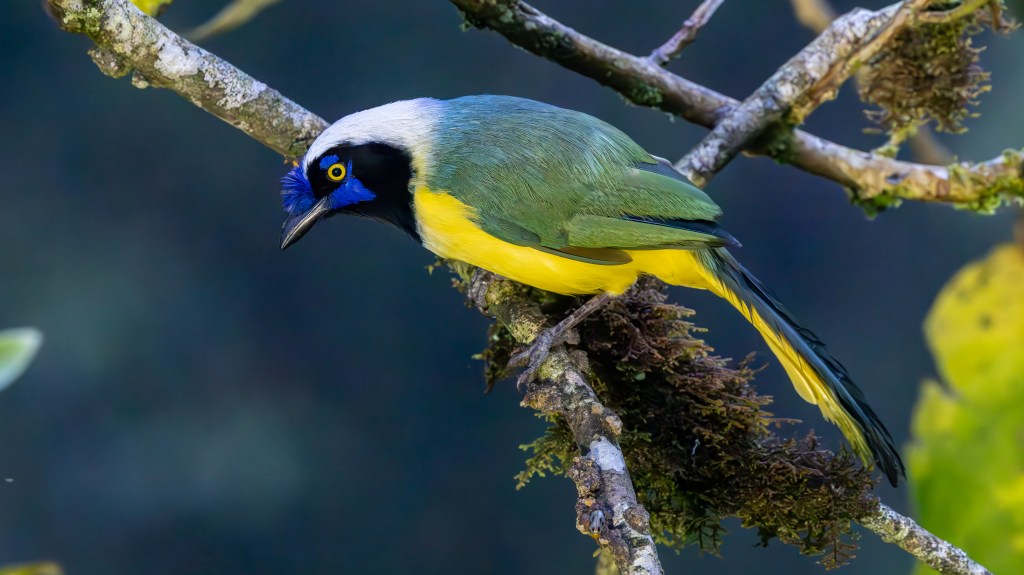
Synopsis: A familiar species seen across the Americas becomes something astonishingly new in the Andes, where the “Inca” Green Jay reveals a deeper, richer, and more dramatic expression of a bird I thought I already knew.

Ecuador Birding – Where Every Feather Tells a Story
From October 26, 2025 through November 8, 2025 I joined 5 other adventurers and an outstanding photographer and birding guide (Liron Gertsman) with Eagle-Eye Tours to Ecuador. This blog series highlights the animals (mostly birds), people and locations we encountered over the 14 full days in this beautiful land.
A Reflections of the Natural World Blog Post Series by Jim Gain
**Due to the high resolution and quality of the images in this blog series it is highly recommended
that readers view posts in Landscape Mode on a desktop PC from the actual blogsite at Ecuador Birding**
DAY 7 – Morning
- My Ecuador Species Count through the morning at Cabañas San Isidro jumps up to: 239 (168 lifers)
- Primary eBird Hotspots:
After the quiet, secretive charm of the White‑bellied Antpitta, the next chapter of the journey delivered a very different kind of encounter—one that burst into view with color, confidence, and unmistakable personality. I’ve known Green Jays for years in the southern United States and Mesoamerica: the bold, lime‑green birds of Texas, with their clean black bibs and bright blue crowns; the deeper‑colored, slightly sleeker birds of the Yucatán Peninsula; and the rich, tropical versions in Belize, where their calls seem to echo through every patch of forest. Each region’s jay has its own flair, its own dialect, its own subtle palette, but they all share that same unmistakable mix of intelligence and mischief.


Nothing, however, prepared me for the “Inca” Green Jay of the Andes. This subspecies feels like a cousin from a different artistic tradition—darker, more saturated, and somehow more dramatic. Its blues run deeper, almost cobalt in the right light, and the greens shift toward richer, forest‑toned hues that blend seamlessly with the cloudforest backdrop. The facial pattern is bolder and more intricate, with inky blacks and vivid blues that seem painted on with a finer brush. Even its behavior feels slightly different: more deliberate, more watchful, as if shaped by the cooler, mist‑laden world of the Andean foothills.

As a species, the Green Jay is one of the most striking corvids in the Americas—intelligent, social, and impossible to ignore. Its plumage is a living gradient of greens, blues, yellows, and blacks, arranged in a way that looks almost too perfect to be real. When sunlight hits the bird just right, the colors ignite, turning it into a moving jewel against the mossy forest. Seeing the Andean “Inca” form for the first time felt like meeting an old friend who had reinvented themselves—familiar yet astonishing, and absolutely worthy of a story all its own.
NEXT UP: EB#42 “The Day the Photos Disappeared at Cabañas San Isidro“
Additional Photographs


Previous Ecuador Birding Blog Posts:
- EB41 – Same Jay, New World: Discovering the Inca Green Jay of Ecuador
 In October 2025, Jim Gain joined a birding tour in Ecuador, exploring its rich biodiversity and stunning landscapes over 14 days. The blog series chronicles his experiences with birds and nature.
 - EB40 – Early Morning Wings at the Moth Light Feeders of Cabañas San Isidro
 In October 2025, Jim Gain joined a birding tour in Ecuador, exploring its rich biodiversity and stunning landscapes over 14 days. The blog series chronicles his experiences with birds and nature.
 - EB39 – Wildlife and Mountain Mists on the Road to San Isidro
 In October 2025, Jim Gain joined a birding tour in Ecuador, exploring its rich biodiversity and stunning landscapes over 14 days. The blog series chronicles his experiences with birds and nature.
 - EB38 – Sunlit Surprise: The Golden‑Tailed Sapphire’s Rainbow Glow
 In October 2025, Jim Gain joined a birding tour in Ecuador, exploring its rich biodiversity and stunning landscapes over 14 days. The blog series chronicles his experiences with birds and nature.
 - EB37 – The Numbers Keep Climbing: WildSumaco’s Hummingbird Explosion Continues
 In October 2025, Jim Gain joined a birding tour in Ecuador, exploring its rich biodiversity and stunning landscapes over 14 days. The blog series chronicles his experiences with birds and nature.
 - EB36 – From Farmland to Sanctuary: WildSumaco’s Rebirth and Its Earliest Arrivals
 In October 2025, Jim Gain joined a birding tour in Ecuador, exploring its rich biodiversity and stunning landscapes over 14 days. The blog series chronicles his experiences with birds and nature.

>>Ecuador Birding Blog Home Page Link https://reflectionsofthenaturalworld.com/ecuador-birding/
*This Ecuador Birding blog post was shaped and polished with the assistance of Microsoft Copilot, helping bring clarity and a consistent flow to my field notes and dictated memories.
**Unless otherwise indicated in the image caption, all photographs (>99%) are mine.

 Reflections of the Natural World
Leave a comment