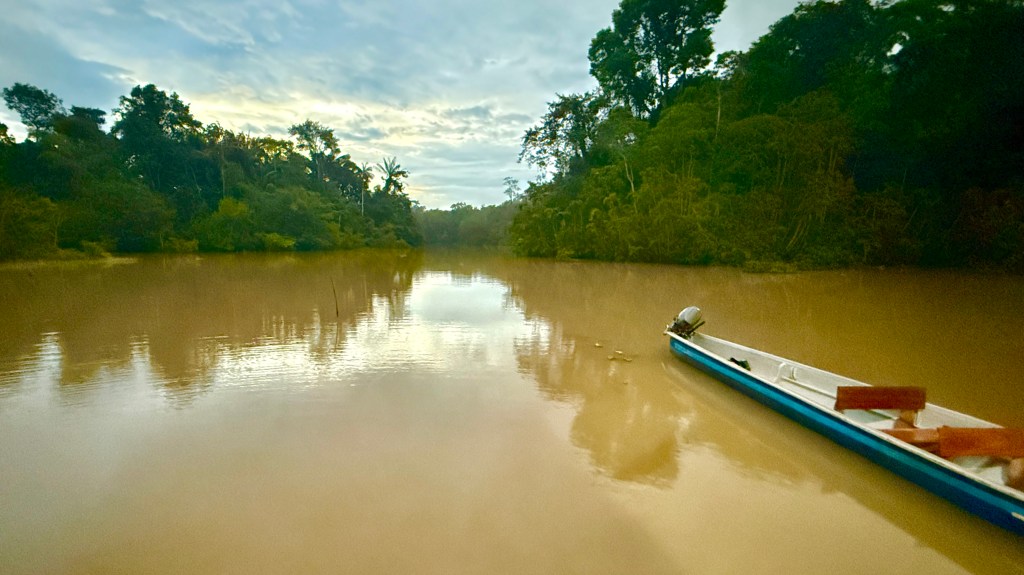
A Reflections of the Natural World Blog Post Series by Jim Gain

Ecuador Birding – Where Every Feather Tells a Story
From October 26, 2025 through November 8, 2025 I joined 5 other adventurers and an outstanding photographer and birding guide (Liron Gertsman) with Eagle-Eye Tours to Ecuador. This blog series highlights the animals (mostly birds), people and locations we encountered over the 14 full days in this beautiful land.
DAY 5 – Early Afternoon
- My Ecuador Species Count including the visit to El Retiro and San Roque jumps up to: 185 (130 lifers)
- Primary eBird Public Hotspot: Sani Lodge
After this Kodak moment, we had more time to explore, and I focused on the resident birds that had eluded me earlier in the trip. Smooth‑billed Anis strutted through the open areas, their glossy black plumage and oversized, ridged bills giving them a slightly prehistoric look. They moved in tight family groups, constantly chattering to one another as they flipped leaves and probed the ground for insects, always seeming half‑curious and half‑mischievous.

Pale‑vented Pigeons, soft gray with a gentle blush of pink on their breasts, preferred to perch right beside the bar area, watching the world with calm, unhurried eyes. When they took flight, their broad wings produced a surprisingly powerful clatter, a reminder that these otherwise placid birds are strong, capable fliers of the lowland forest.

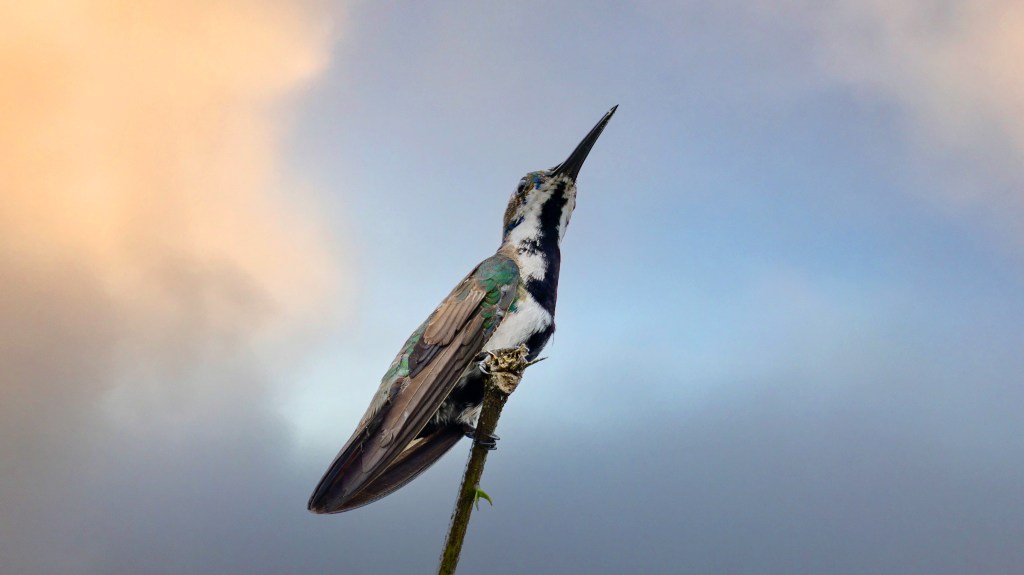
Near my room, a female Black‑throated Mango perched on a slender branch, her iridescent green back shimmering while I tried to capture the subtle, dusky throat markings unique to the females. She hovered in place with effortless precision, occasionally flicking her tail as she darted out to snatch a passing insect before returning to the same favored perch.
Alex and I then settled at the fruit feeding station to see what might drop in. Almost immediately, the White‑lined subspecies of Blue‑gray Tanager appeared, its powder‑blue plumage accented by crisp white wing bars. It fed with quick, delicate movements, pausing between bites to deliver soft, buzzy calls that blended into the forest’s background hum.

An adult Red‑capped Cardinal followed—a jewel of a bird with its brilliant crimson head and velvety black body. In the sunlight, faint emerald glosses shimmered across its wings, revealing colors far richer than the field guides ever suggest.

Our attention was suddenly pulled skyward by the loud, bubbling call of a Russet‑backed Oropendola, which landed on its long, pendulous nest. Like other members of the oriole family, oropendolas weave intricate hanging nests, and we watched as the adult reached deep inside and emerged with a fecal sac—an essential housekeeping task to keep predators from detecting the scent of the young. Its sheer size and commanding presence made the entire tree seem to shift around it.


In the same tree, just above the nest, a sharply adorned Yellow‑rumped Cacique posed in the sunlight, its glossy black plumage offset by a brilliant yellow rump and shoulders. It delivered its metallic, almost mechanical calls, flashing its wings as if performing for an unseen audience.


Nearby, a Silver‑beaked Tanager glowed with its deep wine‑red face and throat, the color intensifying each time it turned its head toward the light. Its soft, warbling song drifted through the clearing, adding a gentle musical thread to the morning chorus.


NEXT UP: EB#31 “One Last Cruise Around the Calluacocha Lagoon“
Additional Photographs


Previous Ecuador Birding Blog Posts:
- EB43 – A New Day of Luck and Light at Cabañas San Isidro
 In October 2025, Jim Gain joined a birding tour in Ecuador, exploring its rich biodiversity and stunning landscapes over 14 days. The blog series chronicles his experiences with birds and nature.
 - EB42 – The Day the Photos Disappeared at Cabañas San Isidro
 In October 2025, Jim Gain joined a birding tour in Ecuador, exploring its rich biodiversity and stunning landscapes over 14 days. The blog series chronicles his experiences with birds and nature.
 - EB41 – Same Jay, New World: Discovering the Inca Green Jay of Ecuador
 In October 2025, Jim Gain joined a birding tour in Ecuador, exploring its rich biodiversity and stunning landscapes over 14 days. The blog series chronicles his experiences with birds and nature.
 - EB40 – Early Morning Wings at the Moth Light Feeders of Cabañas San Isidro
 In October 2025, Jim Gain joined a birding tour in Ecuador, exploring its rich biodiversity and stunning landscapes over 14 days. The blog series chronicles his experiences with birds and nature.
 - EB39 – Wildlife and Mountain Mists on the Road to San Isidro
 In October 2025, Jim Gain joined a birding tour in Ecuador, exploring its rich biodiversity and stunning landscapes over 14 days. The blog series chronicles his experiences with birds and nature.
 - EB38 – Sunlit Surprise: The Golden‑Tailed Sapphire’s Rainbow Glow
 In October 2025, Jim Gain joined a birding tour in Ecuador, exploring its rich biodiversity and stunning landscapes over 14 days. The blog series chronicles his experiences with birds and nature.

>>Ecuador Birding Blog Home Page Link https://reflectionsofthenaturalworld.com/ecuador-birding/
*This Ecuador Birding blog post was shaped and polished with the assistance of Microsoft Copilot, helping bring clarity and a consistent flow to my field notes and dictated memories.
**Unless otherwise indicated in the image caption, all photographs (>99%) are mine.

 Reflections of the Natural World
Leave a comment