A Reflections of the Natural World Blog Post Series by Jim Gain

Ecuador Birding – Where Every Feather Tells a Story
From October 26, 2025 through November 8, 2025 I joined 5 other adventurers and an outstanding photographer and birding guide (Liron Gertsman) with Eagle-Eye Tours to Ecuador. This blog series highlights the animals (mostly birds), people and locations we encountered over the 14 full days in this beautiful land.
DAY 4 – Morning
- My Ecuador Species Count including the entire day at Sani Lodge and Canopy Tower jumps up to: 162 (114 lifers)
- Primary eBird Public Hotspot: Sani Lodge
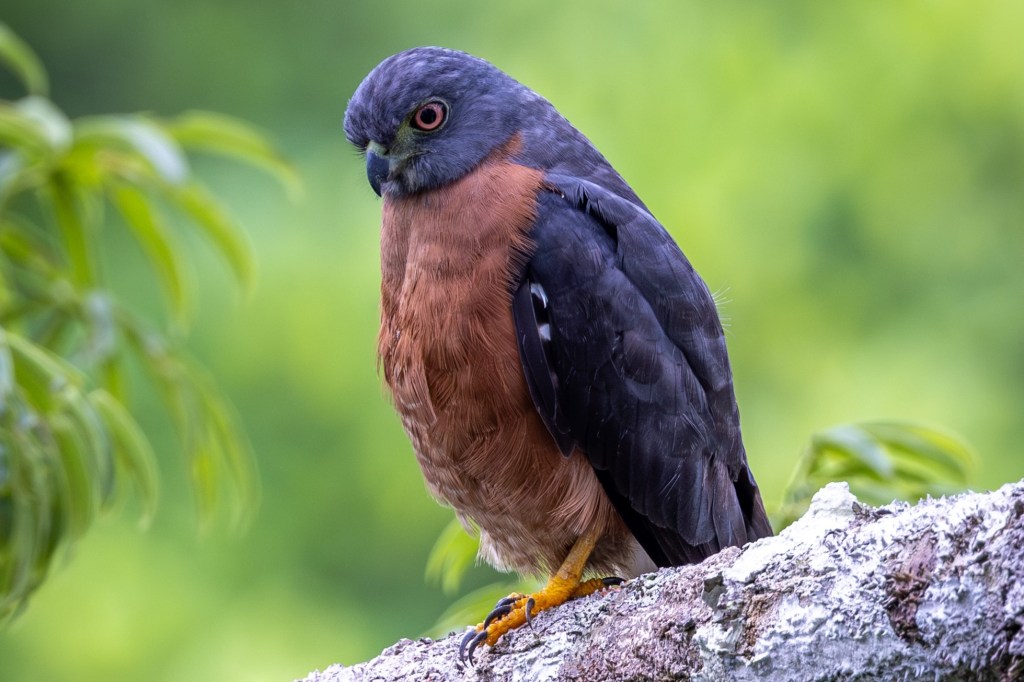
The Double‑toothed Kite is one of those Amazon birds that rewards patience. It doesn’t burst onto the scene with the drama of a macaw or the prehistoric swagger of a Hoatzin. Instead, it appears like a quiet shadow—calm, composed, and utterly confident in its place in the forest. At Yasuní, that subtlety made the moment even more striking. We first spotted it perched motionless on a slender branch, its slate‑gray plumage blending seamlessly with the dim understory light. Only the bright orange cere and legs gave it away, tiny sparks of color against the muted greens. The bird’s posture was classic Double‑toothed Kite—upright, alert, and patient. It’s a species that doesn’t waste energy. Instead, it waits for opportunity to come to it. In Ecuador, this kite is famous for its unusual hunting strategy: shadowing troops of monkeys. As the primates leap through the canopy, they flush insects, lizards, and small vertebrates, and the kite swoops in to snatch the fleeing prey. It’s a clever partnership—one that requires timing, agility, and a keen sense of the forest’s rhythms.


A Familiar Face in a New Forest
Seeing the species here brought back memories of my first encounter in Costa Rica. There, I watched a Double‑toothed Kite follow a group of capuchins through the mid‑canopy, gliding effortlessly from perch to perch. It felt like watching a quiet professional at work—never hurried, never showy, just perfectly attuned to the chaos around it. But in Ecuador, the bird felt different. The Amazon’s vastness gives it a grander stage. The kite seemed more solitary, more self‑possessed, perched above the black‑water lagoon like a sentinel. When it finally launched into the air, its flight was smooth and buoyant, wings flexing with a kind of understated elegance.

A Closer Look at Its Name
Despite the dramatic name, the “double‑toothed” part refers not to fangs but to small notches on the upper mandible, which help the kite grip and dispatch prey. It’s a subtle feature—easy to miss unless you’re close—but it speaks to the bird’s precision. Everything about this species is built for efficiency.
It was a brief encounter, but one that captured the essence of the Double‑toothed Kite: quiet mastery, subtle beauty, and a deep connection to the pulse of the forest.
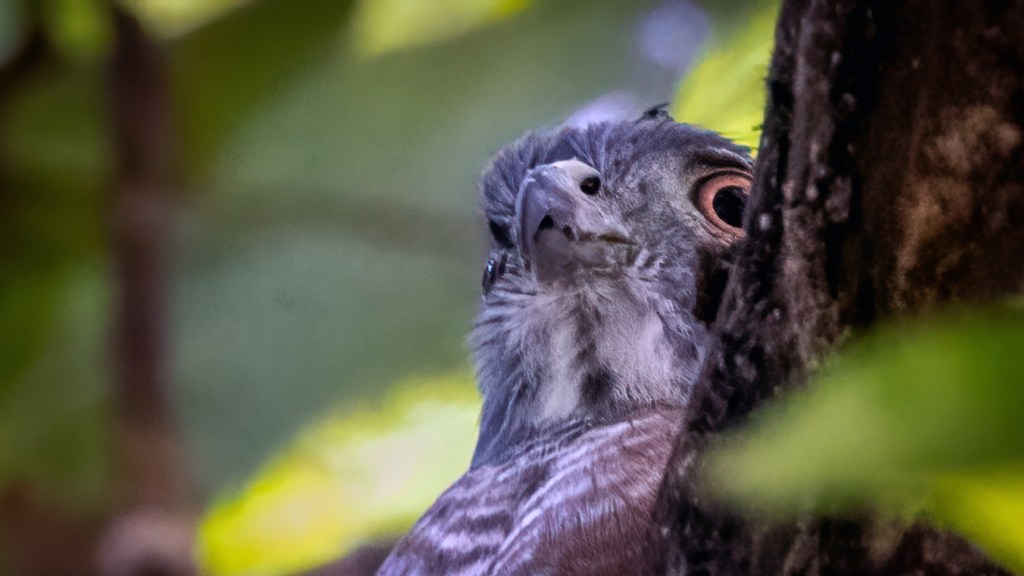
It remained there for most of our time aloft, watching the canopy with calm, predatory patience. Only when we became absorbed in the activity of a pair of GOLDEN-BELLIED EUPHONIAS—both of them busily ferrying bits of nesting material to a hidden nook just below the platform—did the kite take its leave, slipping silently into the forest without any of us noticing until it was already gone.


NEXT UP: EB#28 “An Afternoon of Soft Rainforest Harmonies Around the Lodge“
Additional Photographs and Video

Previous Ecuador Birding blog posts will be linked below.
- EB37 – The Numbers Keep Climbing: WildSumaco’s Hummingbird Explosion Continues
 In October 2025, Jim Gain joined a birding tour in Ecuador, exploring its rich biodiversity and stunning landscapes over 14 days. The blog series chronicles his experiences with birds and nature.
 - EB36 – From Farmland to Sanctuary: WildSumaco’s Rebirth and Its Earliest Arrivals
 In October 2025, Jim Gain joined a birding tour in Ecuador, exploring its rich biodiversity and stunning landscapes over 14 days. The blog series chronicles his experiences with birds and nature.
 - EB35 – Leaving the Amazon Behind, Rising into the Eastern Andes
 In October 2025, Jim Gain joined a birding tour in Ecuador, exploring its rich biodiversity and stunning landscapes over 14 days. The blog series chronicles his experiences with birds and nature.
 - EB34 – One Last Cruise Around the Calluacocha Lagoon
 In October 2025, Jim Gain joined a birding tour in Ecuador, exploring its rich biodiversity and stunning landscapes over 14 days. The blog series chronicles his experiences with birds and nature.
 - EB33 – A Quiet Afternoon Spent Shooting on the Sani Lodge Grounds
 In October 2025, Jim Gain joined a birding tour in Ecuador, exploring its rich biodiversity and stunning landscapes over 14 days. The blog series chronicles his experiences with birds and nature.
 - EB32 – Afternoon Birds, Bats, Butterflies and a Really Cool Pair of Owls at Sani Lodge
 In October 2025, Jim Gain joined a birding tour in Ecuador, exploring its rich biodiversity and stunning landscapes over 14 days. The blog series chronicles his experiences with birds and nature.

>>Ecuador Birding Blog Home Page Link https://reflectionsofthenaturalworld.com/ecuador-birding/
*This Ecuador Birding blog post was shaped and polished with the assistance of Microsoft Copilot, helping bring clarity and a consistent flow to my field notes and dictated memories.
**Unless otherwise indicated in the image caption, all photographs (>99%) are mine.

 Reflections of the Natural World
Leave a comment