A Reflections of the Natural World Blog Post Series by Jim Gain

Ecuador Birding – Where Every Feather Tells a Story
From October 26, 2025 through November 8, 2025 I joined 5 other adventurers and an outstanding photographer and birding guide (Liron Gertsman) with Eagle-Eye Tours to Ecuador. This blog series highlights the animals (mostly birds), people and locations we encountered over the 14 full days in this beautiful land.
DAY 4 – Morning
- My Ecuador Species Count including the entire day at Sani Lodge and Canopy Tower jumps up to: 162 (114 lifers)
- Primary eBird Public Hotspot: Sani Lodge
Climbing the canopy tower felt like ascending through layers of time—each platform lifting us deeper into the world of the treetops. The forest below softened into a textured green sea, while the upper branches glowed with the first warm light of morning. As we reached the highest level, the air shifted—cooler, quieter, touched by the faint rustle of leaves stirred by birds we could not yet see.

It was our guide who spotted it first. “Great Potoo,” he whispered, pointing to what looked, at first glance, like nothing more than a broken limb jutting from a moss‑covered branch. But as our eyes adjusted, the illusion dissolved. There it was—a GREAT POTOO perched about ten meters above us, frozen in its uncanny stillness, its elongated body perfectly aligned with the branch. Only the faint outline of its massive head and the subtle marbling of its plumage betrayed the bird’s presence.

In daylight, potoos are masters of invisibility. They spend the entire day perched upright, stretching their bodies into a rigid, vertical posture that mimics a dead snag. Their mottled gray‑brown plumage blends seamlessly with bark and lichen, and they often close their eyes to narrow slits, leaving just enough of a gap to detect movement without revealing the gleam of their enormous pupils. This “cryptic pose” is so effective that even seasoned birders can walk right past a potoo without ever knowing it was there. From the tower, we had the rare privilege of looking almost directly across at the bird—close enough to appreciate the delicate barring on its wings, the subtle scalloping along its flanks, and the faint, sleepy twitch of its eyelids as it monitored us without moving a muscle. It was a creature caught between worlds: a nocturnal hunter resting through the day, a ghost of the forest masquerading as wood.
For several long moments, the canopy seemed to hold its breath with us. Then a breeze stirred the leaves, the potoo shifted ever so slightly, and the spell broke—but the memory of that encounter, of seeing such a secretive bird in its element, remained suspended in the morning light. From the platform at the top, the world opens in every direction. Here, eye‑level encounters with brilliantly colored tanagers, toucans, aracaris, parrots, and the occasional soaring raptor feel almost dreamlike, as if we had stepped into the birds’ own realm. Bromeliads and orchids cling to branches at arm’s length, and fruiting trees draw in a constant flow of movement and sound. For birders and photographers, the tower offers unmatched light, perspective, and opportunity; for first‑time visitors, it provides a breathtaking sense of scale—an immersion into the rainforest’s vertical universe.

Almost immediately, we noticed a DOUBLE-TOOTHED KITE perched quietly in the very same Ceiba tree that supported the tower, no more than a few branches away. More about the kite in the next post!

But the tower is more than a viewpoint. At 36 meters (118 feet), it stands as a symbol of conservation and community resilience, generating sustainable income for local families and reinforcing the protection of the surrounding forest. Quietly overlooking the canopy, the Sani Lodge Canopy Tower serves as a bridge between people and the living rainforest, inviting all who climb it to understand, even briefly, the vibrant world that thrives in the treetops.

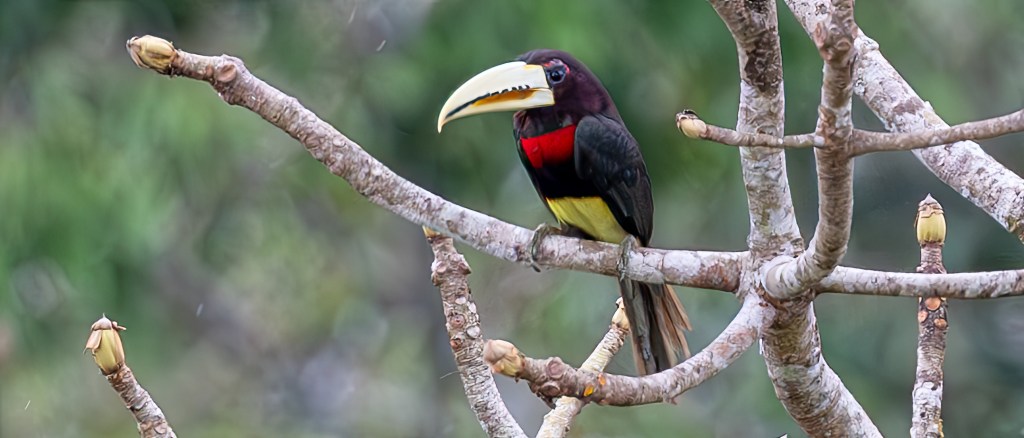
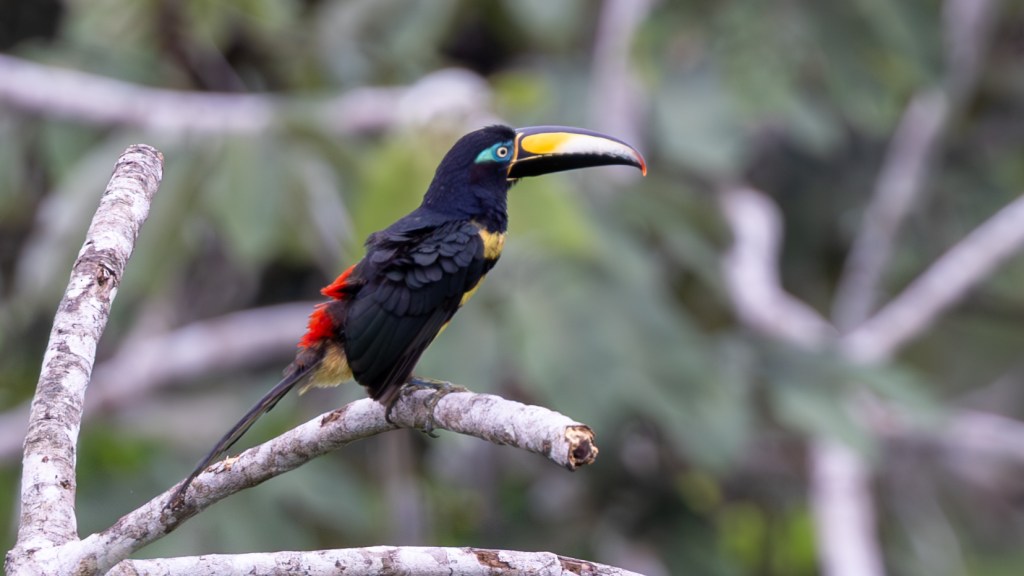
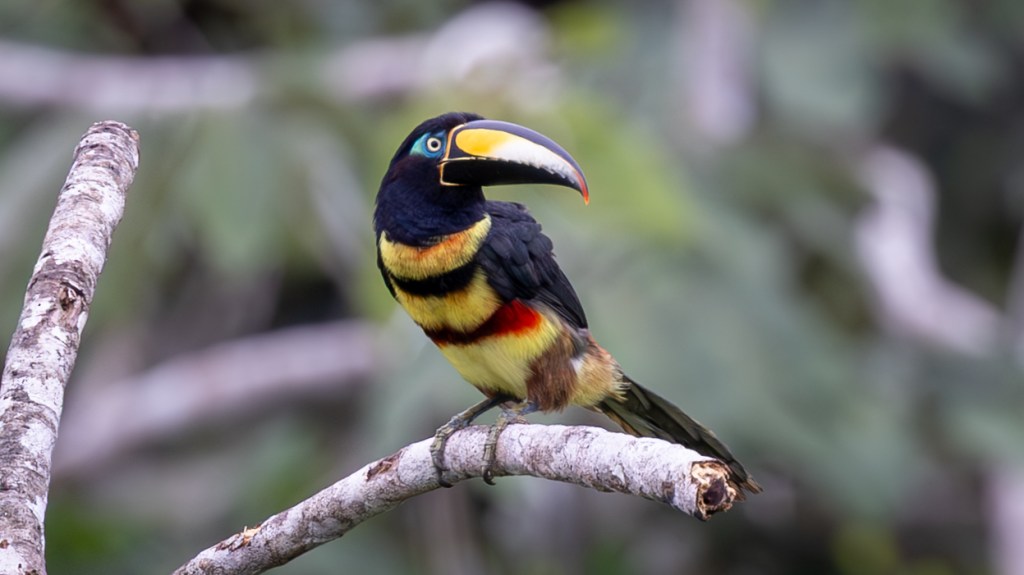
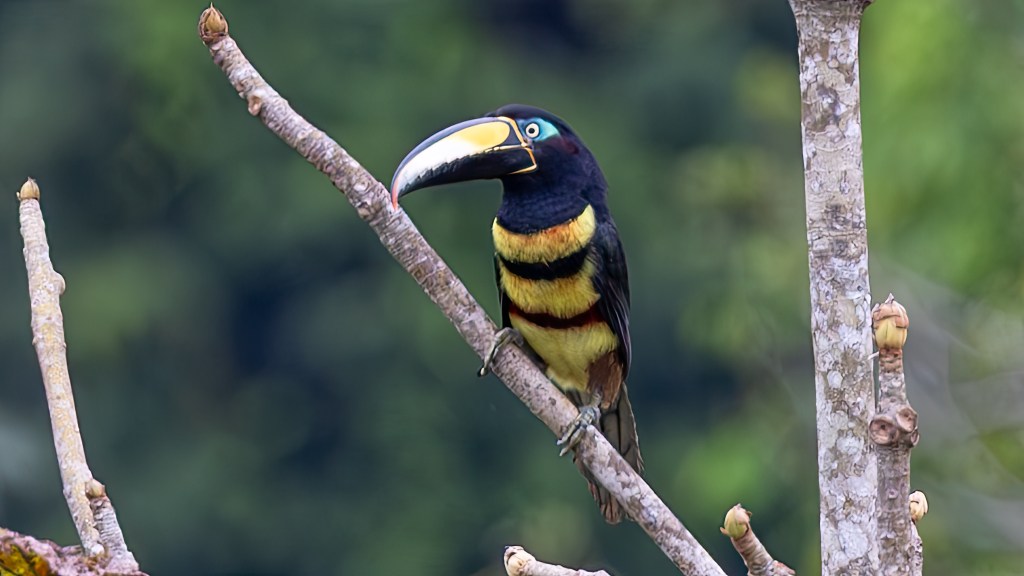
Moments later, the canopy burst with color as a MANY‑BANDED ARACARI and an IVORY‑BILLED ARACARI appeared in quick succession, their mosaic plumage glowing against the morning light as they hopped between fruiting branches. The Many‑banded flashed its bold chestnut bands and lemon‑yellow belly with every twist of its body, while the Ivory‑billed followed close behind, its pale bill gleaming like carved bone against the deep greens of the treetops. They moved with an effortless, acrobatic grace—sidestepping along narrow limbs, stretching for berries, and pausing just long enough for the sun to ignite the reds, golds, and greens stitched across their feathers. For a few breathless moments, the tower felt like a front‑row seat to a living tapestry of color woven high above the forest floor.


While we scanned for birds, the forest offered another gift. A family of RED HOWLER MONKEYS moved slowly through the treetops just beyond the tower, their deep russet coats catching the light as they fed on tender leaves and lounged across thick branches. The adults moved with deliberate, unhurried grace, while the younger ones scrambled playfully between vines, occasionally pausing to peer curiously in our direction.

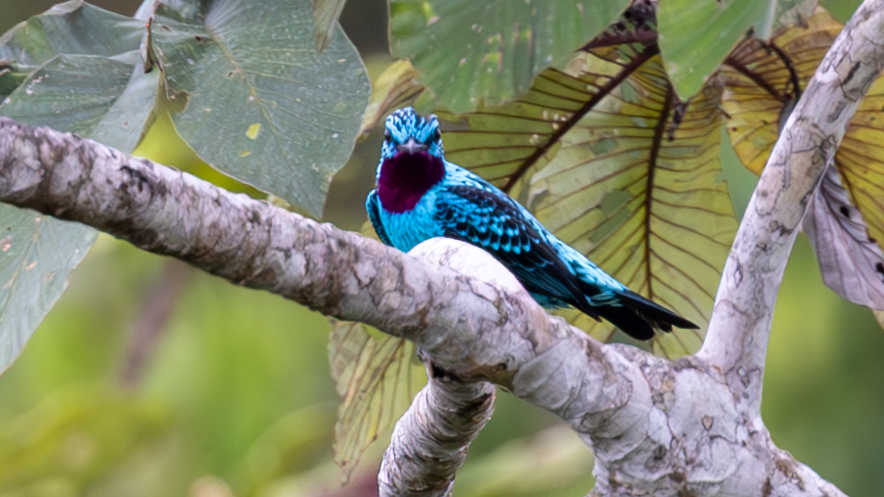
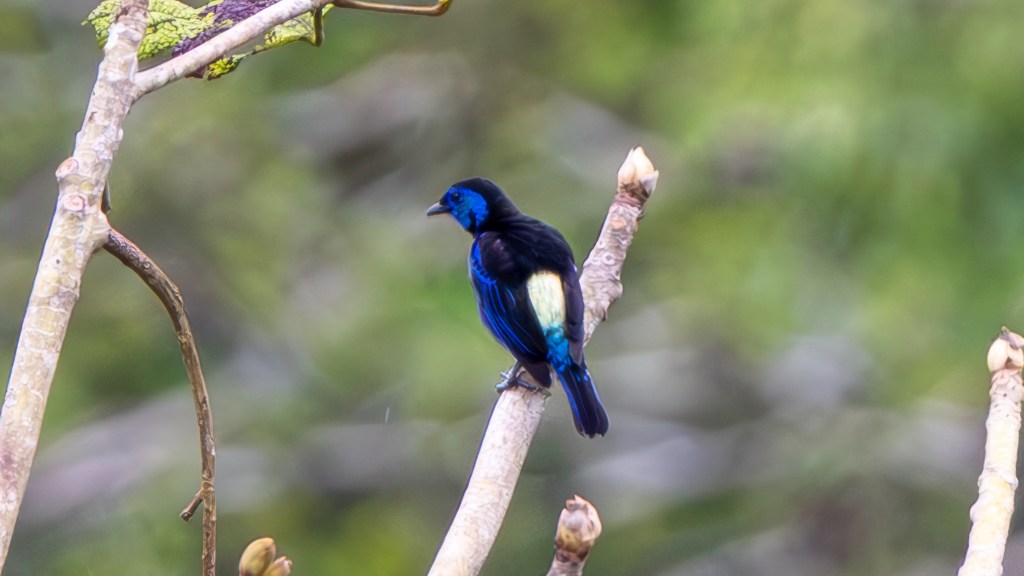
From the top of the towering Ceiba beside the Sani Lodge Canopy Tower, a male SPANGLED COTINGA appeared like a fragment of sky given feathers, its electric blue body shimmering against the distant green of the forest. Nearby, the male PLUM-THROATED COTINGA offered a quieter brilliance—cool turquoise-blue washed with a rich, wine-colored throat that deepened as the light shifted. Both birds sat motionless for long moments, statuesque and aloof, as if aware that such beauty required patience to witness.


All around us, the massive Ceiba tree that supported the tower was alive with its own miniature world. Clusters of bromeliads clung to its enormous limbs—some holding tiny pools of water, others sending out bright red and yellow inflorescences that attracted insects and hummingbirds. Standing there, surrounded by life at every scale, it felt as though we had stepped into the beating heart of the Amazon. Just as we were beginning to lose track of time, a low rumble of thunder rolled across the canopy.
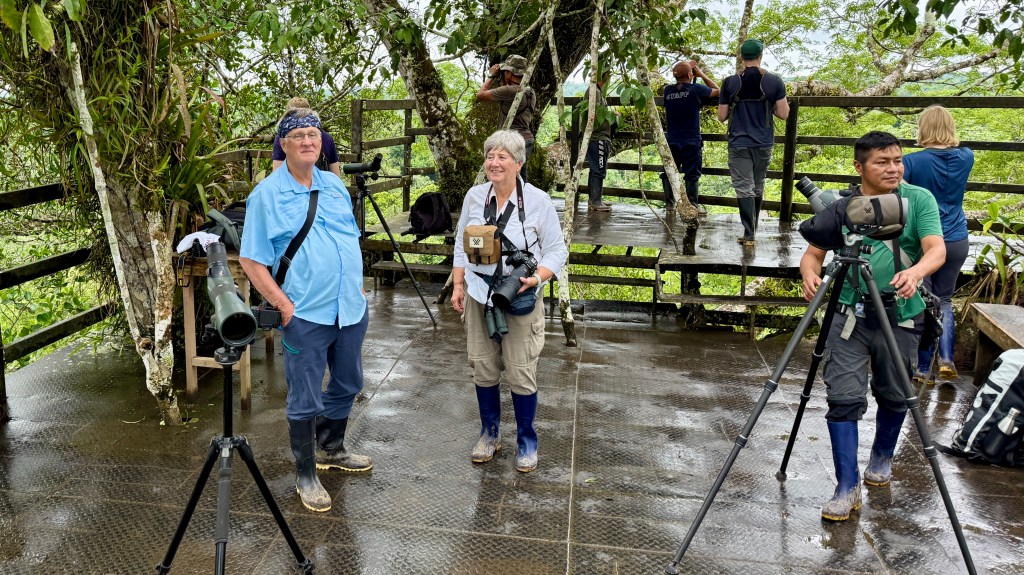
Dark clouds gathered on the horizon, and the first cool gust of wind signaled that the morning’s weather was about to change. With one last look across the treetops, we began our descent, reaching the forest floor just as the first drops of rain began to fall—another perfectly timed escape in a rainforest that rarely grants them.
After conquering all 150 steps on the descent, we gathered at the base of the tower to pull on our rain gear—the storm had finally caught up with us, and the rain was now falling in earnest. We started the muddy trek back toward the canoe landing, but Carlos and Vladimir motioned us down a narrow side path, their expressions hinting at something special. They were taking us to a lek used by one of the Amazon’s most dazzling little performers: the WIRE-TAILED MANAKIN. And there it was—part precious stone, part ray of light—glowing against the dim, rain‑soaked understory.
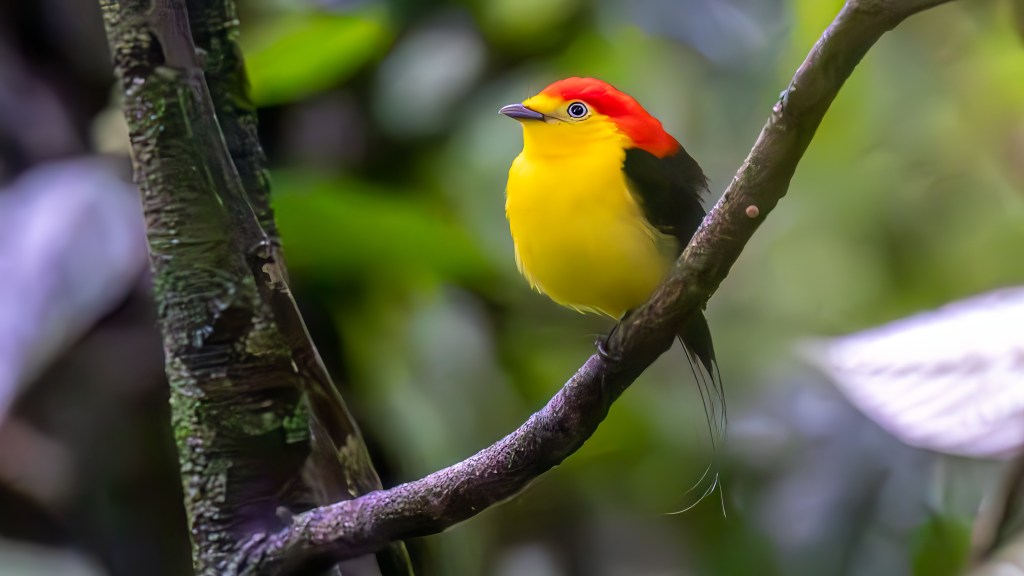
Even through the downpour, the male’s brilliant colors and impossibly delicate wire‑like tail filaments stood out with almost electric intensity. It was one of my top target species for the entire Amazon, and seeing it glow in the dripping forest felt nothing short of magical. We stood there in the rain, completely transfixed.
NEXT UP: EB#27 “Elegance in Ambush: The Double‑toothed Kite of the Amazon“
Additional Photographs and Video


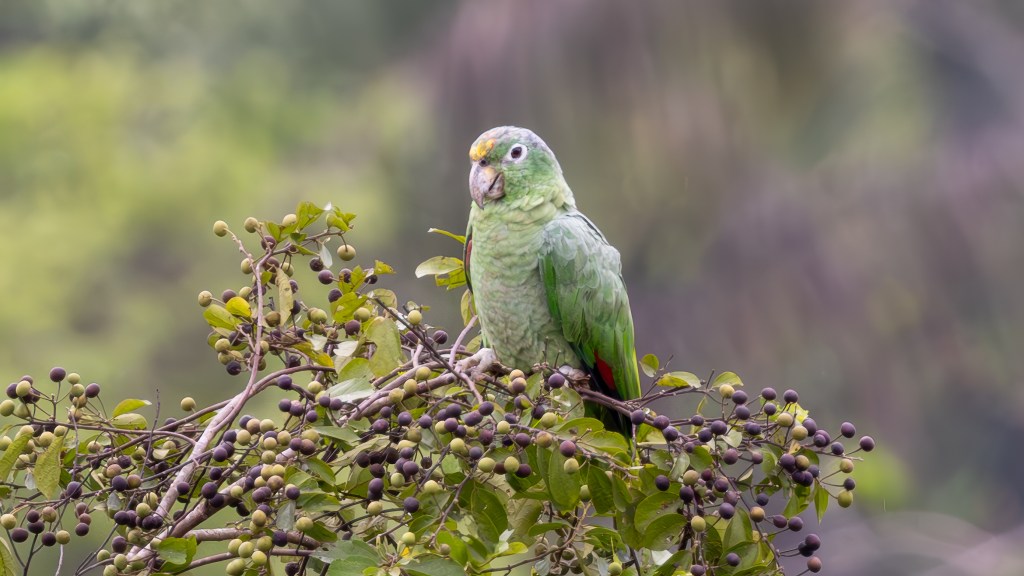
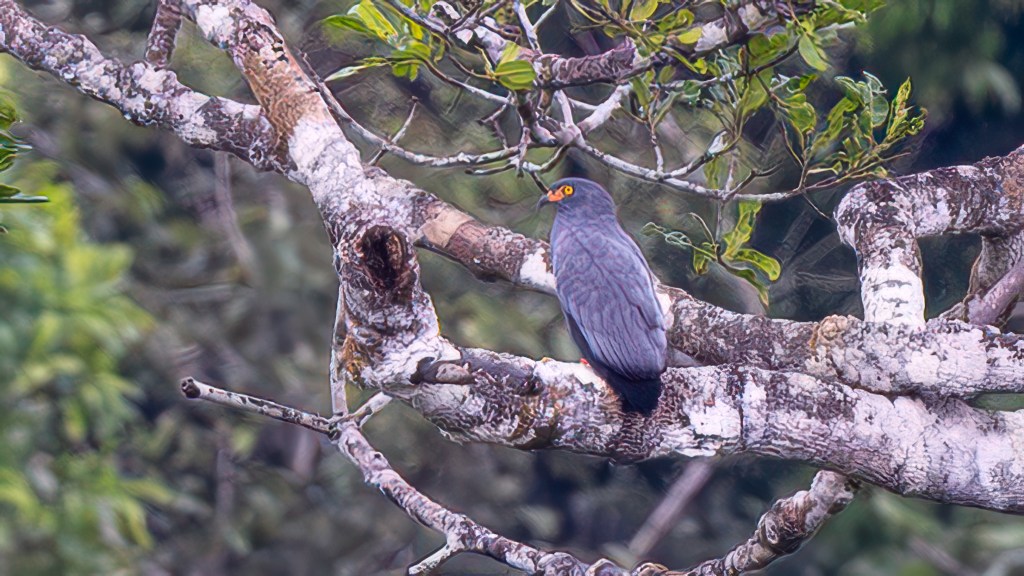

Previous Ecuador Birding blog posts will be linked below.
- EB36 – From Farmland to Sanctuary: WildSumaco’s Rebirth and Its Earliest Arrivals
 In October 2025, Jim Gain joined a birding tour in Ecuador, exploring its rich biodiversity and stunning landscapes over 14 days. The blog series chronicles his experiences with birds and nature.
 - EB35 – Leaving the Amazon Behind, Rising into the Eastern Andes
 In October 2025, Jim Gain joined a birding tour in Ecuador, exploring its rich biodiversity and stunning landscapes over 14 days. The blog series chronicles his experiences with birds and nature.
 - EB34 – One Last Cruise Around the Calluacocha Lagoon
 In October 2025, Jim Gain joined a birding tour in Ecuador, exploring its rich biodiversity and stunning landscapes over 14 days. The blog series chronicles his experiences with birds and nature.
 - EB33 – A Quiet Afternoon Spent Shooting on the Sani Lodge Grounds
 In October 2025, Jim Gain joined a birding tour in Ecuador, exploring its rich biodiversity and stunning landscapes over 14 days. The blog series chronicles his experiences with birds and nature.
 - EB32 – Afternoon Birds, Bats, Butterflies and a Really Cool Pair of Owls at Sani Lodge
 In October 2025, Jim Gain joined a birding tour in Ecuador, exploring its rich biodiversity and stunning landscapes over 14 days. The blog series chronicles his experiences with birds and nature.
 - EB31b – An Avian Hodgepodge of Misplaced Species at San Roque
 In October 2025, Jim Gain joined a birding tour in Ecuador, exploring its rich biodiversity and stunning landscapes over 14 days. The blog series chronicles his experiences with birds and nature.

>>Ecuador Birding Blog Home Page Link https://reflectionsofthenaturalworld.com/ecuador-birding/
*This Ecuador Birding blog post was shaped and polished with the assistance of Microsoft Copilot, helping bring clarity and a consistent flow to my field notes and dictated memories.
**Unless otherwise indicated in the image caption, all photographs (>99%) are mine.

 Reflections of the Natural World
Leave a comment