A Reflections of the Natural World Blog Post Series by Jim Gain

Ecuador Birding – Where Every Feather Tells a Story
From October 26, 2025 through November 8, 2025 I joined 5 other adventurers and an outstanding photographer and birding guide (Liron Gertsman) with Eagle-Eye Tours to Ecuador. This blog series highlights the animals (mostly birds), people and locations we encountered over the 14 full days in this beautiful land.
DAY 3 – Lunchtime
- My Ecuador Species Count up to and including the Sani Isla Community jumps up to: 120 (81 lifers)
- Primary eBird Public Hotspots: Sani Isla community
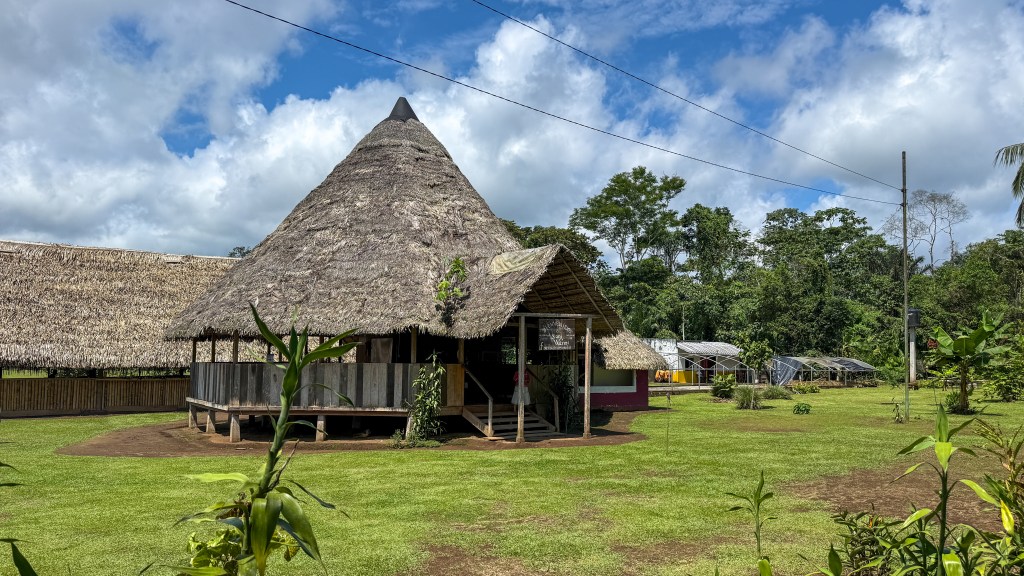
Continuing our morning’s adventures, we arrived at the Sani Isla community center, where we were to be treated to a traditional, community‑prepared lunch. The Sani Isla community sits quietly along the Río Napo, a Kichwa settlement whose history stretches back through countless generations of families who have drawn their livelihood, identity, and stories from the river and the surrounding forest. What was once a semi‑nomadic way of life gradually settled into a permanent village as travel routes shifted, outside pressures increased, and a growing awareness of conservation reshaped the rhythms of the region.
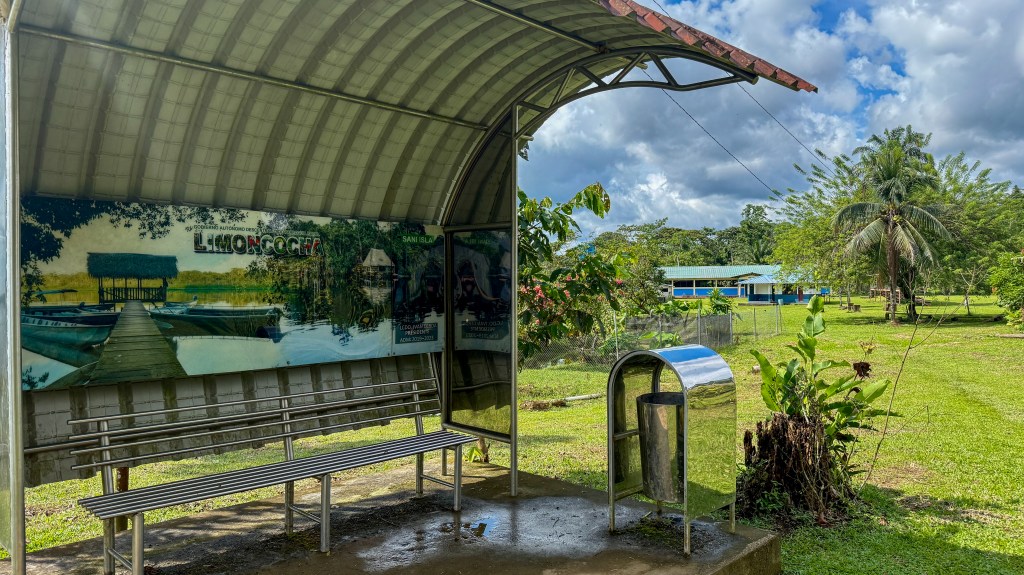
Since we were a bit early, we used the extra time to wander the clearing and take in more of the local wildlife. A PIRATIC FLYCATCHER called insistently from a nearby perch, its bold, robin‑like stance and sharp, ringing notes giving it a surprisingly commanding presence for such a modest‑sized bird. A TROPICAL KINGBIRD soon followed, posing beautifully on an exposed branch—its lemon‑yellow belly and gray head instantly familiar to me from countless sightings throughout Central America and even back home in California. Butterflies drifted through the warm air in bright, fluttering flashes, but before we could attempt any photographs, we were called inside for lunch.


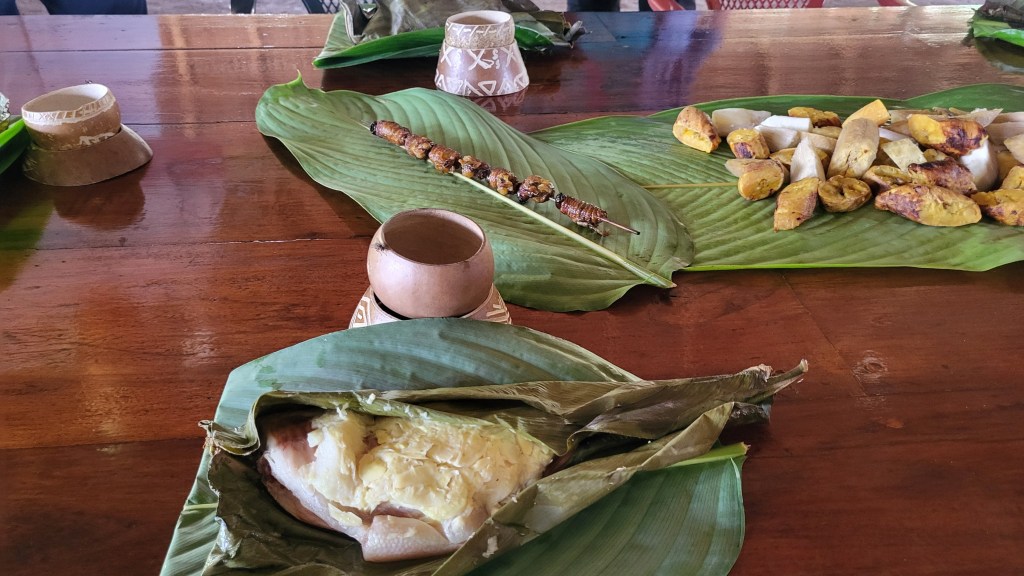
The women of the community had prepared a remarkable meal: fresh tilapia wrapped in plantain leaves, cooked over an open‑fire stove in the center of the airy, thatched‑roof room. Alongside it were roasted plantains and a local delicacy—caterpillars, crisped over the flames and served with quiet pride. It was one of the most memorable and culturally rich meals of the entire trip.

After lunch, we stepped back outside and were immediately rewarded with close views of two spectacular lepidopterans: the GREEN-BANDED URANIA, shimmering with iridescent emerald and black like a living jewel, and the striking widespread EIGHTY-EIGHT BUTTERFLY, its bold black‑and‑white “88” wing pattern as crisp and unmistakable as a hand‑painted signature.


Today, the community reflects a graceful blend of tradition and adaptation: thatched‑roof homes raised on stilts, a communal gathering house where decisions and celebrations unfold, a small bilingual school, and a handful of modest buildings for health and local administration. Narrow footpaths wind between homes, gardens, and docks, while handcrafted wooden canoes rest along the riverbank, ready for the next journey. Everything about the place speaks to an enduring, almost inseparable connection between the people, the Napo River, and the rainforest that sustains them.
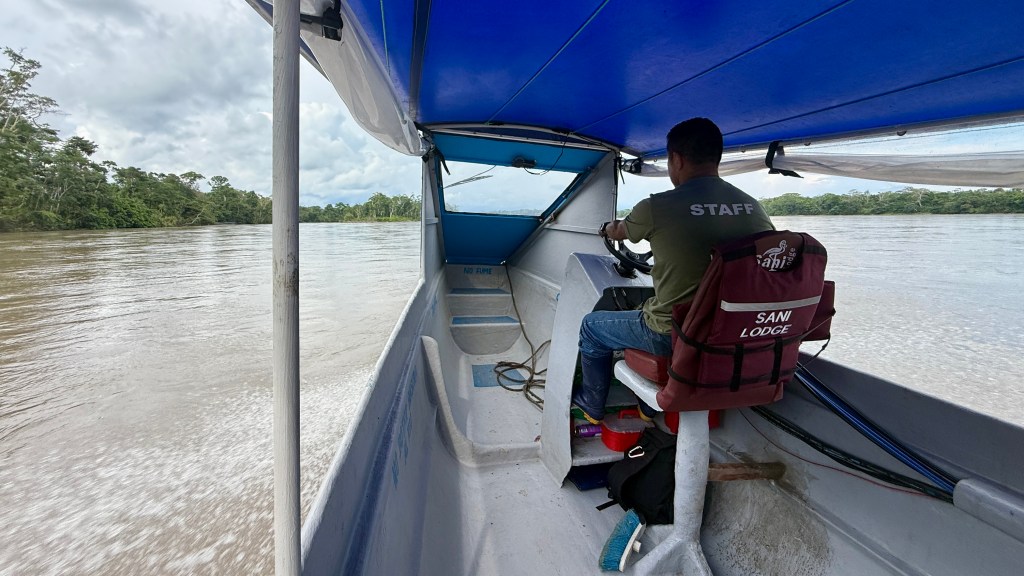
Grateful for having shared this experience, we boarded the Mama Lucy and began our journey back towards the Sani Lodge.
NEXT UP: EB#23 “Animal Encounters Along the Journey Back to Sani Lodge“
Additional Photographs


Previous Ecuador Birding blog posts will be linked below.
- EB42 – The Day the Photos Disappeared at Cabañas San Isidro
 In October 2025, Jim Gain joined a birding tour in Ecuador, exploring its rich biodiversity and stunning landscapes over 14 days. The blog series chronicles his experiences with birds and nature.
 - EB41 – Same Jay, New World: Discovering the Inca Green Jay of Ecuador
 In October 2025, Jim Gain joined a birding tour in Ecuador, exploring its rich biodiversity and stunning landscapes over 14 days. The blog series chronicles his experiences with birds and nature.
 - EB40 – Early Morning Wings at the Moth Light Feeders of Cabañas San Isidro
 In October 2025, Jim Gain joined a birding tour in Ecuador, exploring its rich biodiversity and stunning landscapes over 14 days. The blog series chronicles his experiences with birds and nature.
 - EB39 – Wildlife and Mountain Mists on the Road to San Isidro
 In October 2025, Jim Gain joined a birding tour in Ecuador, exploring its rich biodiversity and stunning landscapes over 14 days. The blog series chronicles his experiences with birds and nature.
 - EB38 – Sunlit Surprise: The Golden‑Tailed Sapphire’s Rainbow Glow
 In October 2025, Jim Gain joined a birding tour in Ecuador, exploring its rich biodiversity and stunning landscapes over 14 days. The blog series chronicles his experiences with birds and nature.
 - EB37 – The Numbers Keep Climbing: WildSumaco’s Hummingbird Explosion Continues
 In October 2025, Jim Gain joined a birding tour in Ecuador, exploring its rich biodiversity and stunning landscapes over 14 days. The blog series chronicles his experiences with birds and nature.

>>Ecuador Birding Blog Home Page Link https://reflectionsofthenaturalworld.com/ecuador-birding/
*This Ecuador Birding blog post was shaped and polished with the assistance of Microsoft Copilot, helping bring clarity and a consistent flow to my field notes and dictated memories.
**Unless otherwise indicated in the image caption, all photographs (>99%) are mine.

 Reflections of the Natural World
Leave a comment