A Reflections of the Natural World Blog Post Series by Jim Gain

Ecuador Birding – Where Every Feather Tells a Story
From October 26, 2025 through November 8, 2025 I joined 5 other adventurers and an outstanding photographer and birding guide (Liron Gertsman) with Eagle-Eye Tours to Ecuador. This blog series highlights the animals (mostly birds), people and locations we encountered over the 14 full days in this beautiful land.
DAY 3 – Mid-Morning
- My Ecuador Species Count up to and including both Parrot Licks at PN Yasuni jumps up to: 114 (78 lifers)
- Primary eBird Public Hotspots: PN Yasuní–saladero del río/parrot lick #1 & PN Yasuní–saladero/parrot lick #2
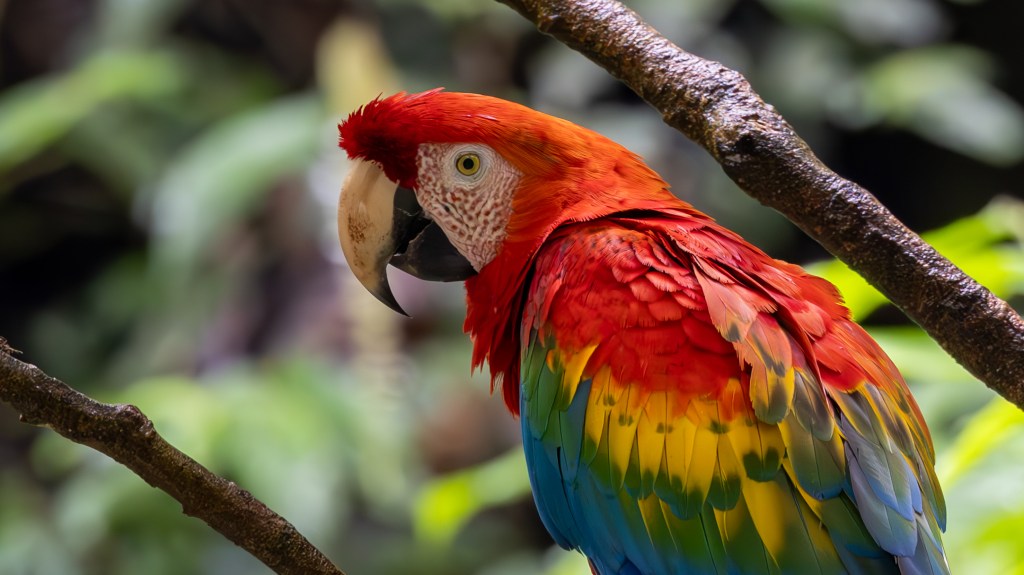
The first sound was a distant, rolling raaak—a voice so bold it seemed to vibrate through the forest itself. At the PN Yasuní clay licks, that call can only mean one thing: Scarlet Macaws are on their way. Even after seeing them in Costa Rica—those loud, charismatic pairs cruising over coastal almond trees—the anticipation still hits like a jolt. But here in the Ecuadorian Amazon, the experience feels deeper, wilder, almost ceremonial.

They arrived in twos and threes, circling high above the treetops before committing to the descent. Against the muted greens of the Amazon canopy, their colors looked impossibly vivid—scarlet wings glowing like embers, yellow panels flashing in the sun, and cobalt-blue tails trailing behind them like brushstrokes. Each wingbeat felt deliberate, powerful, as if the birds were fully aware of the spectacle they created.

The clay licks themselves—steep, exposed riverbanks rich in mineral-laden clay—are one of the Amazon’s most remarkable natural theaters. Dozens of species visit them, but the macaws transform the scene into something unforgettable. Scientists believe the birds consume the clay to neutralize toxins found in the unripe fruits and seeds that make up much of their diet. Whatever the reason, the result is a daily gathering that feels both ancient and essential.
At Yasuní, the macaws approach cautiously at first, landing in the canopy above the lick and calling loudly to one another. Then, one brave bird drops to the ground, cautiously surveying the nearby area for potential danger. The others follow, until the entrance to the cave is alive with color—reds, yellows, and blues shifting and shimmering as the birds drink up the clay-enriched water with their massive bills.

A Familiar Species in a New Light
Watching them here, I couldn’t help comparing the moment to my earlier encounters in Costa Rica. There, Scarlet Macaws feel almost celebratory—bright flashes over beaches, pairs chattering from palm crowns, their calls echoing over the surf. In Ecuador, the mood is different. The macaws seem more connected to the deep pulse of the forest, their presence tied to the rhythms of the river and the chemistry of the soil. The clay lick transforms them from charismatic showpieces into participants in a complex ecological dance.

A Moment That Stays With You
As the morning sun climbed higher, the macaws gradually lifted off, one pair at a time, circling back into the vast green expanse of Yasuní. Their calls faded into the distance, leaving the clay bank quiet once more. But the impression lingered—the sense of having witnessed something both spectacular and deeply rooted in the life of the Amazon.

Seeing Scarlet Macaws in Costa Rica taught me to appreciate their beauty. Seeing them at the Yasuní clay licks taught me to appreciate their story.
NEXT UP: EB#22 “A Cultural Feast with the Amazonian Kichwa of Sani Isla“
Additional Photographs and Video


Previous Ecuador Birding blog posts will be linked below.
- EB42 – The Day the Photos Disappeared at Cabañas San Isidro
 In October 2025, Jim Gain joined a birding tour in Ecuador, exploring its rich biodiversity and stunning landscapes over 14 days. The blog series chronicles his experiences with birds and nature.
 - EB41 – Same Jay, New World: Discovering the Inca Green Jay of Ecuador
 In October 2025, Jim Gain joined a birding tour in Ecuador, exploring its rich biodiversity and stunning landscapes over 14 days. The blog series chronicles his experiences with birds and nature.
 - EB40 – Early Morning Wings at the Moth Light Feeders of Cabañas San Isidro
 In October 2025, Jim Gain joined a birding tour in Ecuador, exploring its rich biodiversity and stunning landscapes over 14 days. The blog series chronicles his experiences with birds and nature.
 - EB39 – Wildlife and Mountain Mists on the Road to San Isidro
 In October 2025, Jim Gain joined a birding tour in Ecuador, exploring its rich biodiversity and stunning landscapes over 14 days. The blog series chronicles his experiences with birds and nature.
 - EB38 – Sunlit Surprise: The Golden‑Tailed Sapphire’s Rainbow Glow
 In October 2025, Jim Gain joined a birding tour in Ecuador, exploring its rich biodiversity and stunning landscapes over 14 days. The blog series chronicles his experiences with birds and nature.
 - EB37 – The Numbers Keep Climbing: WildSumaco’s Hummingbird Explosion Continues
 In October 2025, Jim Gain joined a birding tour in Ecuador, exploring its rich biodiversity and stunning landscapes over 14 days. The blog series chronicles his experiences with birds and nature.

>>Ecuador Birding Blog Home Page Link https://reflectionsofthenaturalworld.com/ecuador-birding/
*This Ecuador Birding blog post was shaped and polished with the assistance of Microsoft Copilot, helping bring clarity and a consistent flow to my field notes and dictated memories.
**Unless otherwise indicated in the image caption, all photographs (>99%) are mine.

 Reflections of the Natural World
Leave a comment