A Reflections of the Natural World Blog Post Series by Jim Gain

Ecuador Birding – Where Every Feather Tells a Story
From October 26, 2025 through November 8, 2025 I joined 5 other adventurers and an outstanding photographer and birding guide (Liron Gertsman) with Eagle-Eye Tours to Ecuador. This blog series highlights the animals (mostly birds), people and locations we encountered over the 14 full days in this beautiful land.
DAY 3 – Mid-Morning
- My Ecuador Species Count up to and including both Parrot Licks at PN Yasuni jumps up to: 114 (78 lifers)
- Primary eBird Public Hotspots: PN Yasuní–saladero del río/parrot lick #1 & PN Yasuní–saladero/parrot lick #2
Our next destination was Yasuní Parrot Lick #1, a towering cliff with a broad, exposed face framed by immense rainforest trees rising just above the riverbank. Our time there was limited, but the activity was immediate and impressive.

Dozens of BLUE-HEADED PARROTS swirled around the cliffside, their powder‑blue heads and emerald bodies glowing against the clay. Mixed among them were hefty MEALY AMAZONS, their large size and subtle green plumage accented by a powdery wash of pale blue around the face. A small flock of YELLOW-CROWNED AMAZONS crowded the branches above the clay lick, their deep green bodies offset by flashes of gold at their crowns as they shifted and murmured among the leaves. Sunlight filtered through the canopy, catching their watchful eyes while the ochre riverbank below glowed with the quiet promise of minerals and safety in numbers.


From there, we continued to Yasuní Parrot Lick #2, which required a longer walk into terra firme forest—slightly higher, drier ground with a noticeably different plant community.


A covered shelter with benches offered a comfortable vantage point, and we settled in with our gear, listening to the distant calls of parrots echoing through the canopy. Clay licks are essential mineral sources for fruit‑eating birds, and we waited patiently for the morning’s procession to begin. At first, the birds were hesitant. Then, unexpectedly, the first visitor appeared—not a parrot at all, but a SPECKLED CHACHALACA, its mottled plumage and loud, clucking calls making it impossible to miss as it strutted into view before darting away again.


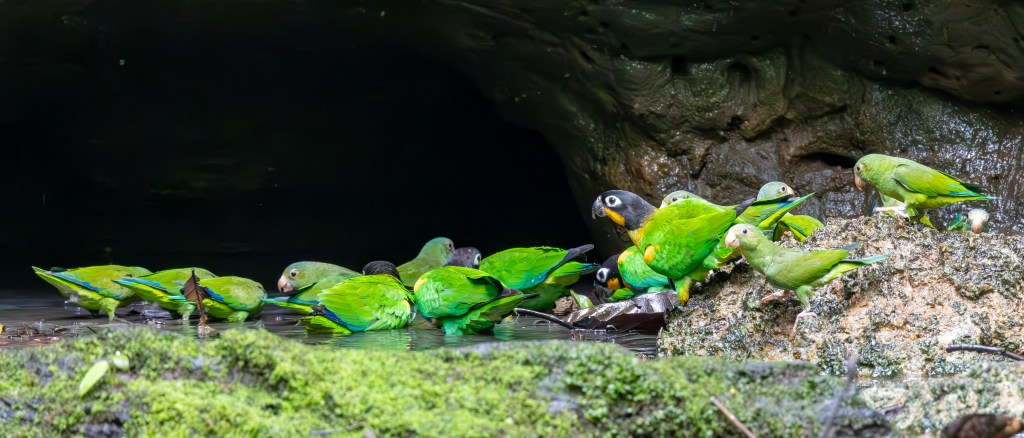
Moments later, the stars of the show arrived. A single SCARLET MACAW glided down, its blazing red, blue, and yellow plumage lighting up the dim forest like a flying flame. (More about this species in the next blog post!) After they departed, the smaller members of the parrot family began to descend. COBALT-WINGED PARAKEETS fluttered in with quick, nervous energy, their vivid blue wings flashing brightly each time they shifted position. At the clay lick’s ochre-stained bank, a pair of ORANGE-CHEEKED PARROTS leaned forward to drink, their emerald bodies mirrored in the damp earth as the soft orange on their cheeks glowed against the mineral-rich clay. Between cautious sips they paused, alert and close, before lifting together in a flutter of green wings that carried the taste of the Amazon back into the forest.


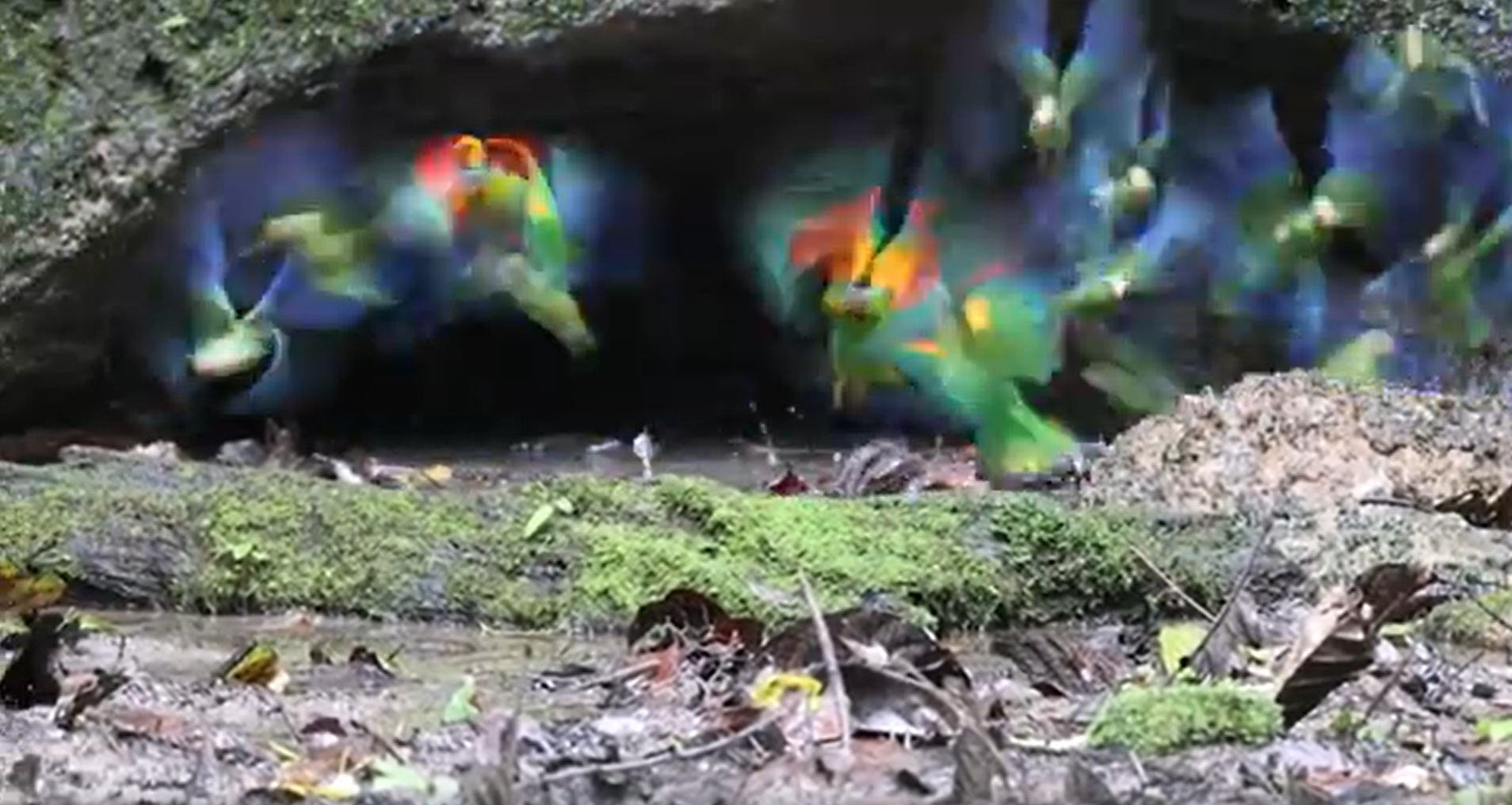
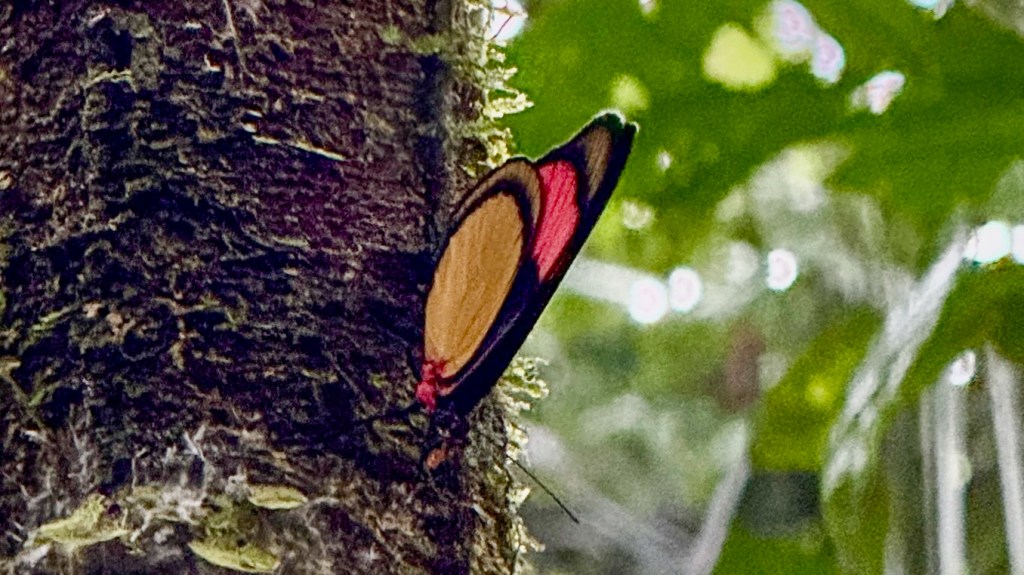
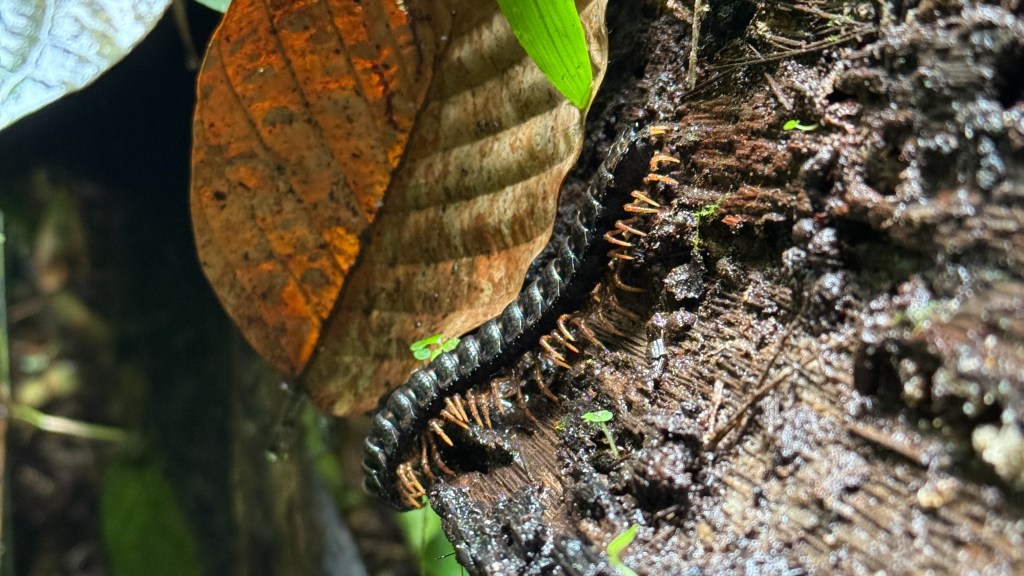
Then, as if responding to a silent cue, the entire flock erupted into flight—hundreds of wings beating at once, a swirling explosion of greens, blues, reds, and golds vanishing back into the forest. It was one of those Amazonian moments that leaves you breathless, a reminder of how alive and dynamic this landscape truly is. As the last of the parrots vanished into the canopy in a burst of color and wingbeats, the forest seemed to exhale, settling back into its quieter rhythms. With the excitement of the clay lick still buzzing through the group, we began to explore the surrounding terra firme forest, where the trail revealed an entirely different cast of Amazonian wonders. Not far from the shelter, a BATESIA HYPOCHLORA butterfly drifted into view, its delicate wings glowing with a surreal wash of powdery blue and soft lavender—so luminous it looked almost painted. It settled briefly on a sunlit leaf, giving us just enough time to admire and photograph its ethereal beauty before it fluttered deeper into the understory. A few steps farther along, Chris spotted movement near the base of a rotting log. Coiled among the leaf litter was a POLYDESMIDAN MILLIPEDE, its flattened, armor‑like segments arranged in a perfect geometric pattern. The creature’s glossy, dark body glinted with subtle iridescence as it inched methodically across the forest floor, each tiny leg moving in mesmerizing waves.
Nearby, a BROAD-HEADED WOODLIZARD clung to the trunk of a moss‑covered tree, its wide triangular head and mottled green‑brown scales blending seamlessly with the bark. It watched us with calm, unblinking eyes, perfectly still except for the faint rise and fall of its breath—an Amazonian sentinel guarding its patch of forest.But perhaps the most intriguing discovery was botanical rather than animal. Just off the trail stood a towering WALKING PALM, its trunk lifted high on a spray of long, stilt‑like roots bristling with what felt like a million needle‑sharp spines. The structure looked almost alien, as if the tree were poised to stride away at any moment. Our guide explained how these unusual roots allow the palm to “walk” slowly toward sunlight over the years, a quiet, patient migration written into its very architecture. Standing beneath it, surrounded by the layered sounds of the rainforest, the tree felt like a living reminder of how strange and adaptive life becomes in a place as ancient and competitive as the Amazon.


NEXT UP: EB#21 “The Amazon Ignites: A Scarlet Macaw Spectacle at the Clay Licks“
Additional Photographs and Video


Previous Ecuador Birding blog posts will be linked below.
- EB40 – Early Morning Wings at the Moth Light Feeders of Cabañas San Isidro
 In October 2025, Jim Gain joined a birding tour in Ecuador, exploring its rich biodiversity and stunning landscapes over 14 days. The blog series chronicles his experiences with birds and nature.
 - EB39 – Wildlife and Mountain Mists on the Road to San Isidro
 In October 2025, Jim Gain joined a birding tour in Ecuador, exploring its rich biodiversity and stunning landscapes over 14 days. The blog series chronicles his experiences with birds and nature.
 - EB38 – Sunlit Surprise: The Golden‑Tailed Sapphire’s Rainbow Glow
 In October 2025, Jim Gain joined a birding tour in Ecuador, exploring its rich biodiversity and stunning landscapes over 14 days. The blog series chronicles his experiences with birds and nature.
 - EB37 – The Numbers Keep Climbing: WildSumaco’s Hummingbird Explosion Continues
 In October 2025, Jim Gain joined a birding tour in Ecuador, exploring its rich biodiversity and stunning landscapes over 14 days. The blog series chronicles his experiences with birds and nature.
 - EB36 – From Farmland to Sanctuary: WildSumaco’s Rebirth and Its Earliest Arrivals
 In October 2025, Jim Gain joined a birding tour in Ecuador, exploring its rich biodiversity and stunning landscapes over 14 days. The blog series chronicles his experiences with birds and nature.
 - EB35 – Leaving the Amazon Behind, Rising into the Eastern Andes
 In October 2025, Jim Gain joined a birding tour in Ecuador, exploring its rich biodiversity and stunning landscapes over 14 days. The blog series chronicles his experiences with birds and nature.

>>Ecuador Birding Blog Home Page Link https://reflectionsofthenaturalworld.com/ecuador-birding/
*This Ecuador Birding blog post was shaped and polished with the assistance of Microsoft Copilot, helping bring clarity and a consistent flow to my field notes and dictated memories.
**Unless otherwise indicated in the image caption, all photographs (>99%) are mine.

 Reflections of the Natural World
Leave a comment