A Reflections of the Natural World Blog Post Series by Jim Gain

Ecuador Birding – Where Every Feather Tells a Story
From October 26, 2025 through November 8, 2025 I joined 5 other adventurers and an outstanding photographer and birding guide (Liron Gertsman) with Eagle-Eye Tours to Ecuador. This blog series highlights the animals (mostly birds), people and locations we encountered over the 14 full days in this beautiful land.
DAY 2 – Late Afternoon
- My Ecuador Species Count up to and including our arrival at the Sani Lodge jumps up to: 76 (52 lifers)
- Primary eBird Public Hotspots: Sani Lodge
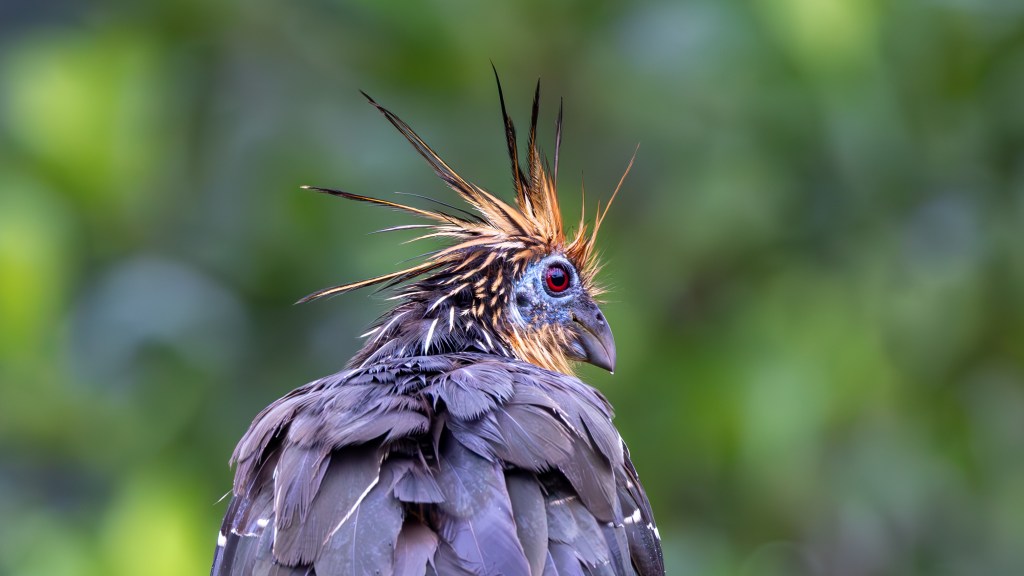
The Hoatzin is one of those birds that feels less like a species and more like a story the forest has been telling for millions of years. Encountering it in Ecuador—especially along the black‑water lagoons and quiet backchannels of the Amazon—feels like stepping briefly into deep time.

My first glimpse came as a rustle in the riverside vegetation, followed by a slow, deliberate movement that seemed almost too heavy for the branch it clung to. Then it emerged: a Hoatzin, looking every bit like a creature that missed the memo on modern evolution. Its shaggy crest flared in the humid air, chestnut wings glowed with warm light, and the cobalt‑blue facial skin framed those amber eyes with an almost prehistoric intensity.

The Hoatzin doesn’t fly so much as heave itself into the air, gliding awkwardly from branch to branch. But that ungainly style is part of its charm. In Ecuador, locals affectionately call it the “stinky turkey”—a nod to the musky odor produced by its unusual digestive system. The Hoatzin is the only bird in the world that digests food like a cow. Instead of relying on a muscular gizzard, it ferments leaves in an enlarged crop. This process breaks down tough plant material but also makes the bird surprisingly poor at flight—its chest muscles are reduced to make room for that fermentation chamber. This odd biology gives the Hoatzin a place all its own on the avian family tree. Scientists have debated its evolutionary relationships for decades, and it remains one of the most distinctive—and puzzling—birds on Earth.

Ecuador’s Amazon basin is one of the best places to see Hoatzins, especially around oxbow lakes and slow‑moving tributaries. They gather in small, noisy groups, clambering through overhanging branches with a series of croaks, hisses, and grunts that sound more reptilian than avian. If you’re lucky, you might spot a juvenile. Young Hoatzins still carry the species’ most famous ancestral trait: claws on their wings. These help them climb back into vegetation if they fall into the water—a remarkable throwback to early bird evolution.

On this trip, I watched a small group settle into the late‑afternoon light, their crests glowing like backlit flames. One bird stretched its wings, revealing the rich tapestry of chestnut, buff, and black that makes their plumage so striking. Another let out a guttural croak that echoed across the still water. There was no rush, no urgency—just the slow, ancient rhythm of a species perfectly at home in its world. In a place as vibrant and fast‑moving as the Amazon, the Hoatzin feels like a reminder to pause, breathe, and appreciate the strange and beautiful threads that tie the present to the past.

NEXT UP: EB#18 “First Encounters in the Amazon: A Bird‑Filled Afternoon“
Additional Photographs and Video

Previous Ecuador Birding Blog Posts:
- EB37 – The Numbers Keep Climbing: WildSumaco’s Hummingbird Explosion Continues
 In October 2025, Jim Gain joined a birding tour in Ecuador, exploring its rich biodiversity and stunning landscapes over 14 days. The blog series chronicles his experiences with birds and nature.
 - EB36 – From Farmland to Sanctuary: WildSumaco’s Rebirth and Its Earliest Arrivals
 In October 2025, Jim Gain joined a birding tour in Ecuador, exploring its rich biodiversity and stunning landscapes over 14 days. The blog series chronicles his experiences with birds and nature.
 - EB35 – Leaving the Amazon Behind, Rising into the Eastern Andes
 In October 2025, Jim Gain joined a birding tour in Ecuador, exploring its rich biodiversity and stunning landscapes over 14 days. The blog series chronicles his experiences with birds and nature.
 - EB34 – One Last Cruise Around the Calluacocha Lagoon
 In October 2025, Jim Gain joined a birding tour in Ecuador, exploring its rich biodiversity and stunning landscapes over 14 days. The blog series chronicles his experiences with birds and nature.
 - EB33 – A Quiet Afternoon Spent Shooting on the Sani Lodge Grounds
 In October 2025, Jim Gain joined a birding tour in Ecuador, exploring its rich biodiversity and stunning landscapes over 14 days. The blog series chronicles his experiences with birds and nature.
 - EB32 – Afternoon Birds, Bats, Butterflies and a Really Cool Pair of Owls at Sani Lodge
 In October 2025, Jim Gain joined a birding tour in Ecuador, exploring its rich biodiversity and stunning landscapes over 14 days. The blog series chronicles his experiences with birds and nature.
>>Ecuador Birding Blog Home Page Link https://reflectionsofthenaturalworld.com/ecuador-birding/
*This Ecuador Birding blog post was shaped and polished with the assistance of Microsoft Copilot, helping bring clarity and a consistent flow to my field notes and dictated memories.
**Unless otherwise indicated in the image caption, all photographs (>99%) are mine.

 Reflections of the Natural World
Leave a comment