A Reflections of the Natural World Blog Post Series by Jim Gain

Ecuador Birding – Where Every Feather Tells a Story
From October 26, 2025 through November 8, 2025 I joined 5 other adventurers and an outstanding photographer and birding guide (Liron Gertsman) with Eagle-Eye Tours to Ecuador for a photography-focused tour. This blog series highlights the animals (mostly birds), people and locations we encountered over the 14 full days in this beautiful land.
- My Ecuador Species Count up to but not including Mirador y Restaurante Guaycapi jumps up to: 41 (31 lifers)
- Primary eBird Public Hotspots: Ecoruta–Alambi Valley
DAY 1 – Early Afternoon
Leaving the high páramo of Zuro Loma—still catching my breath from the thin air at more than 10,000 feet—we began our long descent along the Ecoruta Paseo del Quinde. The road wound gracefully downslope, tracing the course of the Alambi River as it carved its way through the mountains. The landscape shifted quickly as we dropped in elevation: the stark, open páramo grasses gave way to denser vegetation, and the air grew noticeably warmer and heavier with moisture.

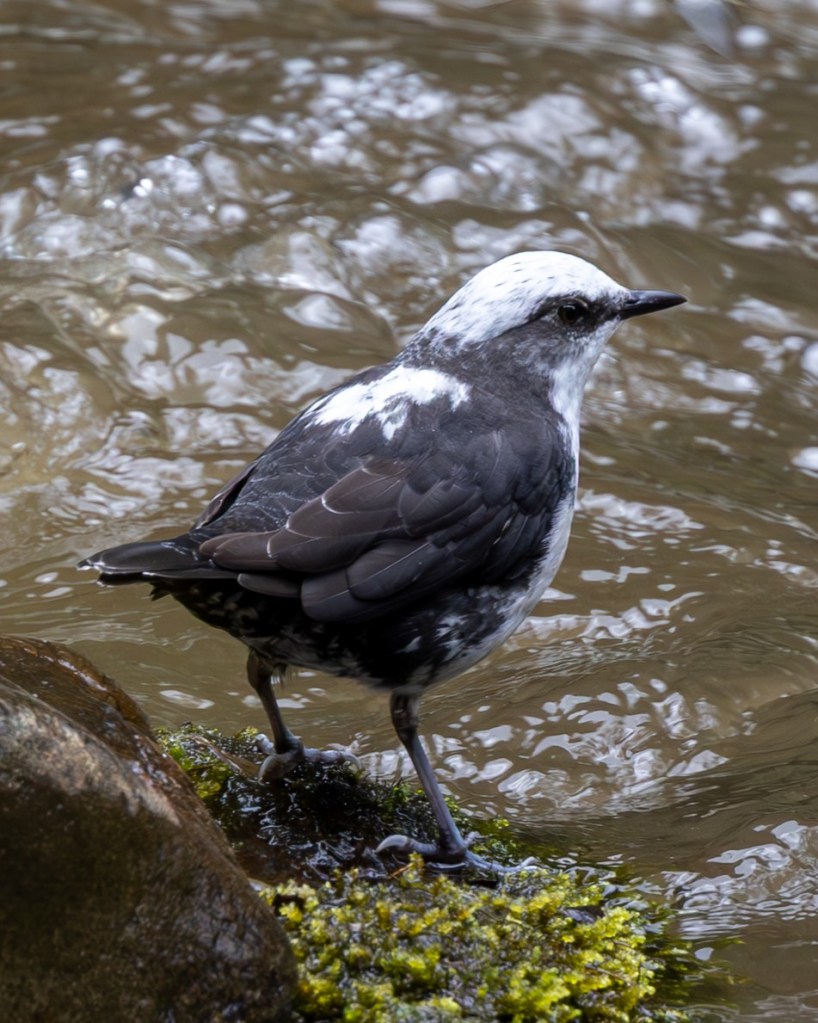
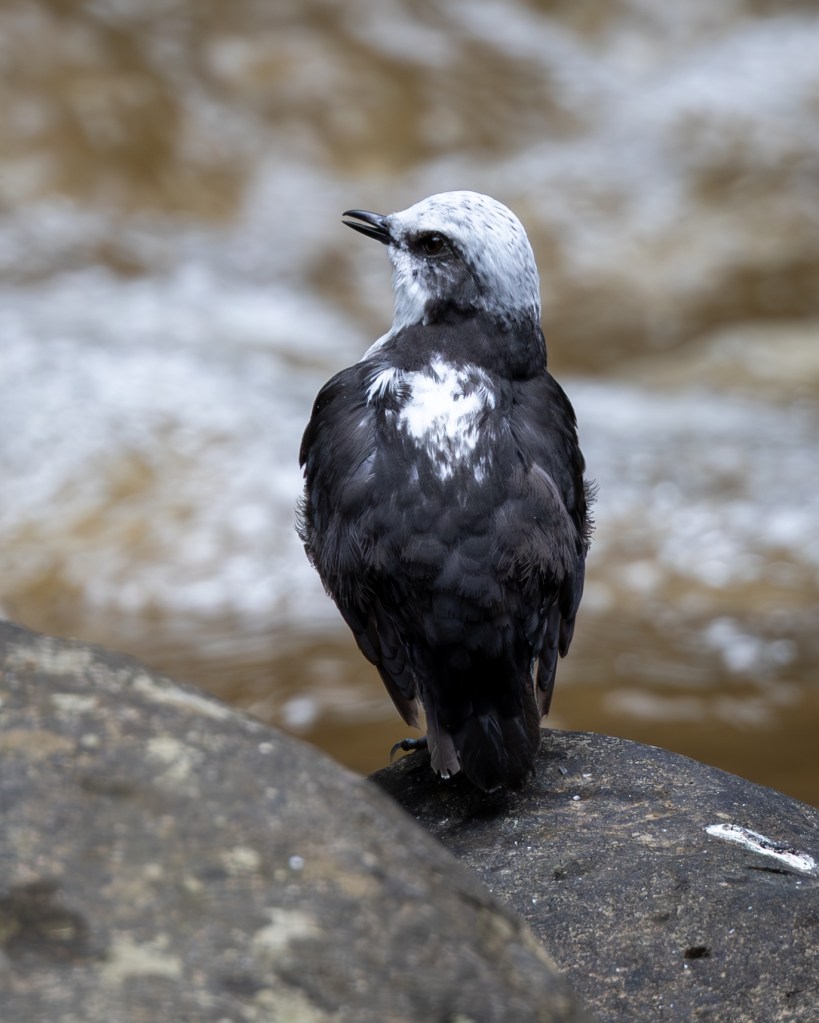
At a broad bend in the river, where the water opened into a long, visible stretch, Edwin suddenly called out that he had spotted one of our key targets for the trip—the WHITE-CAPPED DIPPER. We pulled over immediately. Alex and I jumped out of the car, cameras ready, and managed to capture several solid photographs of this unusual species, one of only two dippers found anywhere in the Americas. The bird was striking: a dark, soot‑brown body offset by a gleaming white cap, bobbing rhythmically on slick river stones before plunging headfirst into the torrent. Watching it forage underwater, surfacing with insect larvae clutched in its bill, felt like a small triumph—a reward for the long, jarring morning we had endured.

For me, still recovering from the punishing backseat ride up to Zuro Loma, the descent was a welcome relief. The road here was smoother, far kinder to my spine, and I found myself relaxing for the first time all day. We passed through the small Tandayapa community, a place that has become almost legendary among birders, and soon merged onto Highway E28. By then we had dropped roughly 5,000 feet in elevation and were fully immersed in the Chocó cloud forest—a region famed for its biodiversity and constant mist.

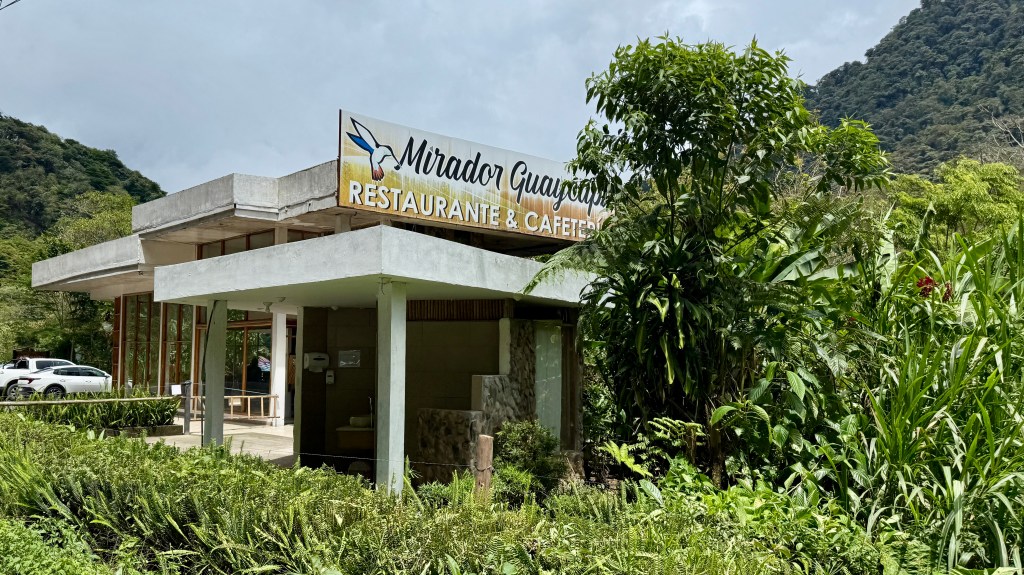
The transition felt dramatic, almost like crossing an invisible ecological threshold. And I won’t deny it: the sight of a real paved highway beneath us felt like a gift. After the bone‑rattling climb that morning, the smooth asphalt was a small luxury, and my back was profoundly grateful for it. Perched along this very stretch of the old Quito–Mindo road is Mirador y Restaurante Guaycapi, a place that has quietly become one of the most beloved birding stops in the entire region. What began as a simple scenic restaurant gradually evolved into a must‑visit site for birdwatchers by offering something that cloud‑forest birding rarely guarantees: easy, close, and consistent access to spectacular species.

With its open‑air terrace overlooking a lush valley where hummingbird feeders, fruit stations, and flowering shrubs were to draw a constant parade of dazzling birds the Mirador y Restaurante Guaycapi would not disappoint.
NEXT UP: EB#11 “Feathers, Food, and Forest Views at Mirador Guaycapi“
Additional Photographs


Previous Ecuador Birding Blog Posts:
- EB40 – Early Morning Wings at the Moth Light Feeders of Cabañas San Isidro
 In October 2025, Jim Gain joined a birding tour in Ecuador, exploring its rich biodiversity and stunning landscapes over 14 days. The blog series chronicles his experiences with birds and nature.
 - EB39 – Wildlife and Mountain Mists on the Road to San Isidro
 In October 2025, Jim Gain joined a birding tour in Ecuador, exploring its rich biodiversity and stunning landscapes over 14 days. The blog series chronicles his experiences with birds and nature.
 - EB38 – Sunlit Surprise: The Golden‑Tailed Sapphire’s Rainbow Glow
 In October 2025, Jim Gain joined a birding tour in Ecuador, exploring its rich biodiversity and stunning landscapes over 14 days. The blog series chronicles his experiences with birds and nature.
 - EB37 – The Numbers Keep Climbing: WildSumaco’s Hummingbird Explosion Continues
 In October 2025, Jim Gain joined a birding tour in Ecuador, exploring its rich biodiversity and stunning landscapes over 14 days. The blog series chronicles his experiences with birds and nature.
 - EB36 – From Farmland to Sanctuary: WildSumaco’s Rebirth and Its Earliest Arrivals
 In October 2025, Jim Gain joined a birding tour in Ecuador, exploring its rich biodiversity and stunning landscapes over 14 days. The blog series chronicles his experiences with birds and nature.
 - EB35 – Leaving the Amazon Behind, Rising into the Eastern Andes
 In October 2025, Jim Gain joined a birding tour in Ecuador, exploring its rich biodiversity and stunning landscapes over 14 days. The blog series chronicles his experiences with birds and nature.
>>Ecuador Birding Blog Home Page Link https://reflectionsofthenaturalworld.com/ecuador-birding/
*This Ecuador Birding blog post was shaped and polished with the assistance of Microsoft Copilot, helping bring clarity and a consistent flow to my field notes and dictated memories.
**Unless otherwise indicated in the image caption, all photographs (>99%) were taken by me.

 Reflections of the Natural World
Leave a comment