

One Moment in Nature is a reflection back in time to a moment of discovery as I explored the natural settings around me. Through the sharing of this moment, is my hope that readers will become motivated to learn more about our environment and its inhabitants, and become passionate advocates for conservation. One Moment in Nature is a Reflections of the Natural World Blog Post Series by Jim Gain
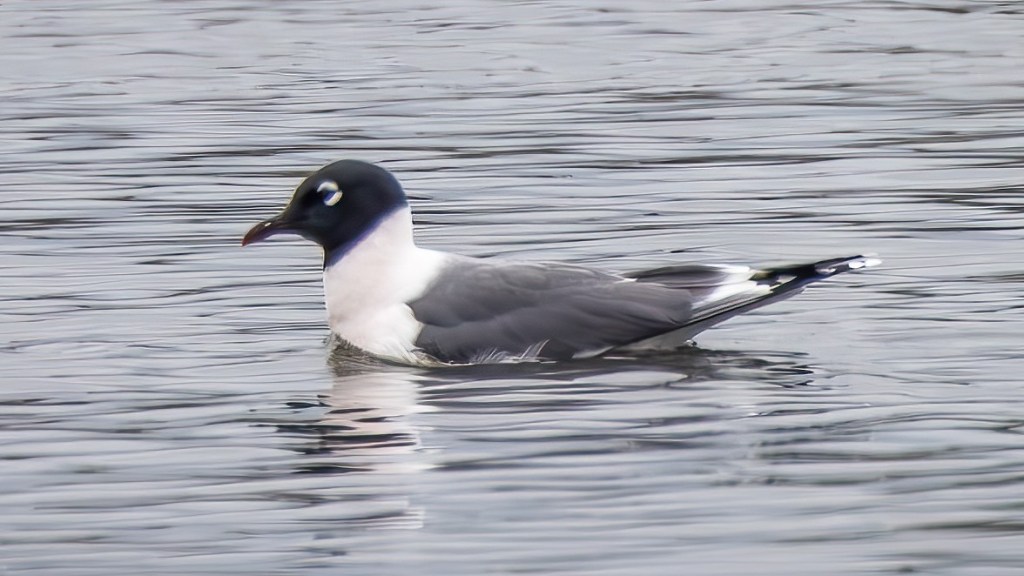
THE FRANKLIN’S GULL MOMENT – Jim Ross and I had just documented Central Valley’s first ever Yellow-footed Gull record at the Modesto WTP when we stopped to look through the usual Bonaparte’s Gulls at the north end of Facultative Pond #3. I immediately noticed that several of the “Bonaparte’s” Gulls were clearly larger and all in full alternate plumage with dark black hoods. A couple of the 9 or so larger gulls took flight and their uniquely patterned primaries stood out proving that they were not Bonaparte’s, but rather Franklin’s Gulls. A couple of the Franklin’s Gulls were also showing their rosy-pink upper chest and throat colors. This was a first for me in Stanislaus County as all of my previous encounters with Franklin’s Gulls involved basic (non-breeding) plumage birds.

WHAT’S IN A NAME – Franklin’s Gull Leucophaeus pipixcan; Greek. λευκοφαιος leukophaios = whitish-grey, ash-coloured; Aztec/Nahuatl names Pipixcan

PHYSICAL DESCRIPTION – Franklin’s Gull is a medium-sized gull with a compact frame, slender wings, and a buoyant, graceful flight. In breeding plumage, it sports a striking black hood, vivid white eye crescents, and soft gray upperparts, complemented by a bright red bill and legs. Most distinctive is the delicate pink wash across its chest and belly, a seasonal flush that adds elegance to its spring appearance.

Outside the breeding season, the black hood recedes to a dusky smudge behind the eye, and the pink tones fade, leaving a more muted gray-and-white palette. Its agile flight and sociable nature make it a lively presence in migration flocks

STATUS AND DISTRIBUTION IN CALIFORNIA’S CENTRAL VALLEY – Franklin’s Gull is a transient visitor to California’s Central Valley, primarily during spring and fall migration, when flocks pass through open wetlands, flooded fields, and agricultural basins. It is generally uncommon but regular in occurrence, with numbers varying annually depending on water conditions and broader migratory patterns. The species is listed as Least Concern by the IUCN, with a large and increasing population that breeds in inland marshes of the northern Great Plains and winters along the Pacific coast of South America. Natural history observations highlight its buoyant flight, gregarious behavior, and striking breeding plumage, with black hood and rosy underparts earning it the nickname “rosy dove”.

Most recent Blog Posts from the One Moment in Nature series.
- A Collaborative Habitat Survey to Guide Future Nest‑Box Conservation
- Bald Eagle Family in Del Puerto Canyon
- Rosy Dove Franklin’s Gulls
- Western Grebe
- American Barn Owl

 Reflections of the Natural World
Leave a comment