

One Moment in Nature is a reflection back in time to a moment of discovery as I explored the natural settings around me. Through the sharing of this moment, is my hope that readers will become motivated to learn more about our environment and its inhabitants, and become passionate advocates for conservation. One Moment in Nature is a Reflections of the Natural World Blog Post Series by Jim Gain

THE OSPREY VS GIANT CARP MOMENT
As I patrolled the western edge of Modesto reservoir heading towards the damn and hoping to photograph a Western Grebe I came upon an Osprey with a huge Carp sitting on a large fence post. As I approached I could see that the carp wasn’t moving and had likely beed deceased for a while. I got closer, turned off my car and just watched it try to feed (and took many photos).
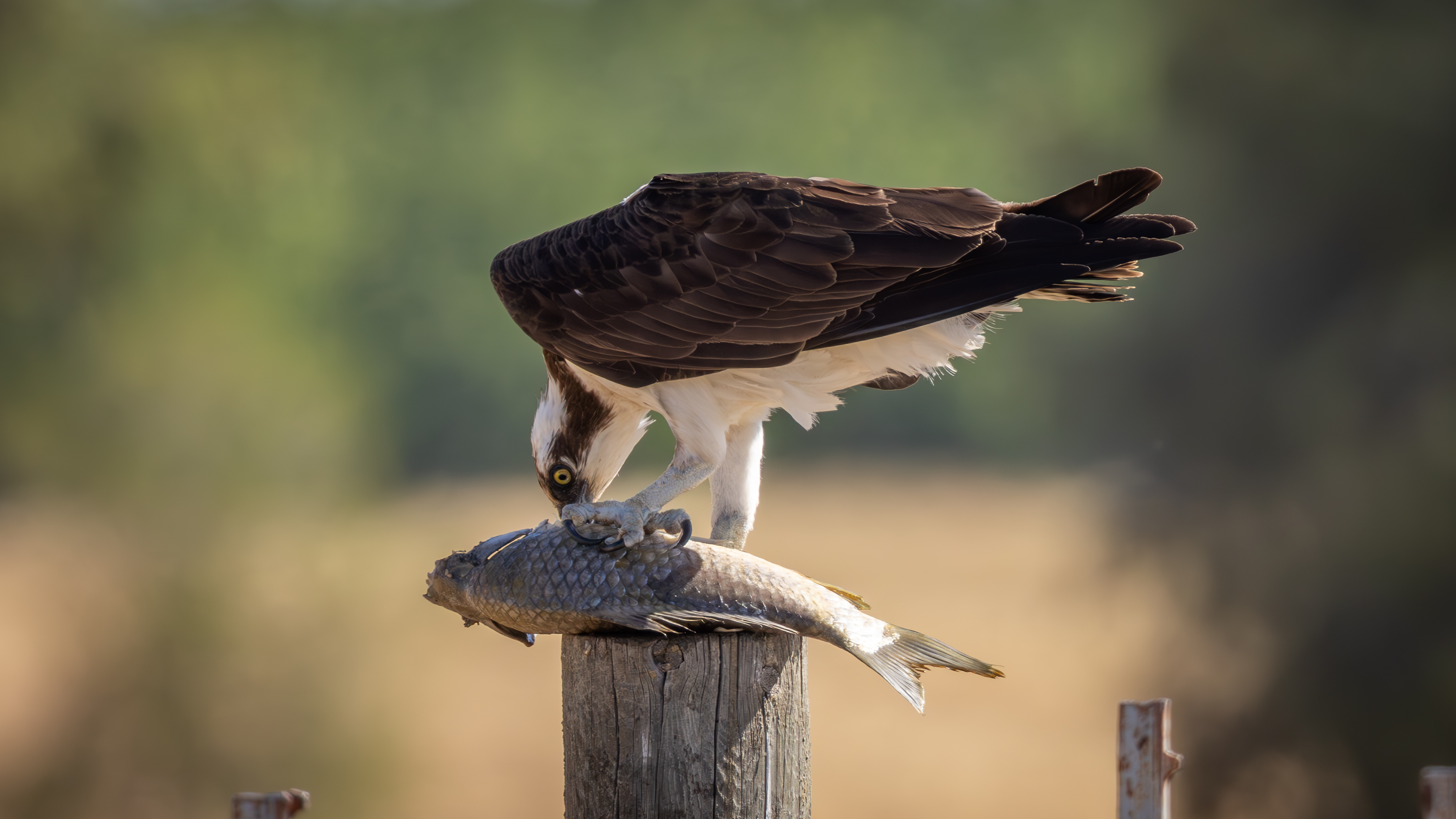
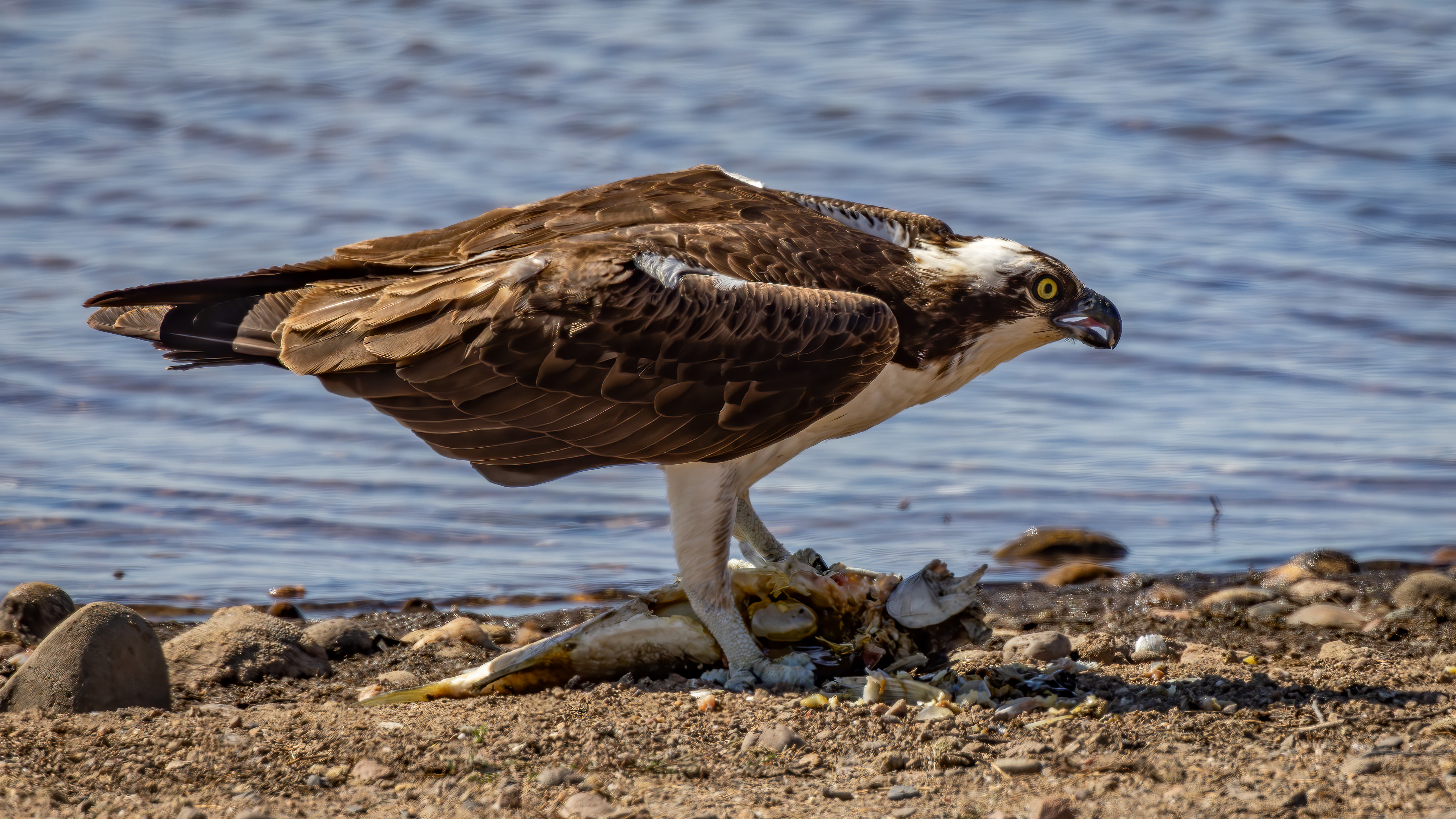
Eventually another car came along and the Osprey took off with Carp in tow. I followed its flight and came upon it down the road a bit this time on the lake shore.
ABOUT THE OSPREY IN CENTRAL CALIFORNIA
In California’s Central Valley, the Osprey has undergone a quiet but remarkable resurgence. Historically present around major water bodies prior to European settlement, the species was nearly extirpated from the region due to human persecution and the widespread use of DDT, which caused eggshell thinning and reproductive failure. Following the ban of DDT in 1972, Ospreys began recolonizing the Valley, with breeding activity first noted in the northern reaches during the mid-1970s. By the 1980s and 1990s, the species had expanded its range, establishing nesting territories throughout much of the Valley’s aquatic landscape—including reservoirs, rivers, and even urban lakes.

Today, Ospreys are a regular sight in the Central Valley, particularly near large bodies of water where fish are abundant. They nest on tall snags, utility poles, and increasingly on artificial platforms designed to support their recovery. Breeding pairs are most concentrated in the northern Valley, but scattered nesting has been documented farther south as well. Wintering birds are also present, though recent data suggest a slight decline in winter numbers in some areas, possibly linked to drought and reduced fish availability. Their occurrence is closely tied to the health of aquatic ecosystems, making them a useful indicator of environmental quality.
Globally, the Osprey is listed as Least Concern, and in California, its population is considered stable or increasing. However, future challenges loom. Climate change-driven droughts threaten to reduce foraging habitat and fish prey, potentially impacting breeding success. Conservation efforts that maintain reservoir levels, protect riparian zones, and support artificial nesting structures have been instrumental in the species’ recovery. Continued monitoring is essential to ensure that this upward trend does not reverse under mounting environmental pressures.

Natural history sets the Osprey apart as a specialist among raptors. It feeds almost exclusively on fish, diving feet-first with dramatic precision. Its reversible outer toe and spiny foot pads help grip slippery prey, while its keen eyesight allows it to spot fish from high above. Unlike most hawks, Ospreys are comfortable nesting near human activity, provided their foraging needs are met. In the Central Valley, their presence is both a symbol of ecological resilience and a reminder of the delicate balance between wildlife and water management.
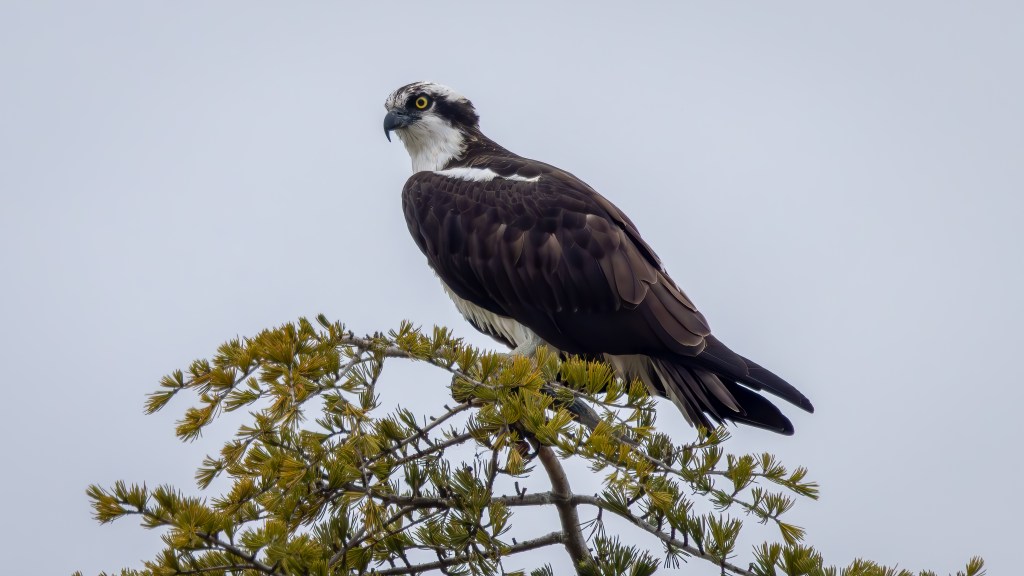
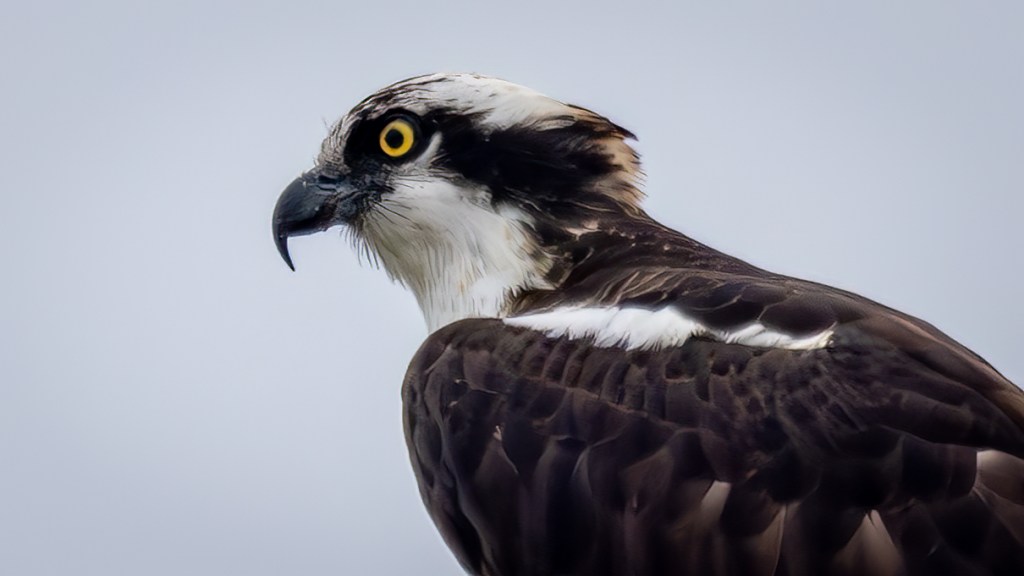
A PHOTO GALLERY OF OSPREY


Most recent Blog Posts from the One Moment in Nature series.

 Reflections of the Natural World
Leave a comment