Western Europe Birds & Birding (#46/52): From the Highland Willow Scrub of Scotland to the Aegean Islands in the Sea of Crete, Western Europe is home to over 800 resident, migratory and vagrant birds. From songbirds to gamebirds and from waterfowl to raptors, you can find birds virtually in every nook and cranny of this beautiful area. *All images showcased in this blog series were taken and edited by me.
A Reflections of the Natural World Blog Post Series by Jim Gain
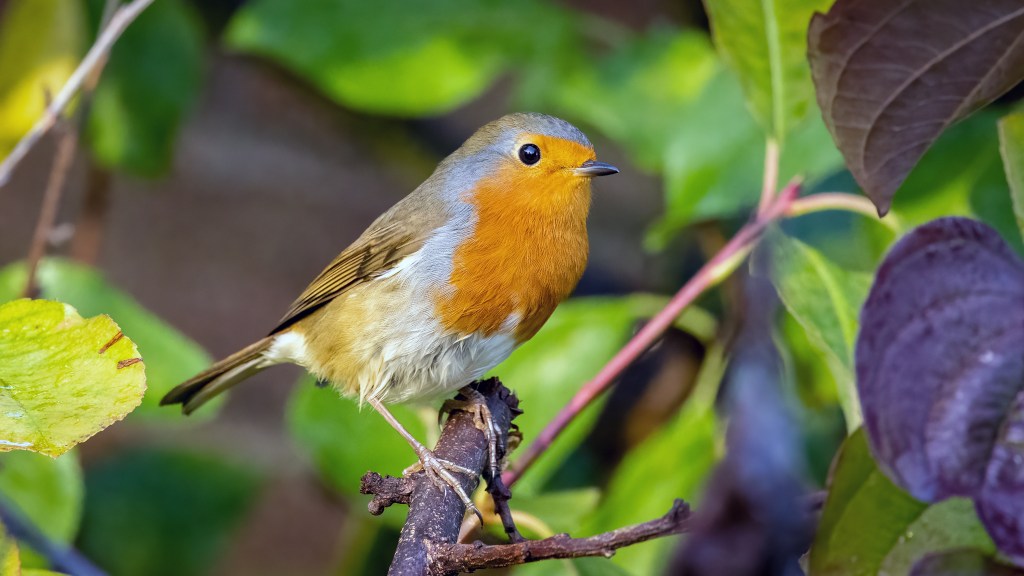
The European Robin (Erithacus rubecula) is a small, plump songbird with a bright orange face and breast, a whitish belly, and brownish upperparts.

Physical Characteristics:
The European robin, also known as the robin redbreast, is a small passerine bird. Both male and female robins exhibit similar coloration:
- They have an orange breast and face, which is bordered by gray.
- Their upperparts are brown.
- The belly is whitish.
- The bill and eyes are black.
- Juveniles are initially spotted brown and white, with patches of orange gradually appearing as they mature.

Diet:
European robins are primarily insectivorous, but their diet is quite versatile:
- They feed on invertebrates such as insects.
- During winter, they consume seeds and berries.
- Occasionally, they may also take very small vertebrates, carrion, leftovers, and bird table foods.

Abundance and Distribution:
- In Europe, the breeding population of European robins consists of 58.7 to 90.5 million pairs, which translates to 117 to 181 million mature individuals.
- These charming birds are found across a wide range:
- Geography: Europe, Asia, and North Africa.
- Subcontinents: Western Asia, Central Asia, and North Africa.
- Countries: Algeria, Andorra, Austria, Azerbaijan, Belarus, Belgium, Bulgaria, China, Croatia, Czech Republic, and more.
- Biogeographical Realms: Palearctic and Afrotropical.
- WWF Biomes: Mediterranean forests, woodlands, and scrub; Taiga; Temperate broadleaf and mixed forest; Temperate coniferous forest; and Temperate grasslands.
- Migration Patterns:
- Irish and British robins are largely resident, but a small minority (usually females) migrate to southern Europe during winter, with some reaching as far as Spain.
- Scandinavian and Russian robins migrate to Britain and western Europe to escape harsh winters.
- Habitat Preferences:
- European robins favor spruce woods in northern Europe.
- In Ireland and Great Britain, they are commonly found in parks and gardens.
- Other habitats include grasslands, shrubby vegetation, hedgerows with tall trees, orchards, and farmlands.

IUCN Red List Status:
Currently, the European Robin is classified as Least Concern (LC) on the IUCN Red List, and its numbers are increasing.
For more information, you can explore the IUCN Red List and learn about the conservation status of various species.

EUROPEAN ROBIN WAS LIFER #768

 Reflections of the Natural World
Leave a comment