Western Europe Birds & Birding (#21/52): From the Highland Willow Scrub of Scotland to the Aegean Islands in the Sea of Crete, Western Europe is home to over 800 resident, migratory and vagrant birds. From songbirds to gamebirds and from waterfowl to raptors, you can find birds virtually in every nook and cranny of this beautiful area. *All images showcased in this blog series were taken and edited by me.
A Reflections of the Natural World Blog Post Series by Jim Gain
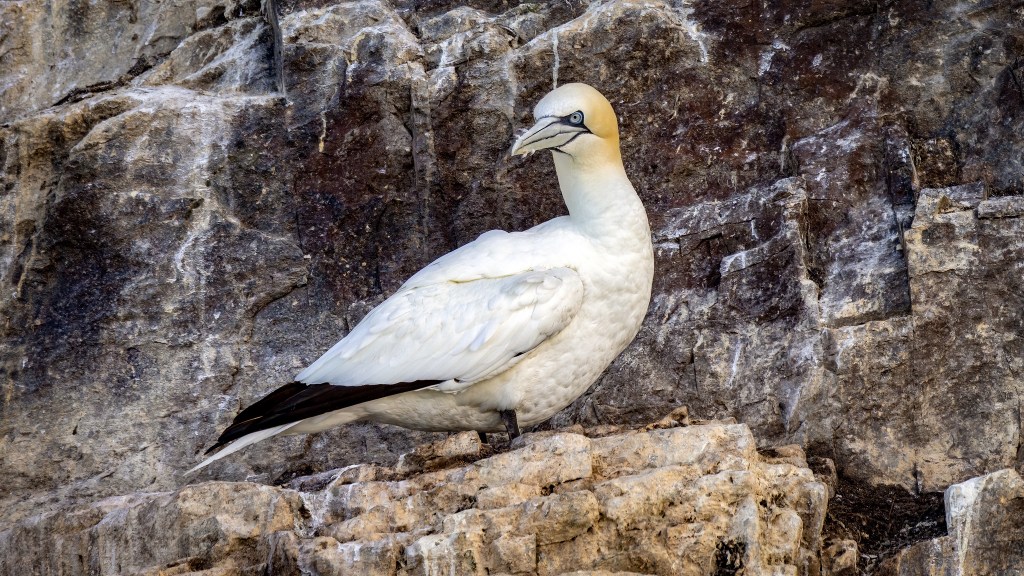
The Northern Gannet’s (Morus bassanus) elegance, fishing prowess, widespread distribution, and favorable conservation status make it a remarkable avian species of the North Atlantic seascape.

Physical Characteristics:
Nearly as large as an albatross, the Northern Gannet boasts a commanding appearance. Its features include:
- A heavy, sharp bill that aids in capturing fish.
- Snowy white plumage with contrasting black wingtips.
- A crown washed with gold that adds a regal touch.
- Long, slender wings that enable it to soar gracefully over the ocean.


Diet:
The Northern Gannet is a master fisherman. Its diet primarily consists of Fish, especially species like mackerel, herring, and sand eels. It employs a spectacular hunting technique from high above, it spots its prey, folds its wings, and plunges into the water like an arrow, often diving from heights of up to 130 feet (40 meters).

Abundance and Distribution:
These magnificent birds are abundant in certain regions:
- They breed in large colonies on cliffs and rocky islands along the North Atlantic coast.
- Key breeding sites include the coasts of Canada, particularly the Gulf of St. Lawrence, and the British Isles.
- During the breeding season, their colonies are a cacophony of calls and bustling activity.
- Outside the breeding season, they disperse across the North Atlantic, ranging from the Arctic Circle to the Gulf of Mexico.

IUCN Red List Status:
The Northern Gannet is assessed by the IUCN Red List. As of the latest evaluation, it falls under the category of Least Concern. This designation indicates that its population is relatively stable, and it faces no immediate threat of extinction.
For more information, you can explore the IUCN Red List and learn about the conservation status of various species.

NORTHERN GANNET WAS LIFER #565

 Reflections of the Natural World
Leave a comment