Western Europe Birds & Birding (#18/52): From the Highland Willow Scrub of Scotland to the Aegean Islands in the Sea of Crete, Western Europe is home to over 800 resident, migratory and vagrant birds. From songbirds to gamebirds and from waterfowl to raptors, you can find birds virtually in every nook and cranny of this beautiful area. *All images showcased in this blog series were taken and edited by me.
A Reflections of the Natural World Blog Post Series by Jim Gain
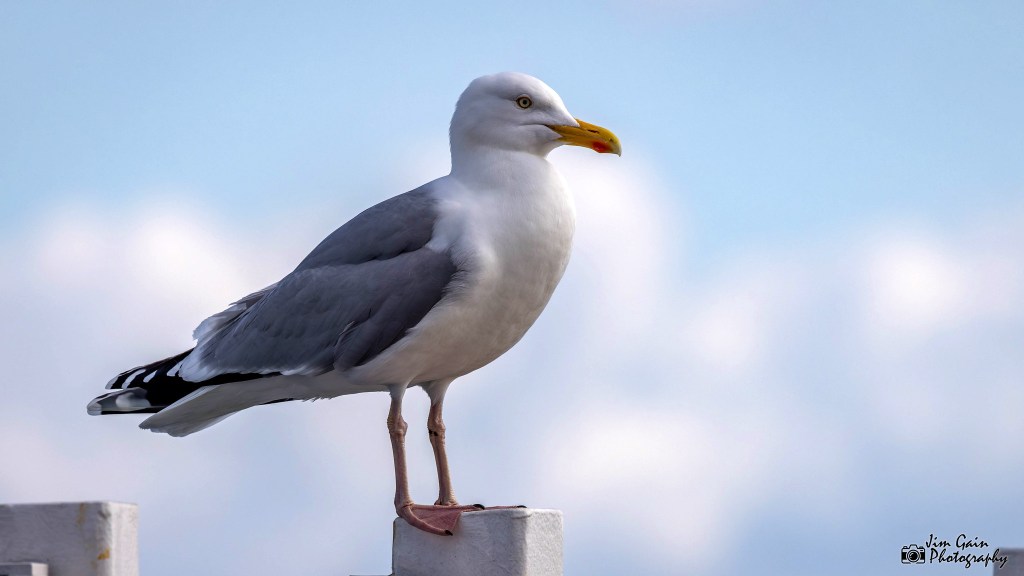
Herring gulls are fairly large gulls whose heads and underparts are white, pink legs and they have light gray backs.
To Split or not to Split!
Based on ongoing scientific research, the American Ornithological Society (AOS) is being asked this year (2024) to consider splitting the current Herring Gull (Larus argentatus) taxonomy into either 3 separate species: American Herring Gull (Larus smithsonianus), Vega Gull (Larus vegae) and European Herring Gull (Larus argentatus) (or possibly the Western Europe Herring Gull), or 2 separate species. If either of the two split recommendations are approved, the birds I observed in England and France would be split from the current Smithsonianus subspecies and a new name would have to be voted on. For these birds, it would likely be European Herring Gull (or Western European Herring Gull). *The Association of European Rarities Committees recognizes six species of “Herring Gull”

Physical Characteristics:
The Western European Herring Gull (Larus argentatus/argentius) is a large seabird with distinct features. Here are its key physical characteristics:
- Size: These gulls have a wingspan of around 4.5 to 5.2 feet (1.4 to 1.6 meters).
- Plumage: Their plumage is predominantly white, with a pale gray mantle (the upper part of the body). Their wings display a characteristic pattern of gray and white.
- Bill: The bill is yellow with a red spot near the tip.
- Legs: Their legs are pinkish in color.
- Eyes: The eyes are pale yellow.

Diet:
Western European Herring Gulls are opportunistic feeders. Their diet includes a variety of items:
- Fish: They consume fish, especially small fish like herring, which gives them their name.
- Crustaceans: Gulls scavenge from garbage dumps, landfill sites, and sewage outflows, where they find crustaceans.
- Human Food: They are known to snatch chips (fries) and other food scraps.
- Carrion: Dead animals are also part of their diet.
- Eggs and Young Birds: They steal eggs and young chicks from other bird species.
- Vegetable Matter: Occasionally, they eat roots, tubers, seeds, grains, nuts, and fruit.

Abundance and Distribution:
Western European Herring Gulls are widespread and relatively common. Distribution: They inhabit coastal regions, including rocky cliffs, sandy beaches, and estuaries, across Western Europe. You can spot them in countries such as the United Kingdom, Ireland, France, and the Netherlands.

IUCN Red List Status:
The Western European Herring Gull is currently assessed as Least Concern on the IUCN Red List of Threatened Species. This status indicates that their population is stable, and they are not facing immediate threats to their survival.
For more information, you can explore the IUCN Red List and learn about the conservation status of various species.

WESTERN EUROPEAN HERRING GULL WAS LIFER #? (Tentatively #775 when split)

 Reflections of the Natural World
Leave a comment