Western Europe Birds & Birding (#17/52): From the Highland Willow Scrub of Scotland to the Aegean Islands in the Sea of Crete, Western Europe is home to over 800 resident, migratory and vagrant birds. From songbirds to gamebirds and from waterfowl to raptors, you can find birds virtually in every nook and cranny of this beautiful area. *All images showcased in this blog series were taken and edited by me.
A Reflections of the Natural World Blog Post Series by Jim Gain
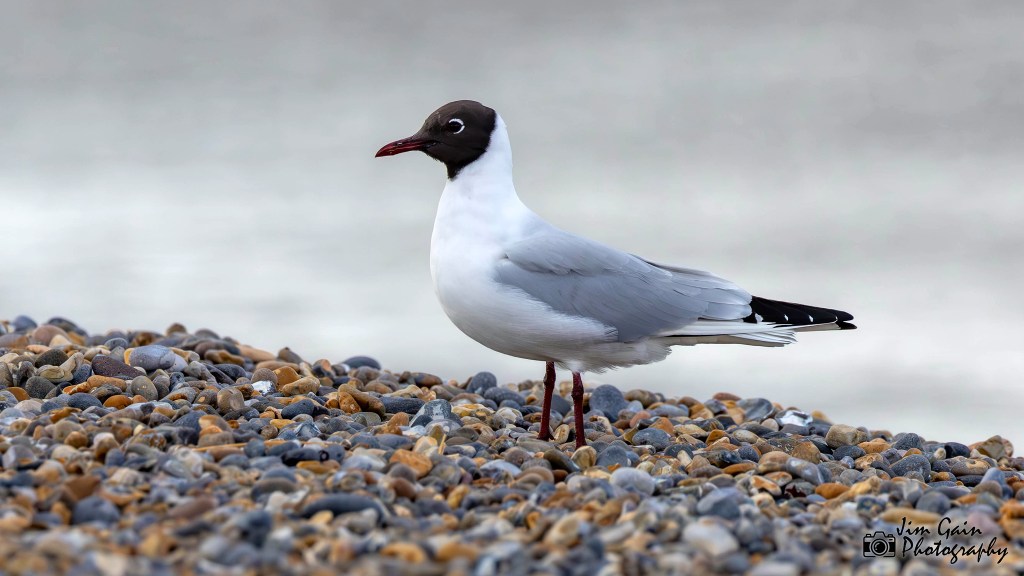
The Black-headed Gull is one of the most abundant species in much of Europe, Asia, and eastern Canada.

Physical Characteristics:
The Black-headed Gull is a small bird, measuring 37–44 cm (14½–17½ inches) in length, with a wingspan of 94–110 cm (37–43½ inches). Its weight ranges from 190 to 400 grams (6¾–14⅛ ounces). During the summer, the adult gull boasts a chocolate-brown head (which appears black from a distance), a pale grey body, black-tipped primary wing feathers, and a red bill and legs.

Interestingly, the hood disappears in winter, leaving behind just two dark spots. Immature birds exhibit a mottled pattern of brown spots across most of their bodies and a black band on their tails. Notably, there’s no difference in plumage between males and females. When in flight, the white leading edge of their wings serves as a distinctive field mark. These adaptable birds have a lifespan of up to 32 years.

Diet:
The Black-headed Gull is an omnivore with a diverse menu. Its diet primarily consists of: Aquatic and terrestrial insects, Earthworms and Marine invertebrates such as mollusks, crustaceans, and marine worms.

Abundance and Distribution:
This gull is one of the most abundant species in much of Europe, Asia, and eastern Canada. Most of its populations are migratory, wintering further south. However, some individuals remain in the milder westernmost parts of Europe. Additionally, certain Black-headed Gulls spend their winters in northeastern North America. They breed in large reed beds, marshes, and on islands in lakes, rivers, lagoons, deltas, and estuaries. During winter, you can find them in estuaries with sandy or muddy beaches, plowed fields, moist grasslands, reservoirs, urban parks, farmland, and gardens.

IUCN Red List Status:
The Black-headed Gull is classified as a species of Least Concern by the IUCN. Its population size ranges from 4.8 to 8.9 million individuals.
For more information, you can explore the IUCN Red List and learn about the conservation status of various species.
BLACK-HEADED GULL WAS LIFER # 569

 Reflections of the Natural World
Leave a comment