Western Europe Birds & Birding (#12/52): From the Highland Willow Scrub of Scotland to the Aegean Islands in the Sea of Crete, Western Europe is home to over 800 resident, migratory and vagrant birds. From songbirds to gamebirds and from waterfowl to raptors, you can find birds virtually in every nook and cranny of this beautiful area. *All images showcased in this blog series were taken and edited by me.
A Reflections of the Natural World Blog Post Series by Jim Gain
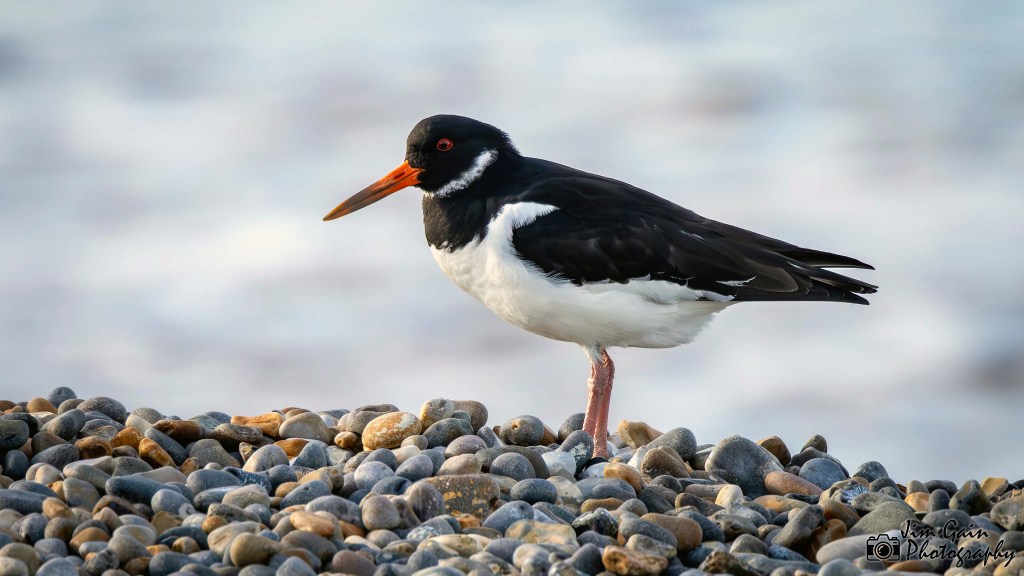
The Eurasian Oystercatcher (Haematopus ostralegus) is a captivating bird species, known for its striking appearance and distinctive behaviors.

Physical Characteristics:
Eurasian Oystercatchers are medium to large-sized waders, typically measuring around 40-45 centimeters in length. They possess a robust body with long legs and a stout, slightly down-curved orange-red bill, perfectly adapted for prying open shellfish. The plumage of Eurasian Oystercatchers is predominantly black on the upper parts, including the head, wings, and back, contrasting sharply with their white underparts. Their legs are long and sturdy, ranging from pinkish to reddish-orange in color. The bill of the Eurasian Oystercatcher is a distinctive feature, being long, straight, and tapered towards the tip. It is orange-red in color with a slight downward curve, making it well-suited for prying open mollusk shells.

Diet:
Despite its name, oysters do not form a large part of its diet. The Eurasian Oystercatcher’s diet primarily consists of bivalve mollusks like oysters, mussels, and clams. They also consume small invertebrates, fish, and crustaceans found in coastal habitats. They utilize their specialized bill to pry open shells.

Abundance and Distribution:
The Eurasian Oystercatcher is the most widespread of its family, with breeding ranges extending from western Europe to central Eurosiberia, Kamchatka, China, and the western coast of Korea. It is migratory, with wintering grounds in north Africa, southern Europe, and parts of Asia. The global population is estimated to number around 925,000-1,030,000 individuals.

IUCN Red List Status:
The Eurasian Oystercatcher is currently listed as ‘Near Threatened’ on the IUCN Red List. The population is suspected to have undergone a reduction over the past three generations that approaches the threshold for listing as Threatened. The recent decline may be part of a longer-term fluctuation and the population should be monitored carefully to ascertain whether it shows signs of stabilising.

EURASIAN OYSTERCATCHER WAS LIFER # 804
Eurasian Oystercatcher 08 Oct 2022 Musselburgh–Levenhall Links (General) | GB-SCT


 Reflections of the Natural World
Leave a comment