
SIERRA NEVADA BIRDS – FEATHERS IN THE RANGE OF LIGHT Blog Post #22
California’s “Range of Light” is home to a diverse array of both colorful and cryptic birds (the feathers). It is my intent to use my passion for birds and photography to paint a story about 120 of the most common or most sought-after Sierra Nevada (Range of Light) birds by most nature enthusiasts.
Sierra Nevada Birds – Feathers in the Range of Light is a Reflections of the Natural World Blog Post Series by Jim Gain

WHAT’S IN A NAME
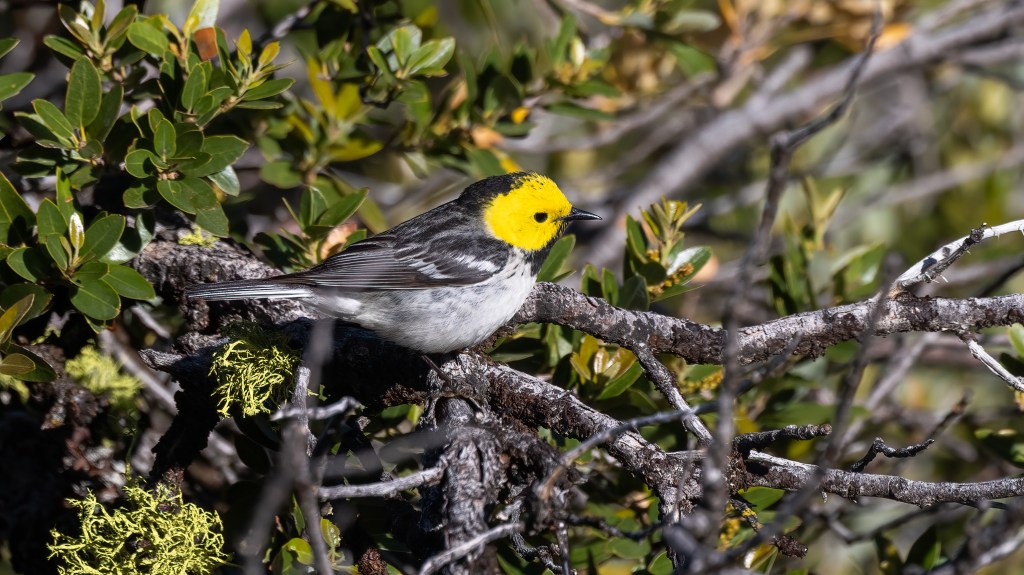
Hermit Warbler – Setophaga occidentalis
Name Roots: (Gr. moth; -phagos -eating – L. occidentalis, “western”)

PHYSICAL CHARACTERISTICS
Hermit Warblers are dark gray in coloration on top, and white below, and their flanks are streaked with black. The wings have two diagonal white wing bars. The majority of the hermit warbler’s head is yellow, and males have a dark black throat, while females have much less black on their throat bib and immature birds have no black throat.

DISTRIBUTION & OCCURRENCE IN THE SIERRA NEVADA
The Hermit Warbler is a Common Summer Visitor of the Sierra Nevada in the Lower and Upper Montane biotic zones.


CONSERVATION STATUS – IUCN Red List Category

The Hermit Warbler (HEWA) is classified as Least Concern by the IUCN.
Redlist Classification Justification: This species has a very large range, the population trend appears to be stable, and the population size is extremely large. For these reasons the species is evaluated as Least Concern. (DataZone HEWA Link)
PLAYING WITH PHOTOSHOP – Dry Brush Filter


 Reflections of the Natural World
Leave a comment