Saskatchewan Birds – Oiseaux in the Land of Living Skies – Post #14
Saskatchewan’s slogan, “The Land of Living Skies” could refer as much to its magnificent birdlife as it does to its awe-inspiring Northern Lights and spectacular thunderstorms experienced there. This centrally located Canadian Province’s “Land of Living Skies” is home to over 400 recorded oiseaux (Fr. bird) species. Using my personal photographs in a blog post format, viewers will learn about the natural history and conservation status of these interesting birds in the Land of Living Skies!
A Reflections of the Natural World Blog Post Series by Jim Gain

WHAT’S IN A NAME
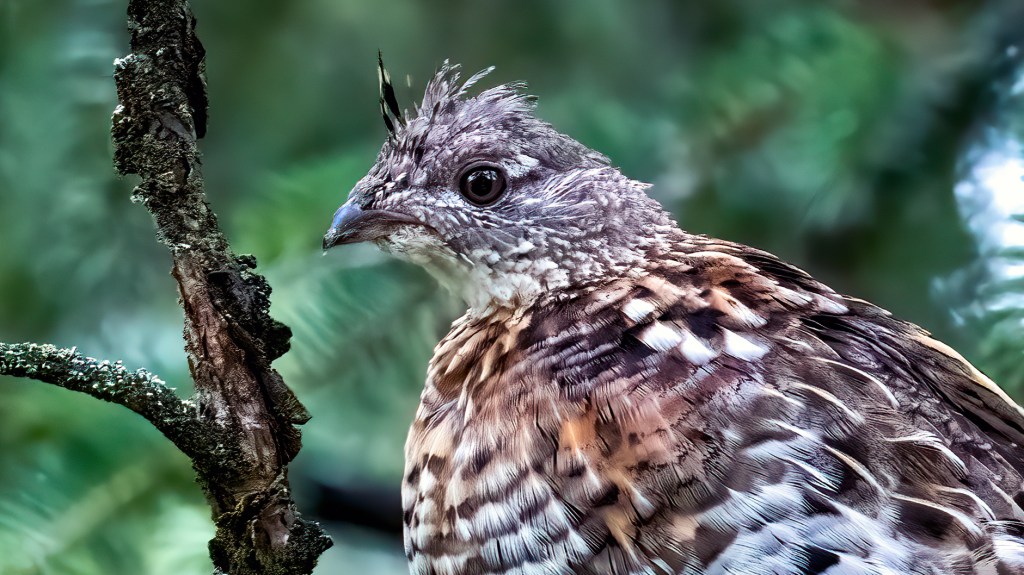
Ruffed Grouse – Bonasa umbellus
Name Roots: (L. & Gr. bonasos, “the aurochs, a wild ox_ – L. umbellus, “a sunshade”)
PHYSICAL CHARACTERISTICS
The Ruffed Grouse is a medium-sized bird that weighs from 1–1.65 lb, measures from 16 to 20 in. in length and spans 20–25 in. across their short, strong wings. They have two distinct morphs: grey and brown. The flanks and underside are heavily white. The birds’ overall appearance is varied; frequently, the throat is noticeably lighter. The brown morph is darker overall with a reddish-brown tail and rufous or chestnut-brown feathers on the flanks. It is the most widely distributed game bird in North America. It is non-migratory. It is the only species in the genus Bonasa.

DISTRIBUTION & OCCURENCE IN THE LAND OF LIVING SKIES
Ruffed Grouse are found in poplar forests and have been introduced into the Cypress Hills in southwestern Saskatchewan. Males beat their wings in a drumming display which is often performed from a stump or log.
eBird Bar Charts & Map Grid


CONSERVATION STATUS – International Union for Conservation of Nature (IUCN) Red List Category
The Ruffed Grouse is classified as Least Concern by the IUCN.
Redlist Classification Justification: This species has an extremely large range, the population trend appears to be stable, and the population size is extremely large. For these reasons the species is evaluated as Least Concern.
Previous Posts in the Saskatchewan Birds Series

 Reflections of the Natural World
Leave a comment