Adventures in Arkansas Blog Series: Post #3

On the second anniversary of my sister’s translocation from California to Fairfield Bay, Greers Ferry Lake, Arkansas, I finally set foot in “The Natural State” to pay her and the rest of the family a long-overdue visit. When it comes to its avian life, Arkansas is a state with a rich and diversified natural heritage. The state’s location in the south-central United States, along with its varied habitats, such as forests, fields, wetlands, and mountains, make it a hotspot for birdwatching and conservation.
Adventures in Arkansas is a Reflections of the Natural World Blog Post Series by Jim Gain
First Stop: Greers Ferry Lake, Fairfield Bay Marina
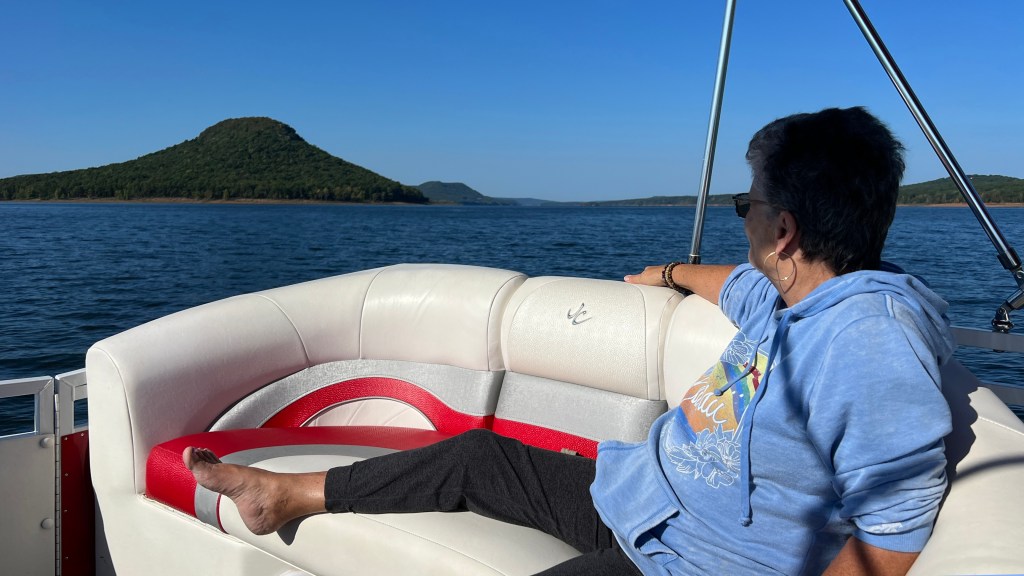
After the morning 2-hour bird census from the Hartley’s Sanctuary, our plans were to board the Joyful Cruiser, a 25′ Tritoon Sunlounger with a 150 hp Honda Outboard, motor for a get-aquainted tour of Fairfield Bay and Greers Ferry Lake.



ABOUT THE LAKE
At the foot of Round Mountain in the beautiful Ozark Mountains of north-central Arkansas stands Greers Ferry Dam. Behind that structure glistens one of the foremost recreational areas in the middle United States, Greers Ferry Lake. With over 30,000 acres of water surface, the lake serves as a playground for all kinds of water sports. Eighteen parks around the shoreline provide modern campgrounds, boat launches, swim areas and marinas.

The flow of the Little Red River was uncontrolled during the first half of the twentieth century, resulting in almost yearly flooding downstream. In 1938, Congress passed the Flood Control Act, which authorized the U.S. Army Corps of Engineers to build dams on most of the country’s major free-flowing river systems, including the Little Red River. In 1960, construction began simultaneously on the Beaver and Greers Ferry dams. Greers Ferry Dam, named after a ferry operated on the Little Red River near where the dam was built, was completed in 1962 and was dedicated on October 3, 1963, by President John F. Kennedy, in what would be one of his last major public appearances before his assassination. The dam measures 1,704 feet in length and stands 243 feet above the streambed of the Little Red River. It cost $46.5 million and created a reservoir of between 30,000 and 40,000 acres, depending on water level, and over 340 miles of shoreline in Cleburne and Van Buren counties.
Second Stop: Sugar Loaf Mountain National Recreation Trail


ABOUT THE TRAIL
Located in the middle of Greers Ferry Lake, Sugar Loaf Mountain island stands 1000 feet tall, offering panoramic views atop one of the nation’s first designated National Scenic Trails. Two island trails to explore offer adventure for hikers. See flora and fauna native to Arkansas, natural stone and bluff formations, and places carved out along the way to the top offer spectacular views.

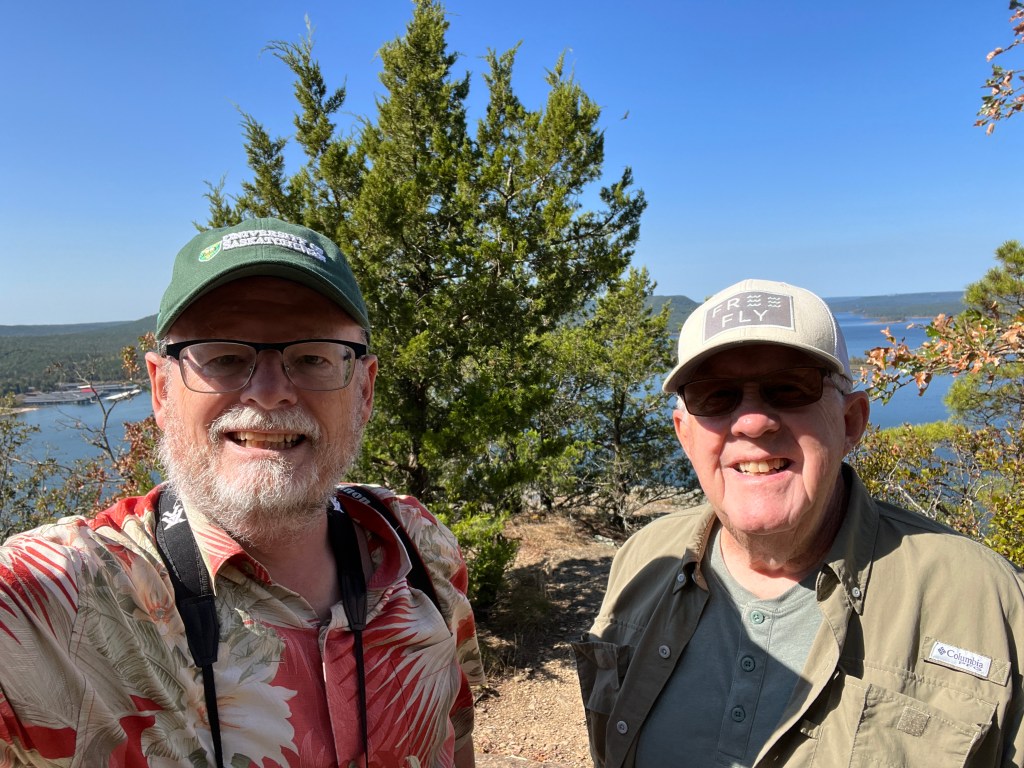
Once we were sitting at the Dock of the Bay, Gary and I set out to do a quick reconnoiter of the general area and to get a feel for how difficult the trail might be. With me in my sandals and neither of us carrying water, we started up the trail. I took a quick shot with my iPhone of the island trail system and didn’t notice the details about the trail. We were surrounded by lots of birds and there was a gentle, cool breeze so we kind of just kept going…UPWARDS! We started first up the Terrace Trail which was somewhat steep, but oh so beautiful.


And then came the turn off to the Mule Trail. Again, upwards, but with a little more gusto. Soooo many steps…


But once we were at the top, the view was breath-taking! (Or was it the hike that was breath-taking?)

Two-hours later on the way back down, we noticed the wording for the Mule Trail; “Mule Trail: Difficult trail that leads to the mountain top. The Mule Trail has very steep steps, steep stairs, high bluffs and difficult walking conditions.” All I know is this 65-year old had a heck of a hard time keeping up with the almost octogenarian!
Perhaps due to an excessive amount of huffing and puffing, I was only able to get decent images of one species, the Pine Warbler.


Previous Adventures in Arkansas Posts

 Reflections of the Natural World
Leave a comment