Saskatchewan Birds – Oiseaux in the Land of Living Skies – Post #2
Saskatchewan’s slogan, “The Land of Living Skies” could refer as much to its magnificent birdlife as it does to its awe-inspiring Northern Lights and spectacular thunderstorms experienced there. This centrally located Canadian Province’s “Land of Living Skies” is home to over 400 recorded oiseaux (Fr. bird) species. Using my personal photographs in a blog post format, viewers will learn about the natural history and conservation status of these interesting birds in the Land of Living Skies!
A Reflections of the Natural World Blog Post Series by Jim Gain

WHAT’S IN A NAME
Pileated Woodpecker – Dryocopus pileatus
Gr. Dryocopus tree striking; L. pileatus capped

PHYSICAL CHARACTERISTICS
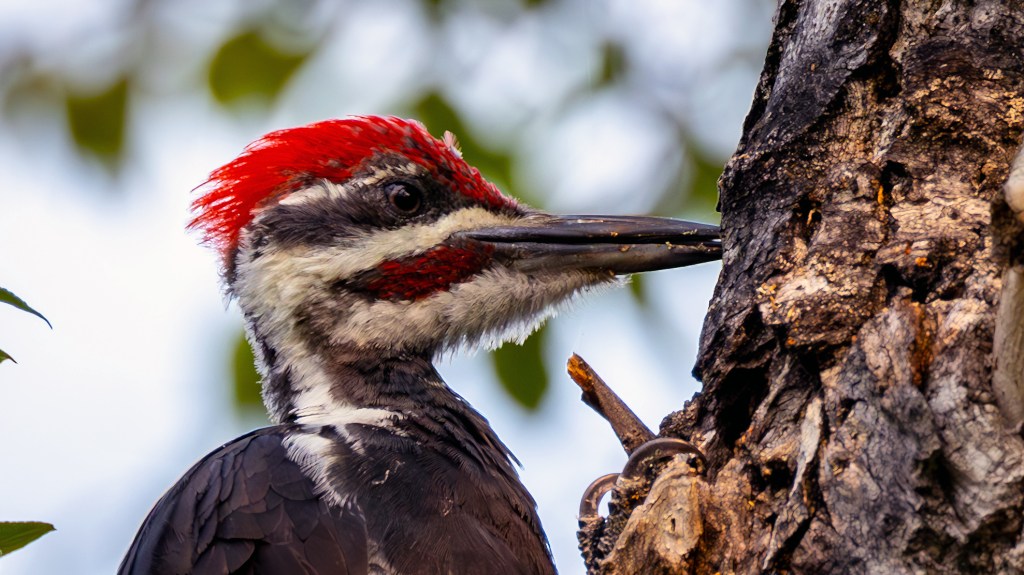
The Pileated Woodpecker is a crow-sized bird with a mostly charcoal-gray-colored body. It has a red crest on its head and a white line down the sides of the throat. The male has a red line extending from the bill to the throat. It has an average length of 16 to 19 inches and weighs an average of 8.8 to 12.3 ounces. Its average wingspan is 26 to 30 inches.
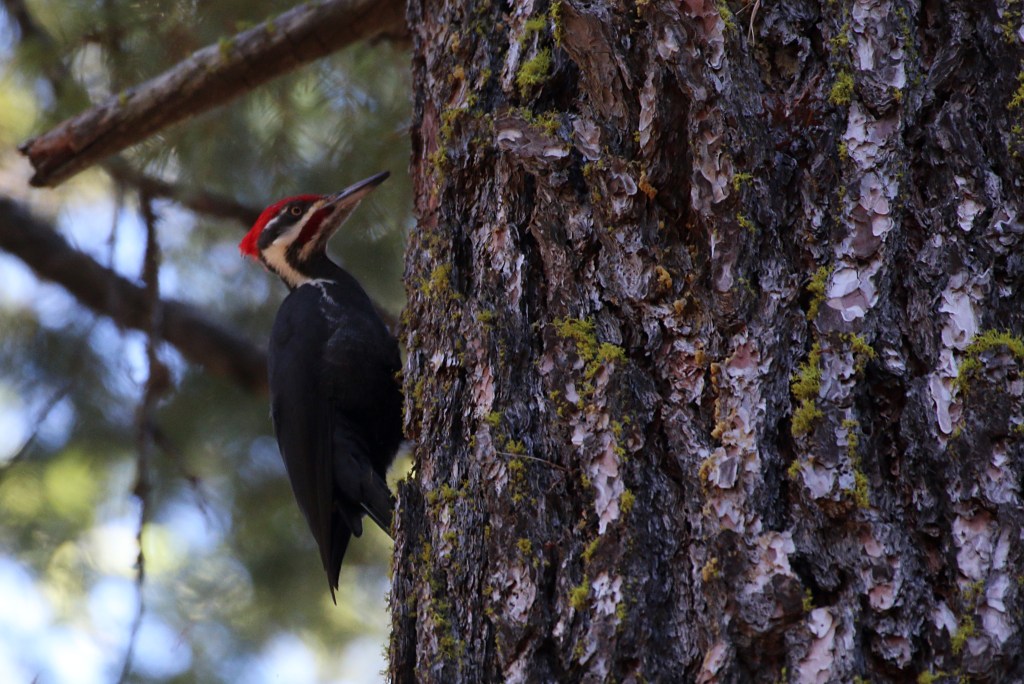
Pileated woodpeckers mainly eat insects, especially carpenter ants and wood-boring beetle larvae. They also eat fruits, nuts, and berries, including poison ivy berries. Pileated woodpeckers often chip out large and roughly rectangular holes in trees while searching out insects, especially ant colonies.

DISTRIBUTION & OCCURRENCE IN THE LAND OF LIVING SKIES
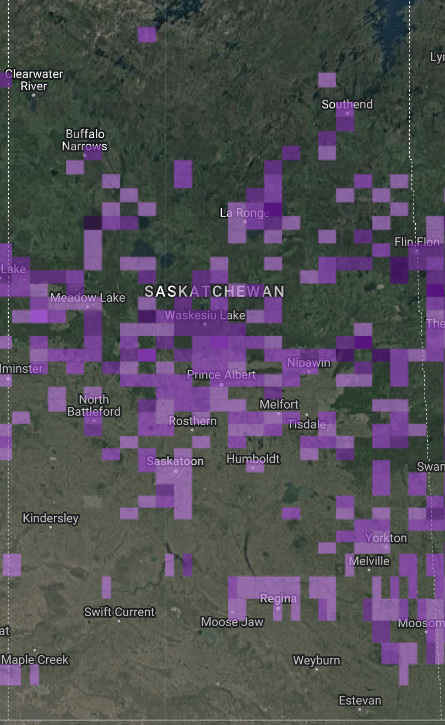
The Pileated Woodpecker is a Yearround Fairly Common Resident of mature boreal forests and heavily wooded parks across Central Saskatchewan. They specifically prefer habitats with large, mature hardwood trees, often being found in large tracts of forest.
eBird Bar Charts & Map Grid

CONSERVATION STATUS – International Union for Conservation of Nature (IUCN) Red List Category
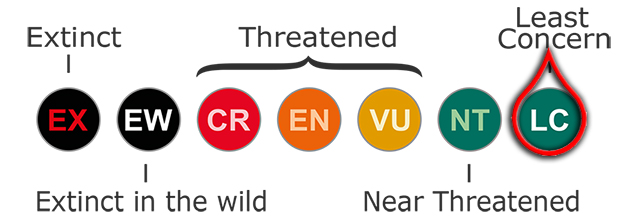
The Pileated Woodpecker is classified as Least Concern by the IUCN.
Redlist Classification Justification: This species has an extremely large range, the population trend appears to be increasing, and the population size is very large. For these reasons the species is evaluated as Least Concern.

 Reflections of the Natural World
Leave a comment