Saskatchewan Birds – Oiseaux in the Land of Living Skies – Post #1
Saskatchewan’s slogan, “The Land of Living Skies” could refer as much to its magnificent birdlife as it does to its awe-inspiring Northern Lights and spectacular thunderstorms experienced there. This centrally located Canadian Province’s “Land of Living Skies” is home to over 400 recorded oiseaux (Fr. bird) species. Using my personal photographs in a blog post format, viewers will learn about the natural history and conservation status of these interesting birds in the Land of Living Skies!
A Reflections of the Natural World Blog Post Series by Jim Gain
WHAT’S IN A NAME
Canada Jay – Perisoreus canadensis
Name Roots: (Gr. perisoreuo, “to heap up” [food] – of Canada)
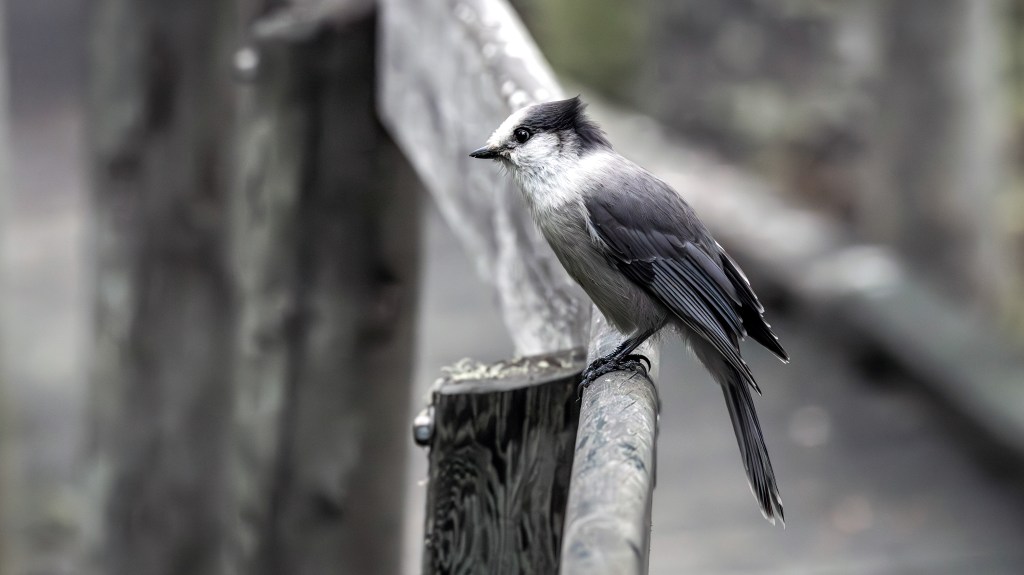
The Canada Jay (Perisoreus canadensis), is also known as the gray jay, grey jay, camp robber, or whisky jack.
In 2016, an online poll and expert panel conducted by Canadian Geographic magazine selected the Canada Jay as the national bird of Canada, although the designation is not formally recognized.
PHYSICAL CHARACTERISTICS
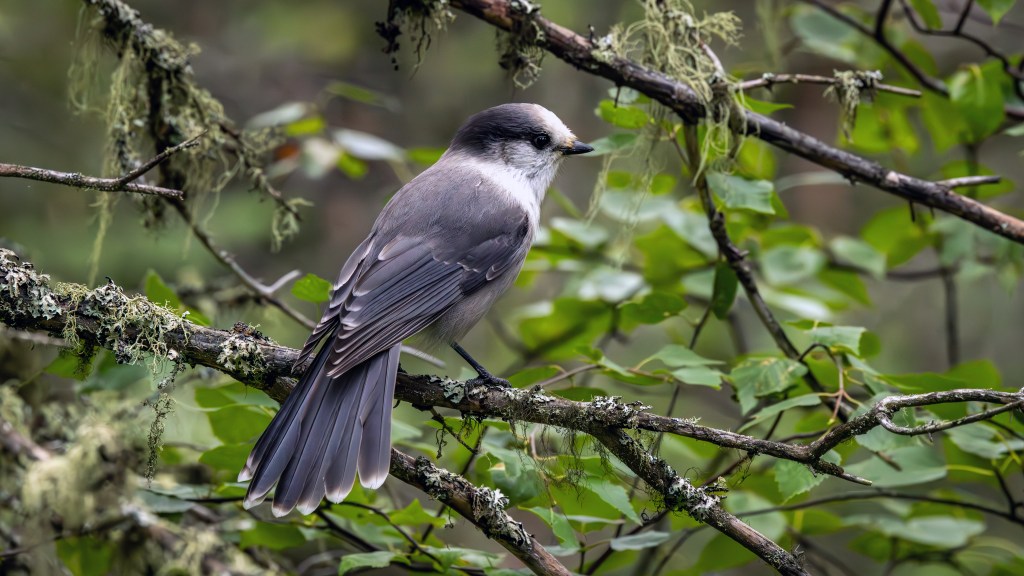
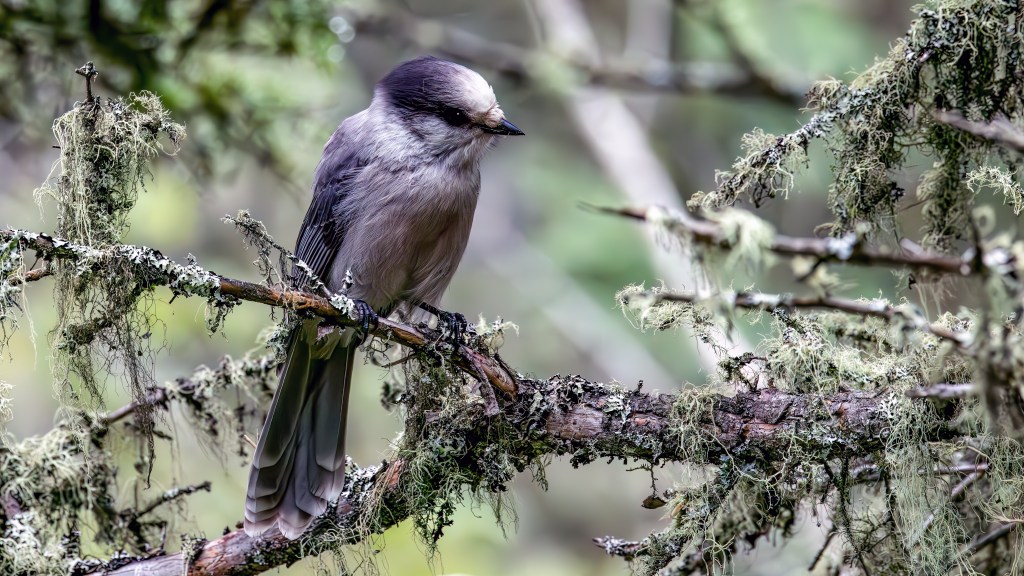
The Canada Jay (Perisoreus canadensis) has medium grey back feathers with a lighter grey underside. Its head is mostly white with a dark grey or black nape and hood, with a short black beak and dark eyes. The long tail is medium grey with lighter tips and the legs and feet are black.

DISTRIBUTION & OCCURENCE IN THE LAND OF LIVING SKIES
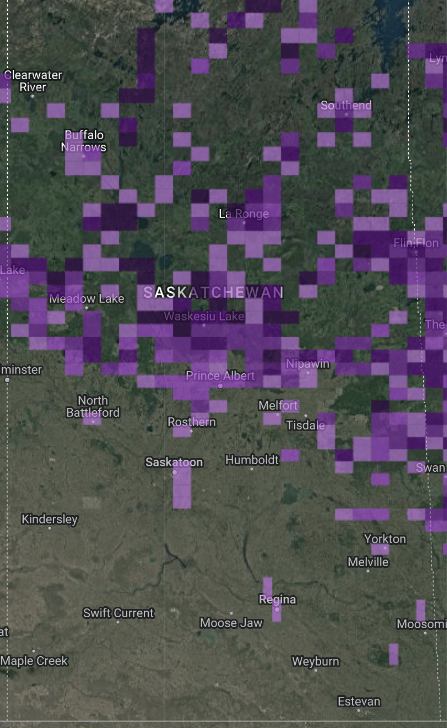
Canada Jay is a fairly common, yearround resident of the boreal forests of Saskatchewan. The boreal forest is a biotic zone characterized by coniferous trees such as spruce, pine, and fir.
eBird Bar Charts & Map Grid

CONSERVATION STATUS – International Union for Conservation of Nature (IUCN) Red List Category
The Canada Jay (CAJA) is classified as Least Concern by the IUCN.
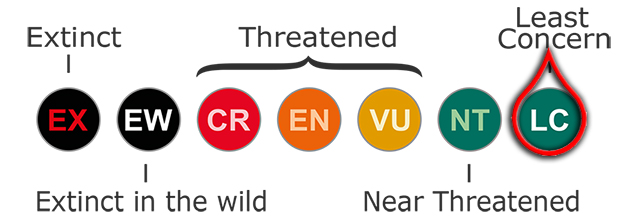
Redlist Classification Justification: This species has an extremely large range, the population trend appears to be *slightly decreasing, and the population size is extremely large. For these reasons the species is evaluated as Least Concern.
*Despite the fact that the population trend appears to be decreasing, the decline is not believed to be sufficiently rapid to approach the thresholds for Vulnerable under the population trend criterion (>30% decline over ten years or three generations).
PLAYING WITH PHOTOSHOP – Dry Brush Gray Scale Filter


 Reflections of the Natural World
Leave a comment