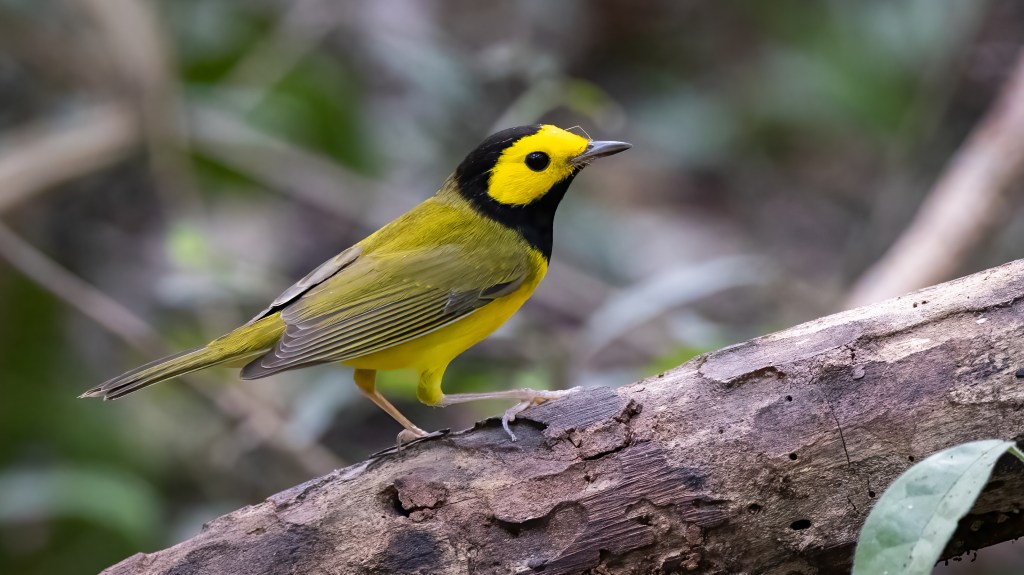

- Scientific Name: Setophaga citrina
- Name in Spanish (Mexico): Chipe Encapuchado
- ABA 4-Letter Bird Code: HOWA
- Family: Parulidae – New World Warblers
- Order: Passeriformes – Perching Birds

About this Species
The Hooded Warbler (Setophaga citrina) has a plain olive/green-brown back, and yellow underparts. Their outer rectrices have whitish vanes. Males have distinctive black hoods which surround their yellow faces; the female has an olive-green cap which does not extend to the forehead, ears and throat instead. Males attain their hood at about 9–12 months of age; younger birds are essentially identical to (and easily confused with) females. They are primarily found in the eastern half of North America, but can also be found in Central America during their non-breeding season. In Belize, Hooded Warblers are generally found in the northern and central parts of the country, including the forests of the Mountain Pine Ridge and Chiquibul National Park.

During their breeding season in North America, Hooded Warblers prefer to nest in the understory of deciduous forests, where they build their nests in shrubs or on the ground. In Belize, they can be found in a variety of forested habitats, including tropical lowland forests and pine-oak forests. They are generally insectivorous and feed on a variety of insects, including caterpillars, beetles, and spiders.

While Hooded Warblers are not considered endangered, their populations have declined in some areas due to habitat loss and fragmentation. Conservation efforts in Belize focus on protecting the bird’s habitat and promoting sustainable land use practices to ensure their continued survival.
>> Next Post on Tuesday, 8/15/2023 – Mottled Owl
Previous posts from Beautiful Birds of Belize Blog

 Reflections of the Natural World
Leave a comment