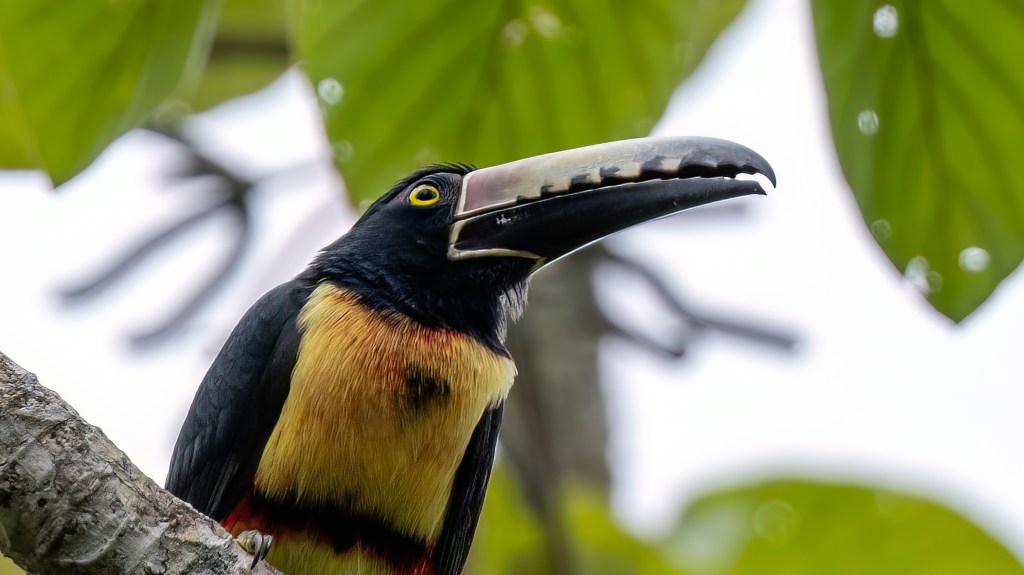

- Scientific Name: Pteroglossus torquatus
- Name in Spanish (Mexico): Tucancillo Collarejo
- ABA 4-Letter Bird Code: COAR
- Family: Ramphastidae – Toucans
- Order: Piciformes

About this Species
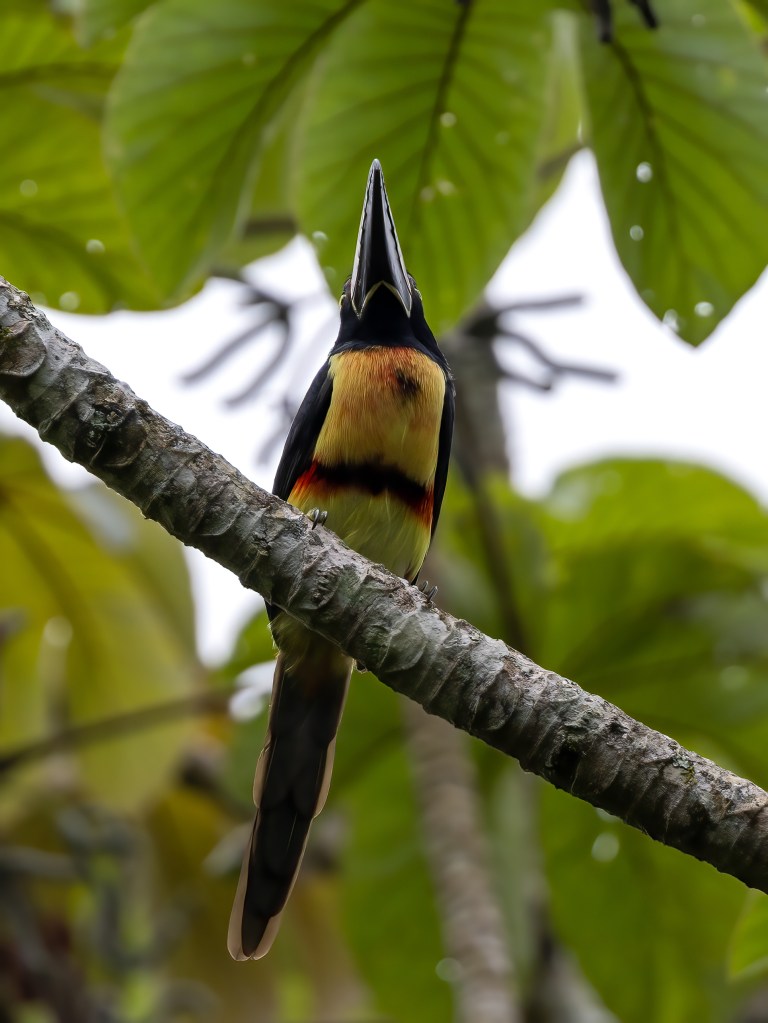
The Collared Aracari is a large-billed, colorful bird found from Mexico south to Northern South America. Aracaris (Pteroglossus) are small, slender toucans. The plumage typically is black, brown, or dark green above, with a black head and red rump, and the underparts usually are extensively yellow. Aracaris have exposed pale skin around the eye, and a long, slender, toucan bill, the maxilla of which is serrated. Collared Aracari is a typical representative of the genus. The head, throat, breast, and upperparts are black, with an inconspicuous cinnamon rufous band (collar) across the nape, and bright red lower back, rump, and uppertail coverts. The underparts are yellow. There is a red wash on the breast, and the breast also has a black central spot. A narrow band of red and black crosses the belly, and tibial feathers are cinnamon rufous or rufous. The bare facial skin is red. The base of the bill has a narrow white vertical band. The maxilla is pale grayish horn or whitish, with a black culmen and tip, and variably reddish at the base; the mandible is black.

In Belize, the Collared Aracari is found in the lowland rainforests, where it feeds on fruit, insects, and small animals. It is a social bird and can often be seen in small groups of up to six individuals. They are also known for their distinctive vocalizations, which include a range of calls and whistles.

In terms of conservation, the Collared Aracari is not currently considered endangered, but its population is declining due to habitat loss and fragmentation. Efforts are being made to protect its habitat and raise awareness about the importance of preserving biodiversity in the region. Visitors to Belize can enjoy watching this colorful bird in its natural habitat, but it’s important to do so responsibly and with the utmost respect for its welfare and conservation.
>> Next Post on Friday, 8/4/2023 – Black Catbird
Previous posts from Beautiful Birds of Belize Blog


 Reflections of the Natural World
Leave a comment