
By Jim Gain
Beautiful Birds of the Sierra Nevada – Blog Post #5
- Scientific Name: Dryobates villosus
- Family: Picidae
- Conservation Status: IUCN Red List species of “Least Concern”
- Occurrence, Residency and Breeding Status: Hairy Woodpecker is a Fairly Common Year-Round Resident and regular breeder
- Favored Biotic Zone(s): Lower and Upper Montane Zones with mature forests with snags and trees of moderate to large size
ABOUT THIS SPECIES
The Hairy Woodpecker (Picoides villosus) is a species of woodpecker found in various regions of North America, including the Sierra Nevada mountains of California. It is a fairly common year-round resident that is more frequently found in Lower and Upper Montane biotic zones.
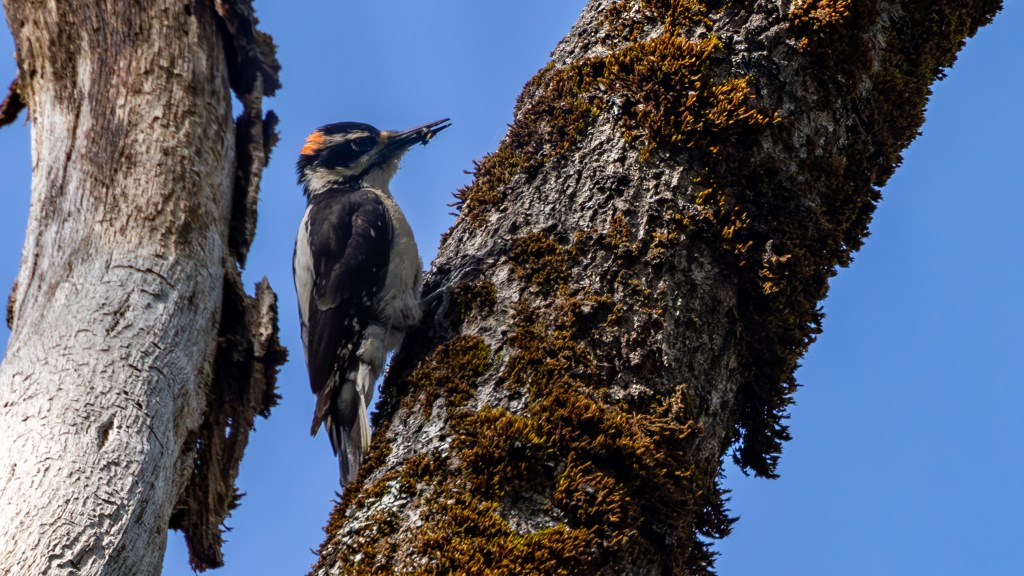
Here’s some information about its natural history, status, distribution, habitat preferences, nesting habits, interesting behaviors, and conservation status in the Sierra Nevada.
Natural History: The Hairy Woodpecker is a medium-sized woodpecker, measuring about 9 to 10 inches (23-25 cm) in length. It has a black and white patterned plumage, with a white undersurface, upperparts black with bold white stripe down center of back; wings black, variably spotted with white; and tail black with white outer rectrices. Males and females are similar in appearance, although males may have a red patch on the back of their heads. The species is named for the long, hair-like feathers on its crown and nape.
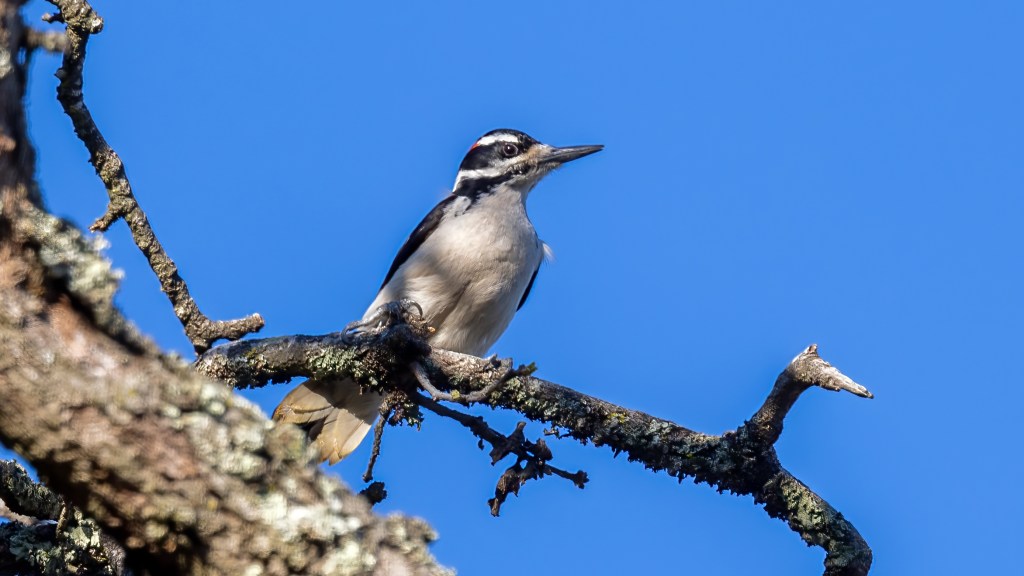
Habitat Preferences: Hairy Woodpeckers inhabit a variety of forested habitats, including coniferous and mixed coniferous-deciduous forests. In the Sierra Nevada, they are commonly found in montane forests dominated by conifers such as Douglas-fir, ponderosa pine, white fir, and incense cedar. They also occur in oak woodlands and riparian areas.
Food Preferences: The primary diet of Hairy Woodpeckers consists of insects and other invertebrates, including wood-boring beetles, ants, caterpillars, spiders, and larvae found under tree bark. They use their strong bills to excavate cavities in trees and probe crevices for their prey. During colder months, they may also consume berries, seeds, and nuts.
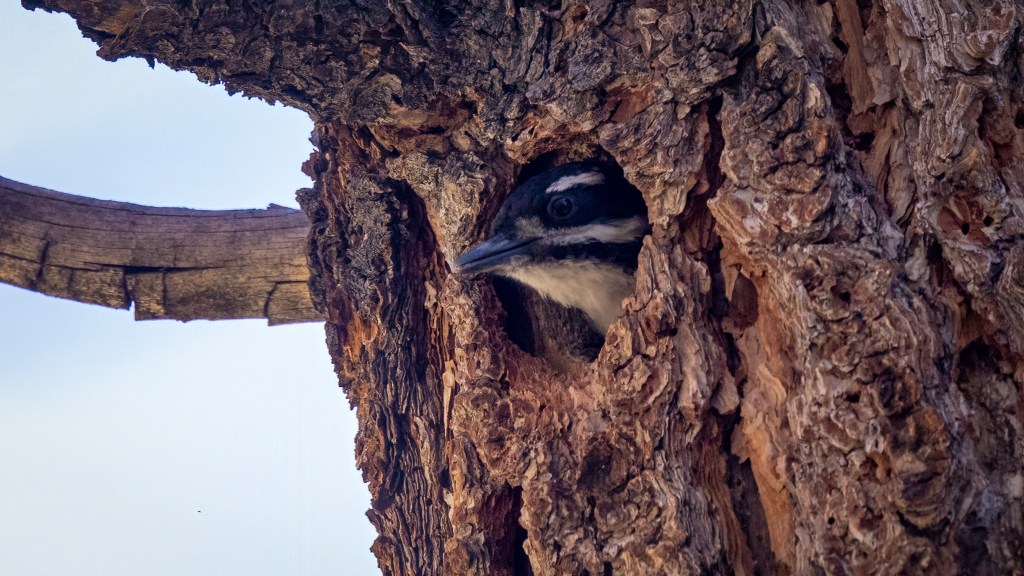
Nesting Preferences: Hairy Woodpeckers typically nest in cavities they excavate in dead or decaying trees. They often select snags (standing dead trees) or partially dead trees for nesting, which provide suitable soft wood for excavation. Nest cavities are lined with wood chips and can be reused in subsequent years. Both male and female birds participate in cavity excavation and incubation of the eggs.
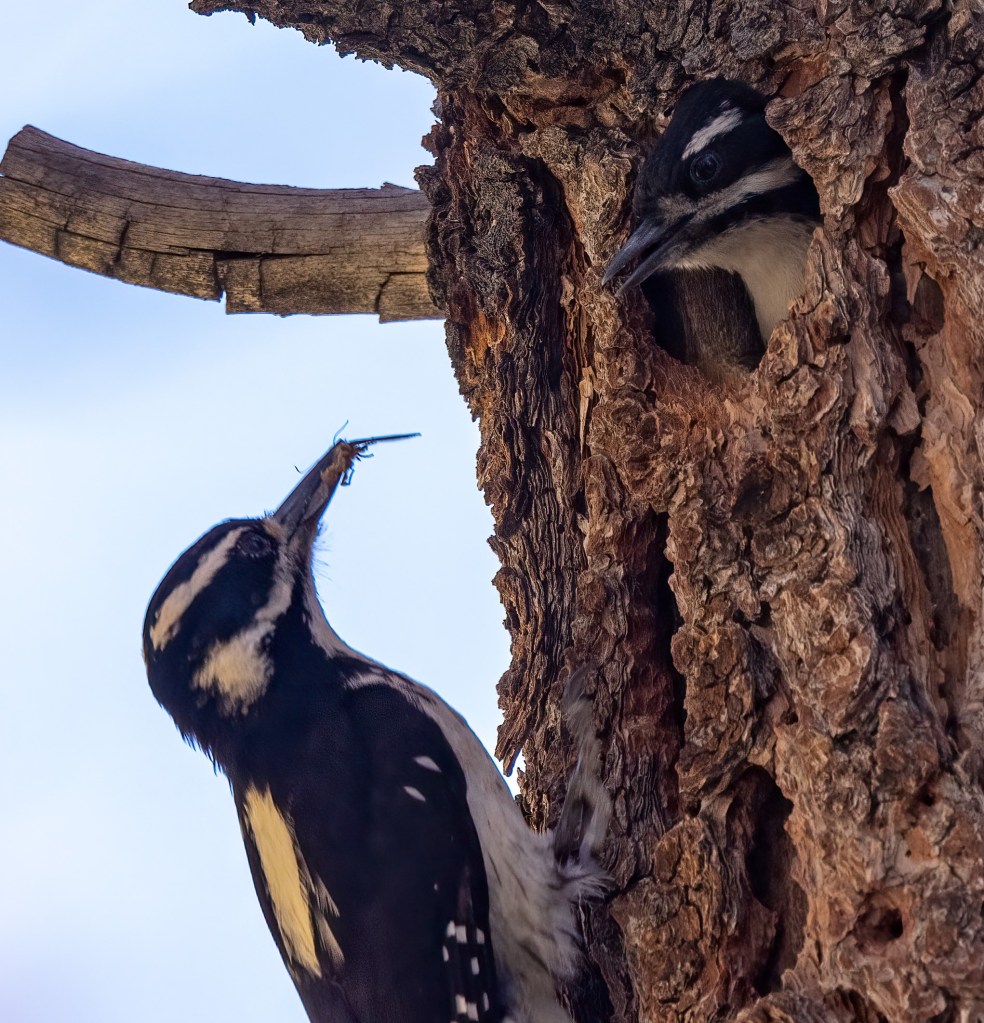
Conservation Status: The Hairy Woodpecker is considered a species of least concern in terms of conservation status. Its population is generally stable and widespread across its range, including the Sierra Nevada. However, like many other bird species, it may face threats from habitat loss due to deforestation, urbanization, and climate change. Protecting its preferred forested habitats and promoting sustainable forest management practices can contribute to its conservation.
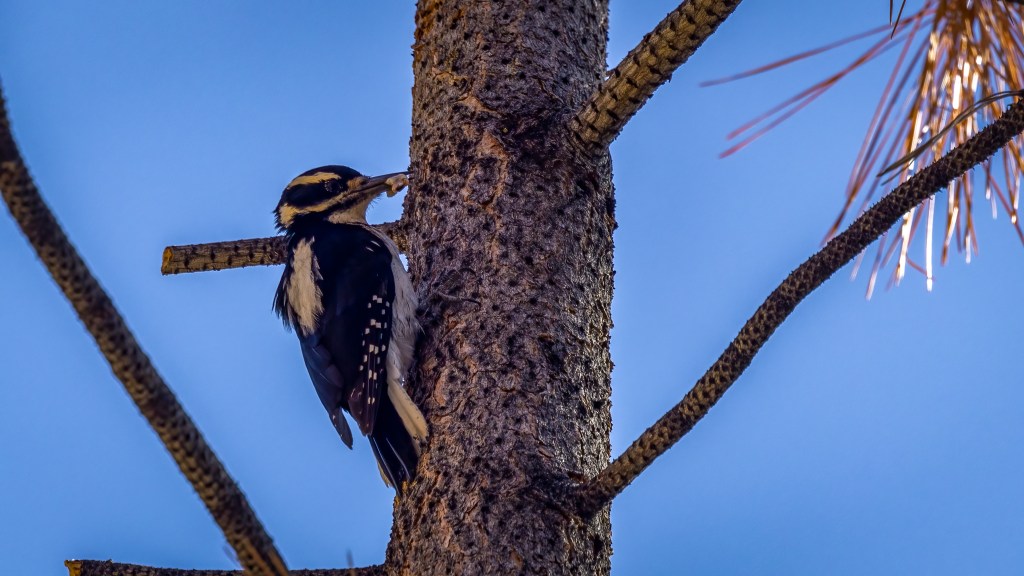
Overall, the Hairy Woodpecker is a fascinating bird species that plays an important ecological role in the Sierra Nevada mountains of California. Its adaptability to different forest types and foraging behaviors make it a resilient species, but ongoing conservation efforts are necessary to ensure the long-term survival of its populations.
Please visit my Beautiful Birds of the Sierra Nevada Blog Site for more Sierra Nevada Birds blog posts:
Previous Posts below:


 Reflections of the Natural World
Leave a comment