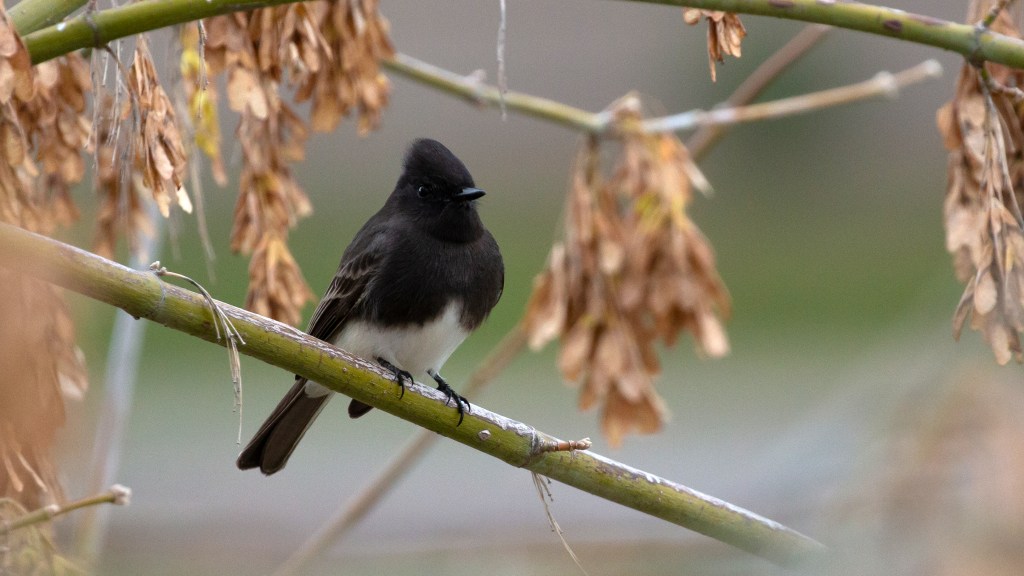
Sayornis nigricans
By Jim Gain

Learn 100 Common Valley Birds is a photo blog series highlighting the 100 most common Valley bird species.
Post #15 in the Learn 100 Common Valley Birds series. (Species 20/100.)
INTRODUCTION
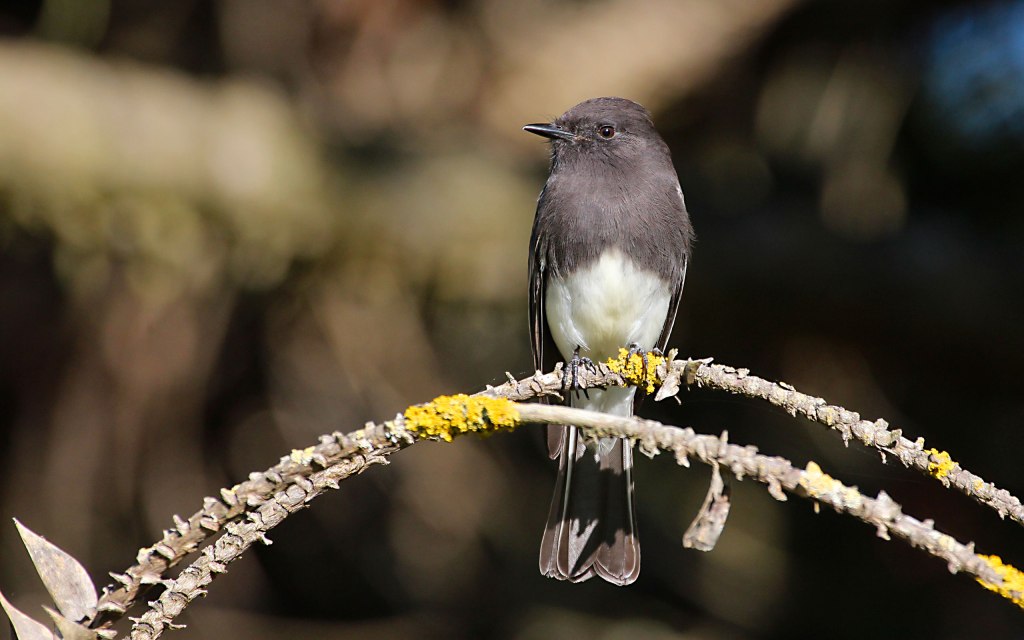
The Black Phoebe is a dapper flycatcher of the Central Valley with a sooty black body and crisp white belly. They sit in the open on low perches to scan for insects, often keeping up a running series of shrill chirps. Black Phoebes are Common Year-round Residents and conspicuous near sources of water and around human development.
FEEDING BEHAVIOR

Forages by watching from a perch and darting out to catch insects, often just above water. Catches insects in mid-air, or may hover while picking them from foliage or sometimes from water’s surface. May also take insects from the ground, especially in cool weather.
NESTING

Image by Alan Vernon
Black Phoebes use mud to build cup-shaped nests against walls, overhangs, culverts, and bridges. Look for them near any water source from small streams, to suburbs.
COOL FACT

The male Black Phoebe gives the female a tour of potential nest sites, hovering in front of each likely spot for 5 to 10 seconds. But it’s the female who makes the final decision and does all the nest construction.
Previous posts from the Learn 100 Common Valley Birds series,
- Northern Pintail
- Say’s Phoebe
- Cinnamon Teal
- Phainopepla
- Sandhill Crane
- Song Sparrow
- Northern Harrier
- Pied-billed Grebe
- Horned Lark
- Northern Shoveler
- White-crowned Sparrow
- Turkey Vulture
- Cedar Waxwing
- Ring-necked Duck
- California Towhee
- House Finch
- Double-crested Cormorant (CVB)
- American Pipit (CVB)
- Fox Sparrow (CVB)
- White-faced Ibis (CVB)
- Long-billed Curlew (CVB)
- American Crow (CVB)
- Greater White-fronted Goose (CVB)
- Osprey (CVB)
- Common Raven (CVB)
- Yellow-rumped Warbler (CVB)
- Great Blue Heron (CVB)
- Black-necked Stilt (CVB)
- Red-shouldered Hawk (CVB)

 Reflections of the Natural World
Leave a comment