By Jim Gain

Learn 100 Common Valley Birds is a photo blog series highlighting 100 of the most common Valley bird species.
Post #12 in the Learn 100 Common Valley Birds series. (Species 16 and 17/100.)
In Part I of the Our Wintering “White” Geese post, we learned about the larger “white Goose with the Grinning Patch”, the Snow Goose.
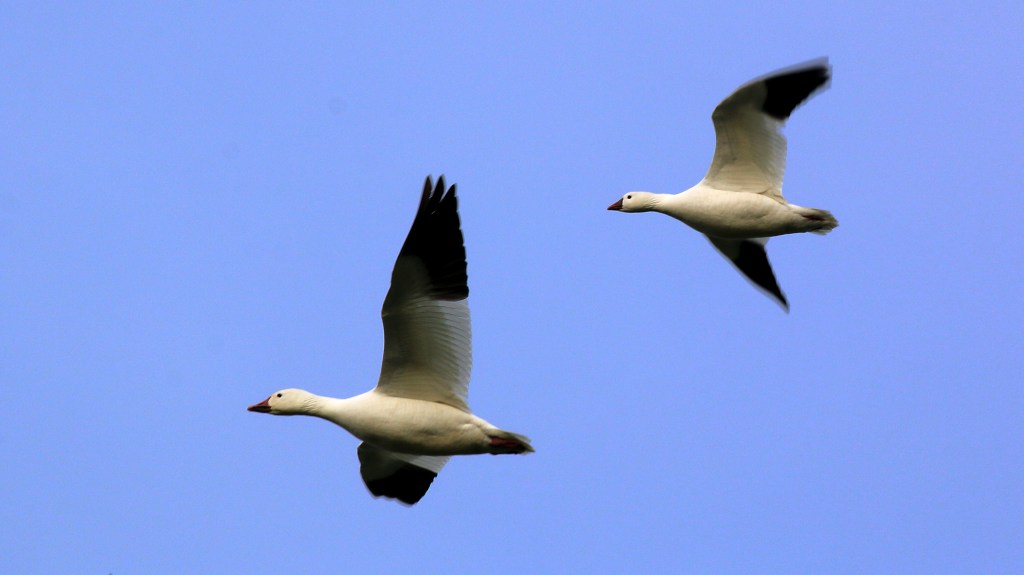
In this post the star of the show is the more diminutive Ross’s Goose.
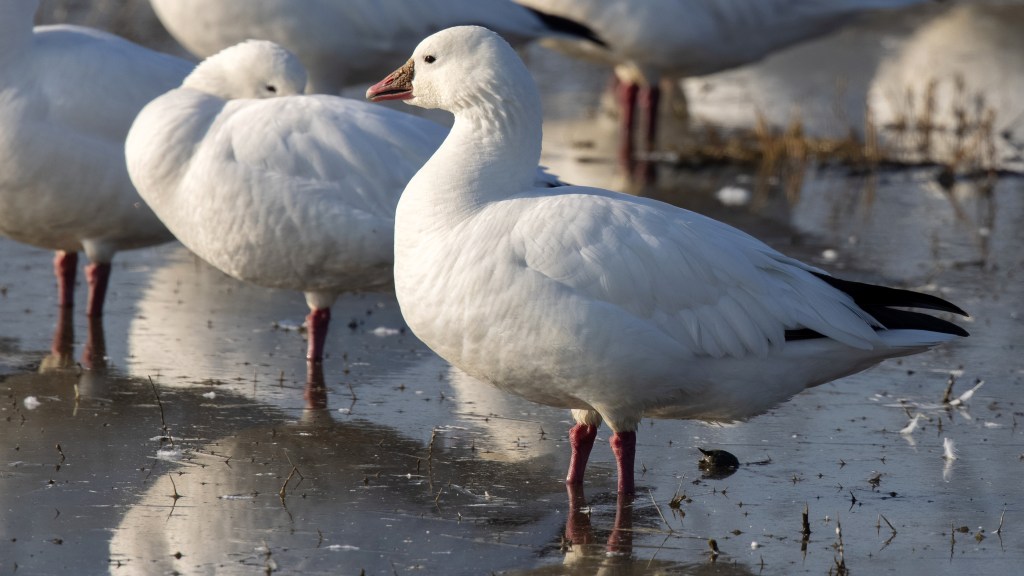
ROSS’S GOOSE Anser rossii (Cassin, 1861)
INTRODUCTION
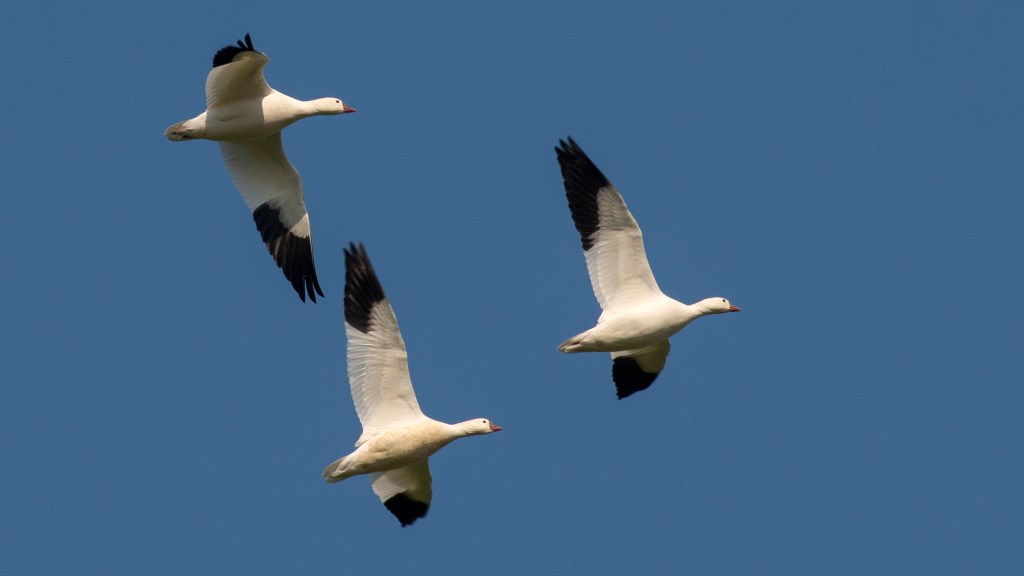
The Ross’s Goose is a Fairly Common Winter Visitor found almost exclusively in winter in the Central Valley. Similar to the Snow Goose, its referred habitats are fresh emergent wetlands, adjacent lacustrine waters, and nearby wet croplands, pastures, meadows, and grasslands. Fairly Common from November to early March.
DESCRIPTION
Plumage is similar to white morph of Greater and Lesser Snow geese, but average annual body mass of Ross’s Goose is 60% and 67% of these species. Feathers of lore meet base of maxilla forming a straight line instead of a forward curved arc typical of Greater and Lesser Snow geese.
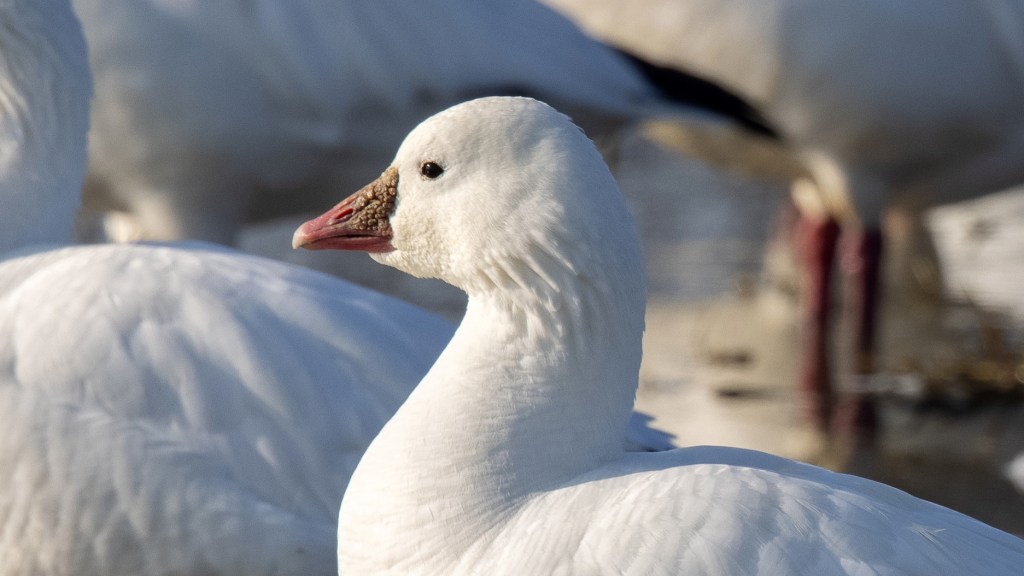
On basal half and sides of maxilla, particularly in mature males, are species-specific vascular wartlike protuberances or caruncles which become more prevalent with age and possibly act as a badge or status symbol, serving to limit contests among conspecifics.
DIMORPHIC FORMS
Similar to the “Blue morph” Snow Goose, the adult blue morph Ross’s Goose has the same dark gray-brown body but a reduced amount of white confined to just the head.
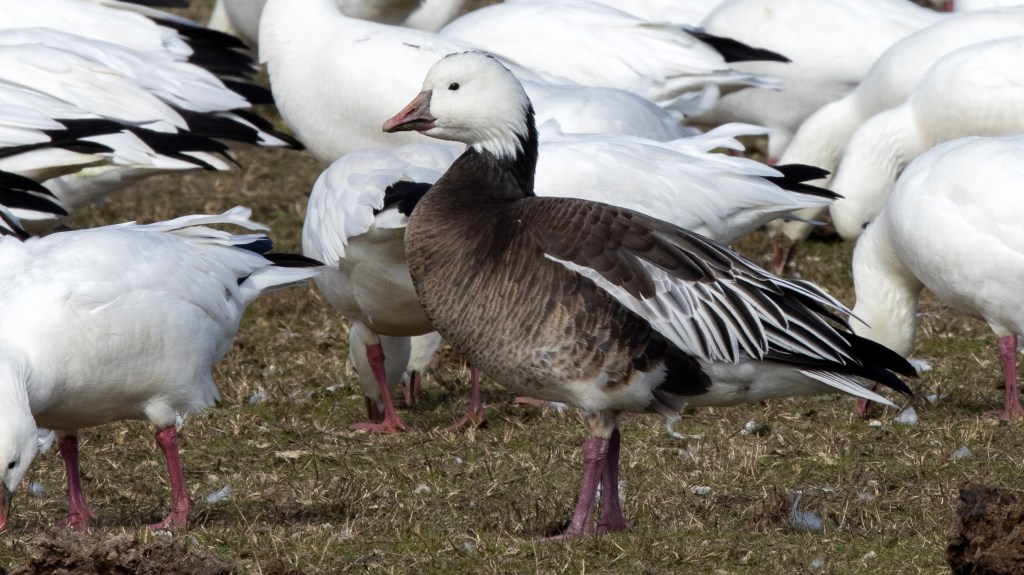
The odds of finding a dark or “Blue” morph have been calculated at about 0.008% (3 out of 38,825).
DISTRIBUTION
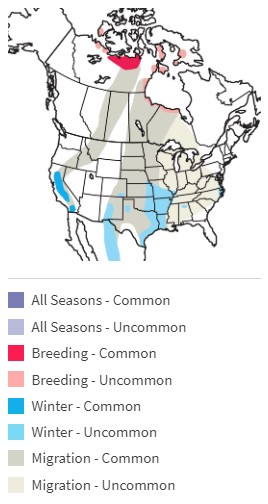
The main wintering area for the species is presently the Central Valley of California. The total number of birds has increased from a recorded low of 2,000–3,000 in the early 1950s to more than exceed 2 million birds in 2009.
COOL FACTS
The female Ross’s Goose does all of the incubation of the eggs. The male stays nearby and guards her the whole time. The female covers the eggs with down when she leaves the nest. The down keeps the eggs warm while she is away and may help hide them from predators.
Previous posts from the Learn 100 Common Valley Birds series,
- Northern Pintail
- Say’s Phoebe
- Cinnamon Teal
- Phainopepla
- Sandhill Crane
- Song Sparrow
- Northern Harrier
- Pied-billed Grebe
- Horned Lark
- Northern Shoveler
- White-crowned Sparrow
- Turkey Vulture
- Cedar Waxwing
- Ring-necked Duck
- California Towhee
- House Finch
- Double-crested Cormorant (CVB)
- American Pipit (CVB)
- Fox Sparrow (CVB)
- White-faced Ibis (CVB)
- Long-billed Curlew (CVB)
- American Crow (CVB)
- Greater White-fronted Goose (CVB)
- Osprey (CVB)
- Common Raven (CVB)
- Yellow-rumped Warbler (CVB)
- Great Blue Heron (CVB)
- Black-necked Stilt (CVB)
- Red-shouldered Hawk (CVB)

 Reflections of the Natural World
Leave a comment