By Jim Gain

Learn 100 Common Valley Birds is a photo blog series highlighting the 100 most common Valley bird species.
Post #1 in the Learn 100 Common Valley Birds, species 1/100.
In California’s Central Valley, almost anyone can learn 100 local bird species. Especially since on a daily basis Valley Residents come in contact with at least a dozen species that most recognize, but may not know the name of. Few things on earth fill us with as much delight as birds, and knowing them by name only adds to our pleasure. The intent of this blog is for followers to learn about and be able to identify 100 common valley birds.

Eazy Peazy First Bird
(You probably already know this bird.)
From James Whitcomb Riley’s poem, The Jaybird
The Jaybird he’s my _favorite_
Of all the birds they is!
I think he’s quite a stylish sight
In that blue suit of his:
And from George Parsons Lathrop’s Poem, O jay
O jay —
Blue-jay! —
What are you trying to say?
I remember, in the spring
You pretended you could sing;
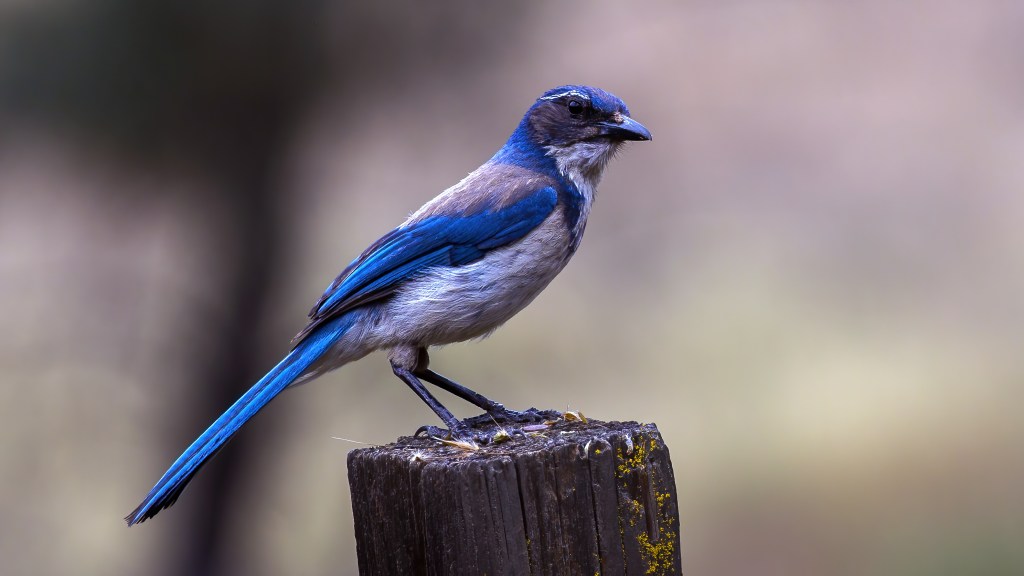
Just remember one thing, it’s a Scrub-Jay, NOT a Blue Jay. Blue Jays have a crest and live back east. Our beautiful jay is a California Scrub-Jay.
All About This Bird
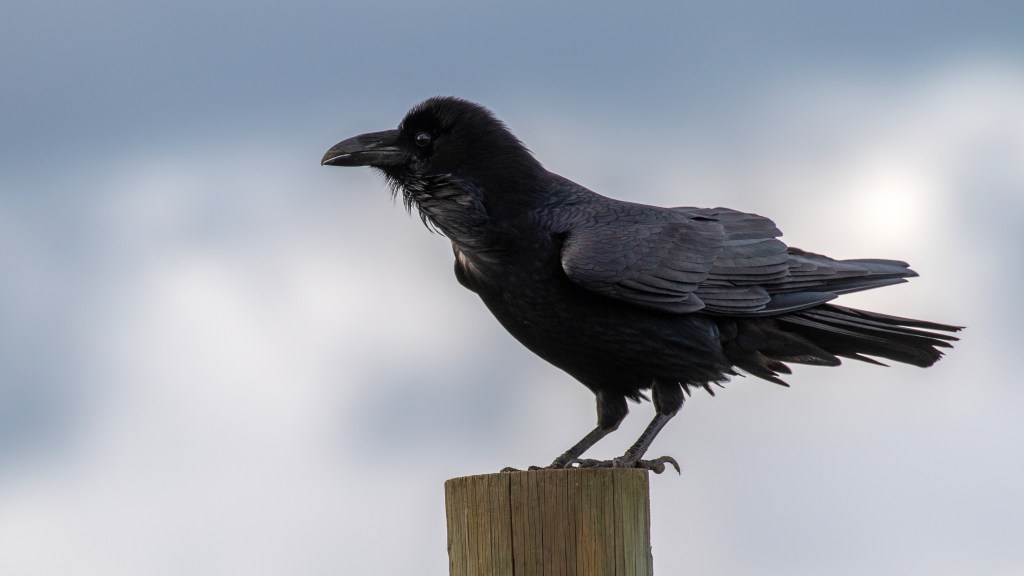
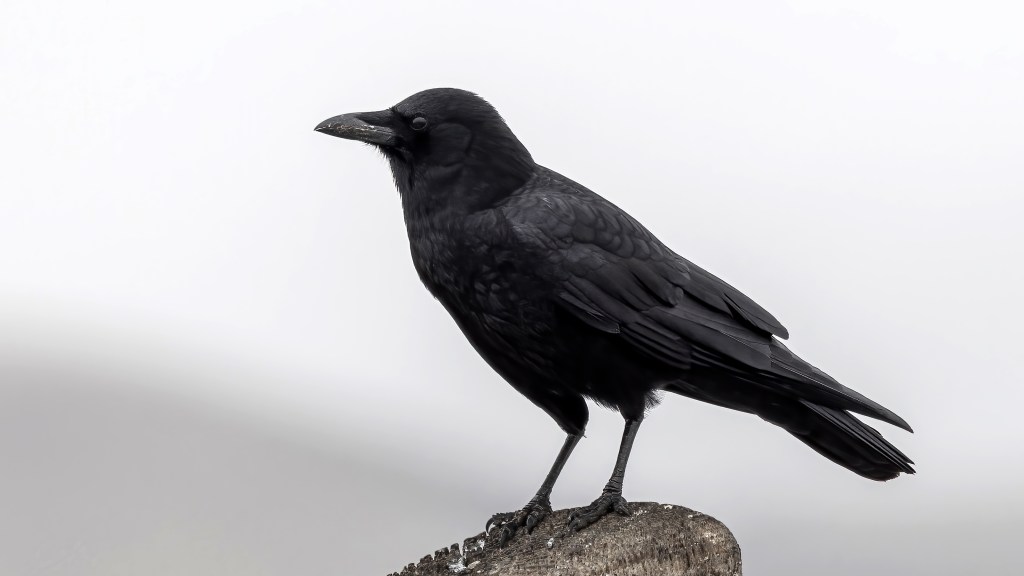
California Scrub-Jays are medium-sized members of the Corvid Family sharing similar characteristics with their other family members, the crows, magpies and ravens.
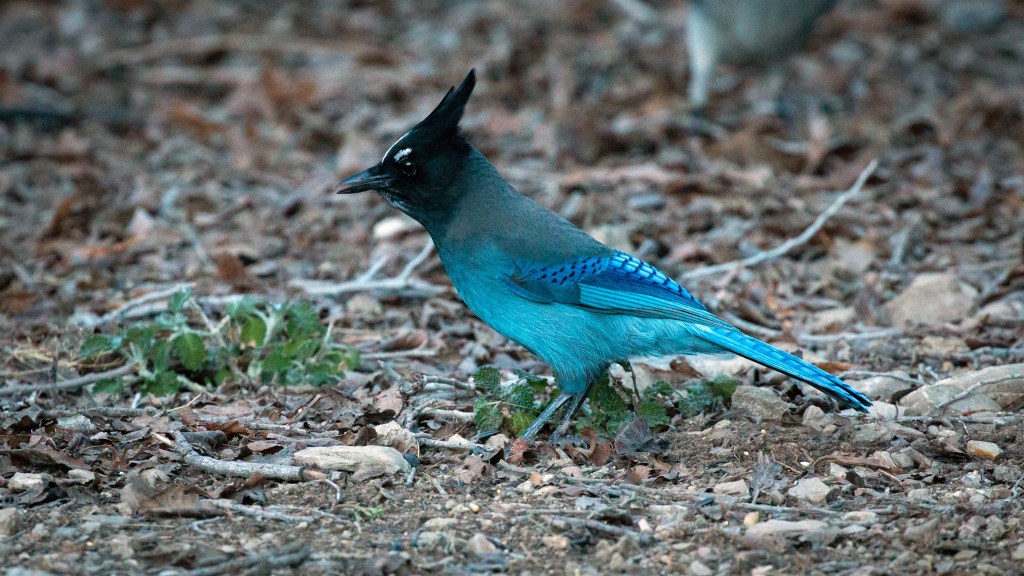
California Scrub-Jays are easily identified by their blue upperparts, dusty-white belly with a grayish-blue back. They have a medium-sized straight bill with a hooked tip and sport a white supercilium (eyebrow line). Depending on the light, their blue feathers may range from pale blue to almost iridescent bold blue. Unlike their Blue Jay cousins back east, they do NOT have a crest.

California Scrub-Jays can be found just about anywhere in the Central Valley. They are what ornithologists (bird scientists) call a year-round common resident and your backyard may even be a favorite spot for one. They are omnivorous and will eat bugs, lizards, berries and even other smaller birds (ouch!). Males and females are monomorphic, meaning they pretty much look the same. The opposite of monomorphic, where the males and females look totally different, is called sexual dimorphism. (Think of male vs female Mallards.)

California Scrub-Jays have strong bills which they use to break open and eat acorns. Acorns are held by the toes of both feet and are hammered with their bill until they break open and can dig out the meat.

After completing this first post in the series, you are now on your way to Learn 100 Birds! These ubiquitous birds may be found in our backyards, on power lines or flying overhead on a regular basis.
Other posts from the Learn 100 Common Valley Birds series,

 Reflections of the Natural World
Leave a reply to California Scrub-Jay – Reflections of the Natural World – Cancel reply